
An In-Depth Review Of The Haute-Rive Honoris Meccanica
 6 min read

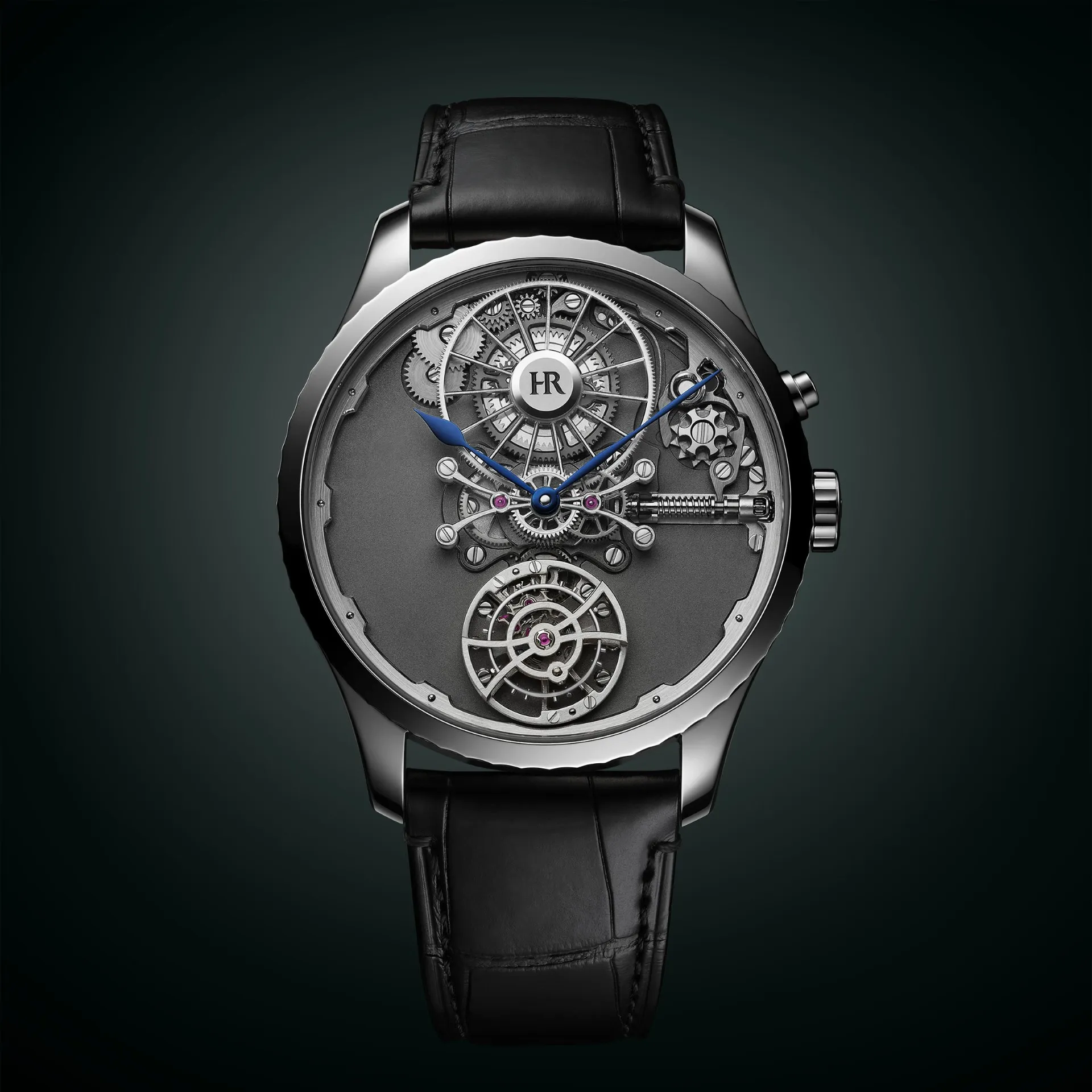
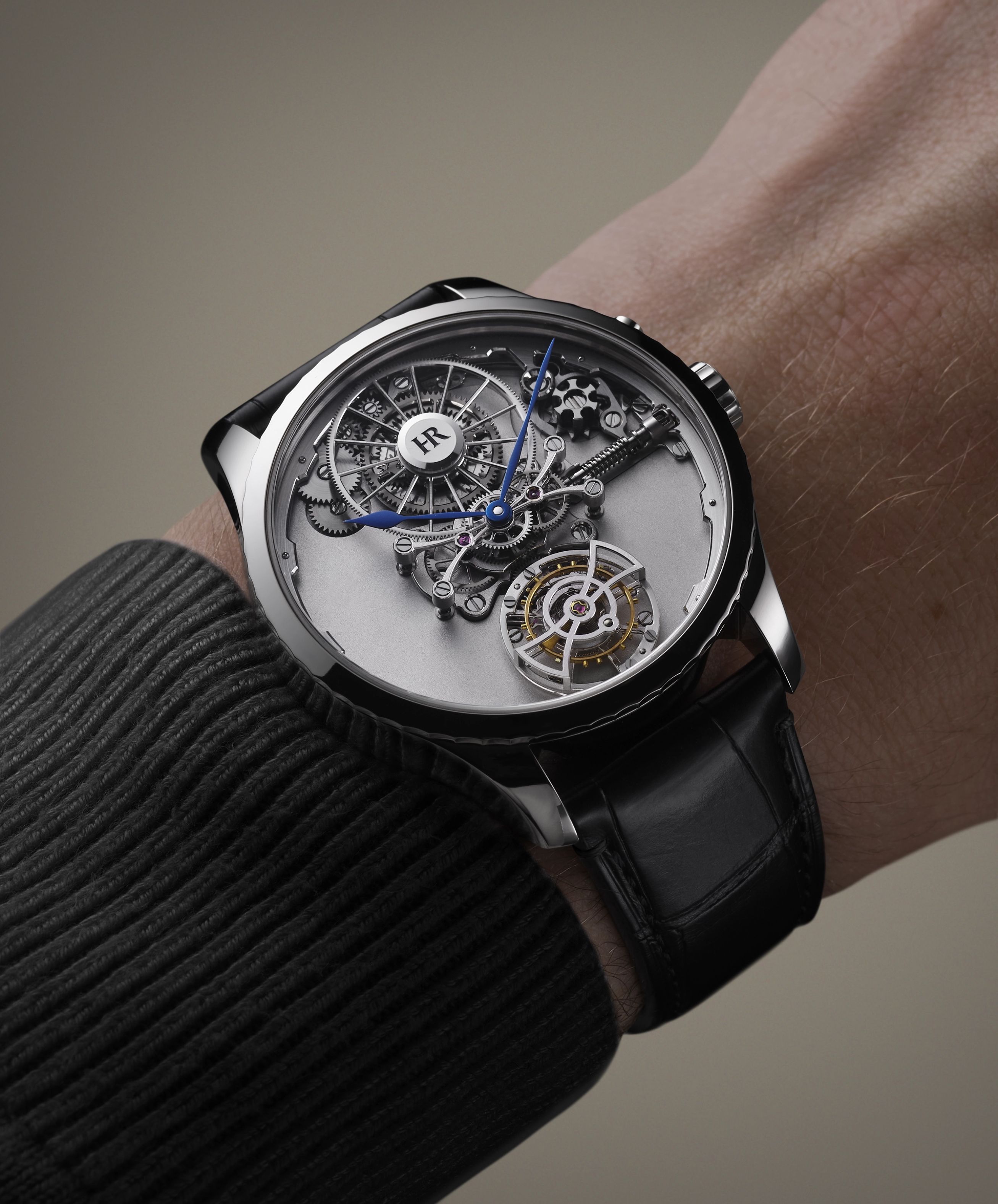
There is a particular kind of watch that does not so much tell time as argue for a different way of thinking about it. The Haute-Rive Honoris Meccanica, unveiled in the spring of 2026, is one of those watches. It does not whisper its ambitions from behind a dial - it removes the dial altogether and dares you to watch a three-meter mainspring negotiate, in real time, the terms of a forty-one-day argument with entropy. For a watch that measures just 42.5mm across and 11.95mm in height, proportions that would embarrass nothing on a dress-watch shelf, the Honoris Meccanica contains one of the more radical rethinks of basic barrel architecture that independent watchmaking has produced this decade. To understand it requires understanding both the watch and the man who built it, because with Haute-Rive, the two are, quite deliberately, inseparable.
A Name Borrowed From an Ancestor
Haute-Rive is not, strictly speaking, a new name. It belongs to Stéphane von Gunten, a watchmaking engineer from La Chaux-de-Fonds who spent nearly two decades inside the machinery of the Swiss industry before deciding he’d rather build the machinery himself. Von Gunten’s most consequential years were spent as R&D and Innovation Director within the Sowind Group, home to Girard-Perregaux and, more relevantly, Ulysse Nardin - where his name sits on a striking number of patents, including work on the oval-section hairspring that still underpins Ulysse Nardin’s escapement research, constant-force mechanisms, and compliant flexure oscillators. He is an engineer who has spent his career solving problems most watchmakers never attempt.

When von Gunten struck out on his own, he named the venture after his own family’s watchmaking atelier of more than a century ago - a lineage that runs directly to Irénée Aubry, his great-great-grandfather and the inventor of the “Hebdomas,” an 1888 pocket watch famous for requiring winding only once every eight days, its oversized mainspring turning visibly on the underside of the movement. It is difficult, once you know this, to view the Honoris Meccanica as anything other than a very literal inheritance. The watch is, in a real sense, Irénée Aubry’s idea, restated in 2026 terms, at a scale and with a level of engineering sophistication its inventor could not have imagined. Haute-Rive is a young house - its founding watch, the Honoris I, only broke cover in 2023, but it carries itself with the unhurried confidence of a workshop that has been quietly right about something for a very long time.
The Premise: Rethinking the Barrel, Not Just Enlarging It
The received wisdom in mechanical horology is that power reserve is a compromise machine. Want more autonomy? Add barrels, or lengthen the mainspring, and accept a thicker case, a more expensive movement, and, critically, a chronometric penalty, since a longer spring delivers less stable torque over its life. The industry has largely settled around three to five days of reserve as a reasonable frontier, anything beyond a month has historically required either serious bulk or serious compromise, and the handful of watches that have crossed the forty-day threshold tend to announce themselves as engineering stunts first and wristwatches second.
Von Gunten’s solution to this problem is, in the most flattering sense, a piece of intellectual sleight of hand. The Honoris Meccanica’s proprietary Caliber HR01 does not use a barrel in the conventional sense at all. There is no rotating drum. Instead, a mainspring measuring over three meters in length coiled directly inside a fixed housing machined into the main plate, and its central arbour, rather than a separate barrel wall, performs the double duty of receiving the winding force and discharging power to the going train. This is the same fundamental trick Irénée Aubry used in 1888, and one that would resurface, transformed, in the Ulysse Nardin Freak of 2001 - a watch von Gunten did not design but which he would have known intimately during his years at Sowind. Where the Freak used a turning barrel to also serve as the movement’s minute hand, Haute-Rive's construction keeps everything stationary and instead solves an altogether different puzzle: how to let one arbour handle both a fast, forceful winding input and a slow, controlled power output without ever stopping the watch.

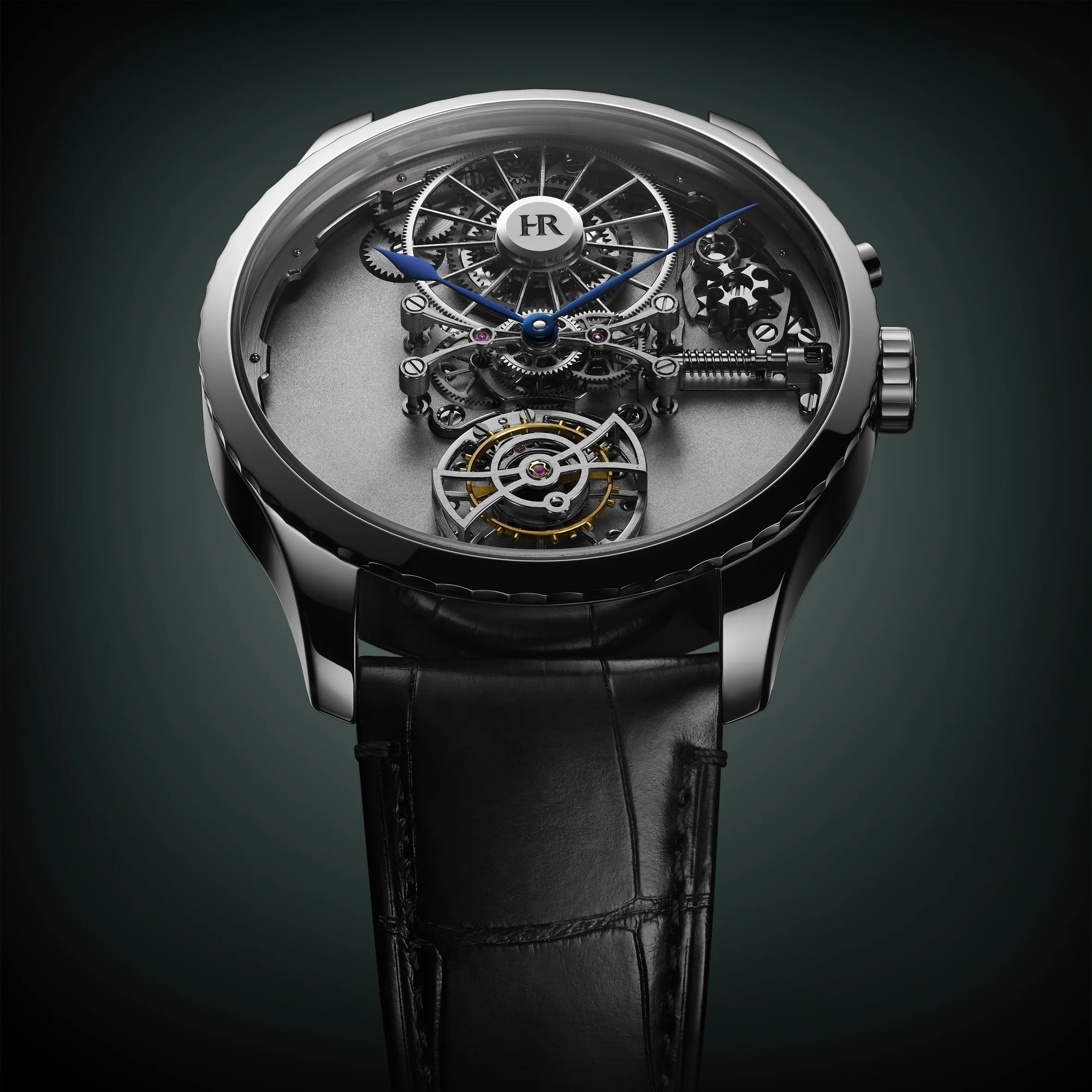
The answer sits directly beneath the “Wheel of Time,” the large spoked gear that dominates the dial at 12 o’clock: a differential gear set, of the sort more familiar from automotive drivetrains than from horology. When the watch is simply running, a click locks the differential’s carrier, turning the assembly into an ordinary planetary gear that feeds the going train. When the wearer winds the fluted bezel, the carrier is freed, and the differential redirects that energy into the mainspring instead, all without the watch ever pausing. It is the same problem John Harrison solved with his “maintaining power” spring in the eighteenth century, and the same problem Christiaan Huygens solved with a compound pulley two centuries before that, applied here to a fully modern, three-dimensional going train. That the solution required borrowing from marine chronometry, Dutch pendulum clocks, and automotive engineering in equal measure tells you something about the kind of mind behind it.

Living With the Mechanism
Because the arbor cannot be wound through a conventional crown without risking damage from the sheer force required to tension a spring of this length, Haute-Rive relegated winding to a subtly fluted, slightly ridged bezel - a solution more commonly associated with far larger manufactures than a house producing roughly ten watches a year. Because the crown is freed from winding duty, it needed a new job description, and Haute-Rive gave it one via a column-wheel-controlled function selector, actuated by a pusher at 2 o’clock. Press it, and a tall column wheel clutches the stem for time-setting. press it again, and the crown de-clutches into a free-wheeling neutral position, with a small aperture confirming which state you’re in. It is, by any reasonable measure, over-engineered for the simple task of setting hands - and that is rather the point. Every element of this watch argues that mechanical superfluity, deployed with intention, is itself a form of honesty.
The dial, if that word even applies here, abandons the pretense of concealment entirely. At 6 o’clock, a flying tourbillon - supported by a ball bearing rather than a conventional upper bridge, and driven by a hidden angled gear that connects to the going train, also visible at front - appears to rotate with no perceptible mechanical link.
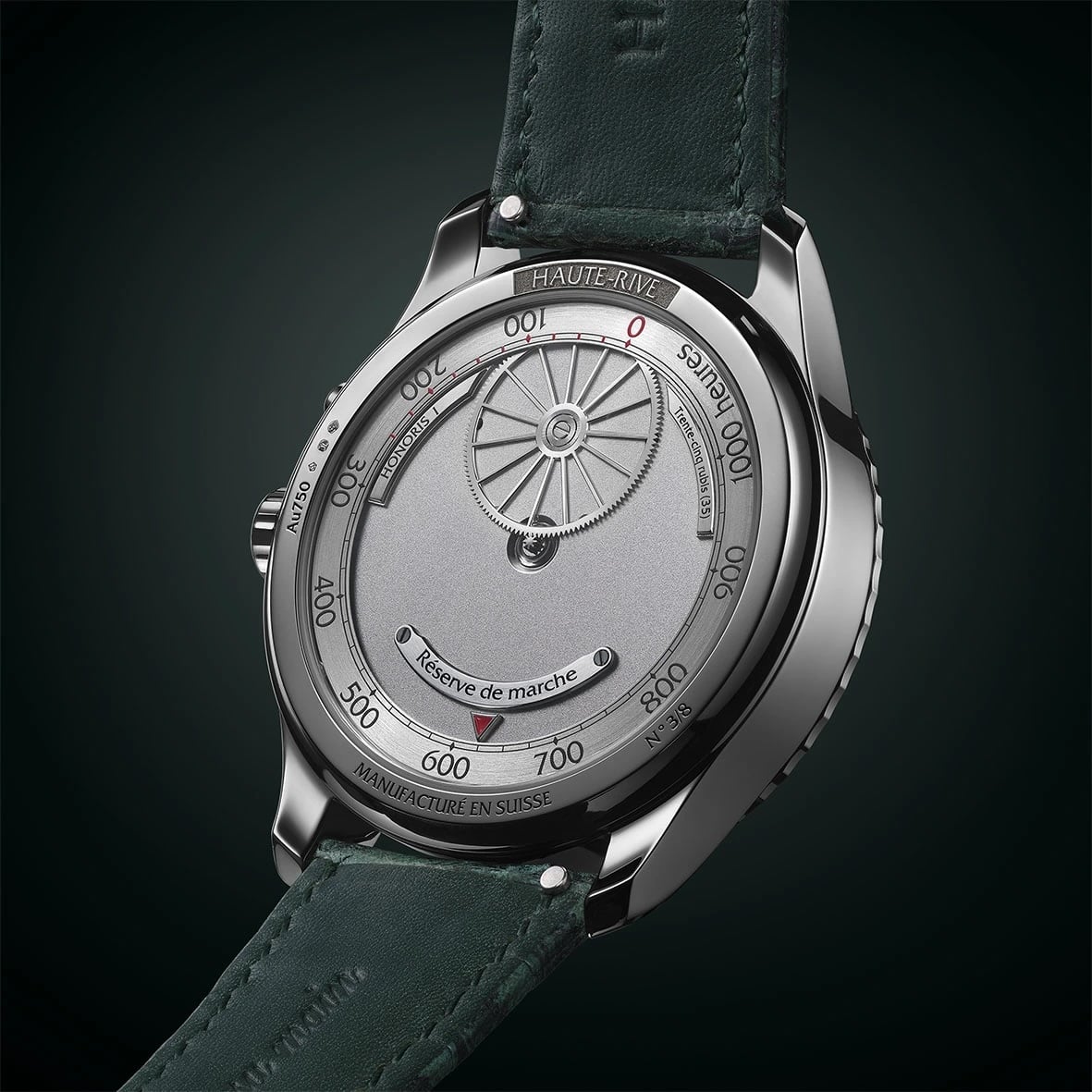
On the caseback, a simple radial power-reserve indicator, geared directly off the sole moving component in the entire mainspring assembly, the arbor itself, counts down from 1,000 hours.
The Verdict
It would be easy to reduce the Honoris Meccanica to its headline statistic: forty-one days, a thousand hours, a number designed for pull-quotes. That would also be a disservice to what von Gunten has actually built. The genuinely remarkable achievement here is not the duration of the power reserve but the elegance of the mechanism that makes it possible without recourse to a stack of barrels or an ungainly case. In rerouting his own family’s nineteenth-century idea through a twenty-first-century differential gear set, von Gunten has produced something rare in contemporary high watchmaking: a complication that is genuinely, structurally new, rather than a familiar mechanism dressed in unfamiliar finishing.
This is a watch built by an engineer who spent two decades solving other companies’ hardest problems, and who has now spent his independence solving one of his own family’s oldest ones. That is, in the end, the most persuasive kind of horology there is.


