 7 min read


Here's a question worth sitting with: why does a machine whose only job is to count seconds so often end up covered in diamonds? That's not a rhetorical flourish. It's the central mystery of the wristwatch. Long before the watch was a tool, it was a treasure. For nearly four hundred years, the timepiece lived less on the wrist as an instrument and more on the body as an ornament sewn into gowns, hung from chains, coiled around wrists as bracelets, and set into rings. The story of the jewellery watch is really the story of watchmaking itself, because for most of that history, there was no meaningful difference between the two. To understand how the jewellery watch rose, fell, and rose again, you have to start not with a watchmaker, but with a queen.
Before the Wrist, There Was the Waistcoat
Rewind to the late Middle Ages. Europe is figuring out mechanical timekeeping, but nobody's wearing a clock, instead they're building them into towers. Time is public. Time is architecture. It belongs to the church bell and the town square, not to any one person's pocket. That changes in the second half of the 15th century, when the "pocket clock" shows up a clunky, temperamental little device that is, frankly, not very good at its job. And here's the part that surprises people: nobody minded.
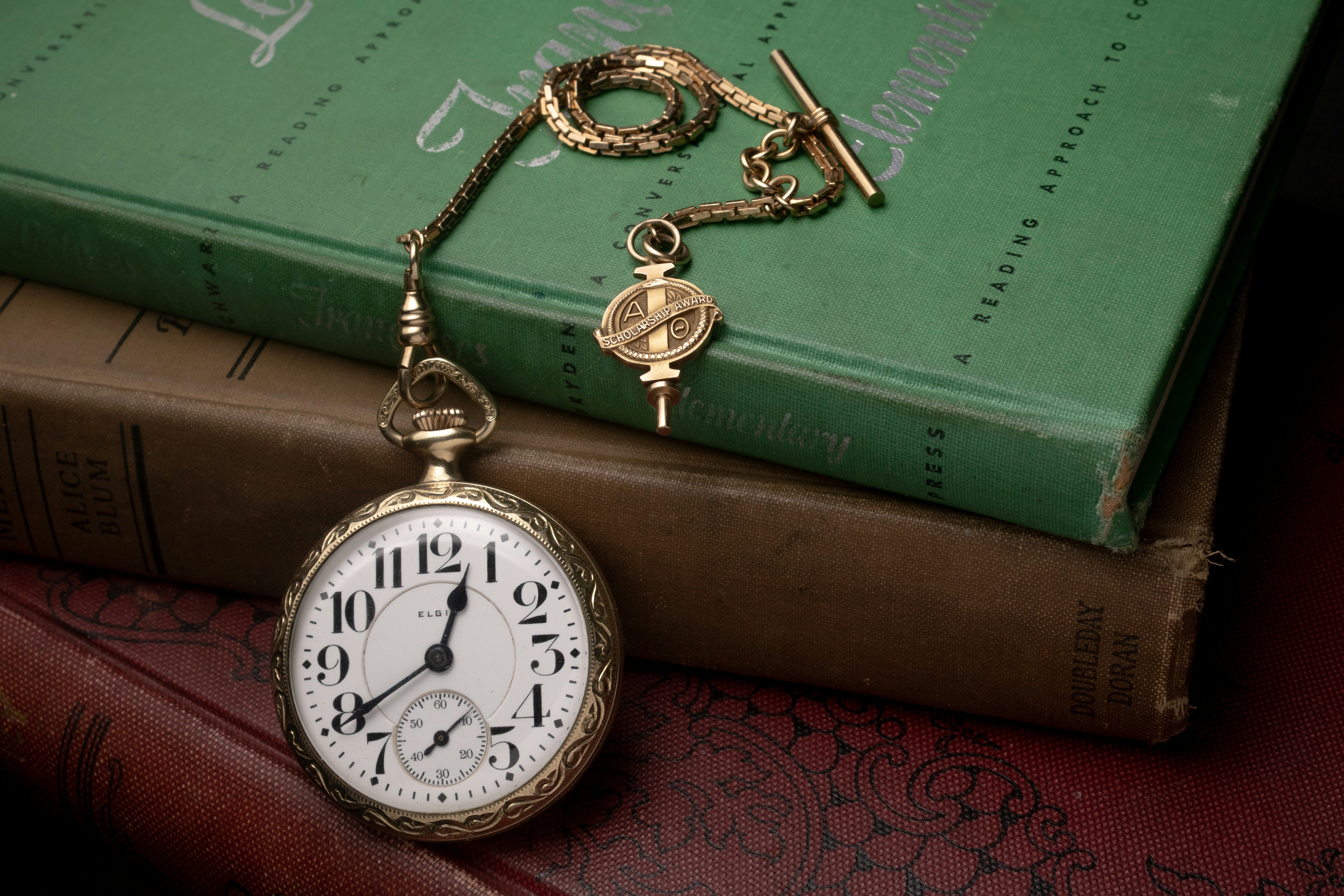
These early portable timekeepers were mechanically unreliable almost by design, because reliability wasn't the point. Owning one was the point. They were commissioned by aristocrats as pure spectacle, and they only became a fixture of aristocratic fashion once Charles II popularized the waistcoat, because suddenly there was a pocket to put one in. So the pocket watch's entire origin story is, essentially: rich people needed a place to keep their new toy, and tailoring obliged. Punctuality had nothing to do with it.
The Moment Watches Became Jewelry
By the 17th and 18th centuries, watches had gotten mechanically decent enough that the European royal courts started asking for something more. Not just a device that tells time, but a device that also announces status, taste, and identity. That demand didn't just tolerate decoration it created a founding belief that still drives high watchmaking today: a timekeeper could be a genuine canvas for art.
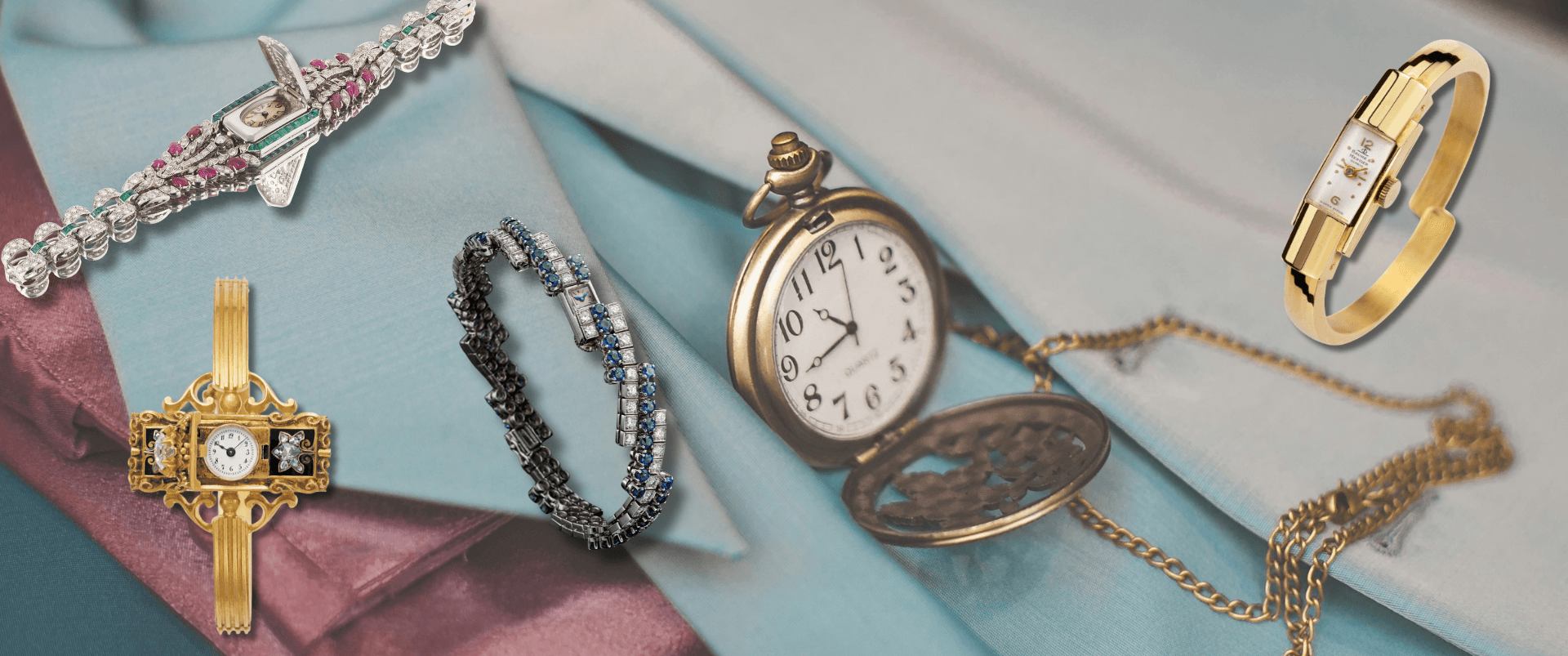
Picture the Rococo period, roughly 1730 to 1770. Watchmakers and jewelers are essentially co-authoring these pieces. Cases become miniature enamel paintings. Chatelaines, which are ornamental clasps studded with gemstones dangle watches from belts and waists. Women tuck them into brooches, pendants, even the pommels of fans. The names you'd expect from this era Abraham-Louis Breguet, John Arnold are remembered today for mechanical genius. But they were also, quietly, jewelers. And then there's Louis Leroy, watchmaker to Queen Victoria, whose 24-complication masterpiece stunned the 1900 Paris World's Fair and held the title of "most complicated watch in the world" for the better part of a century nobody topped it until 1989.
A Secret Nobody Tells You: The Wristwatch Was Invented for Women
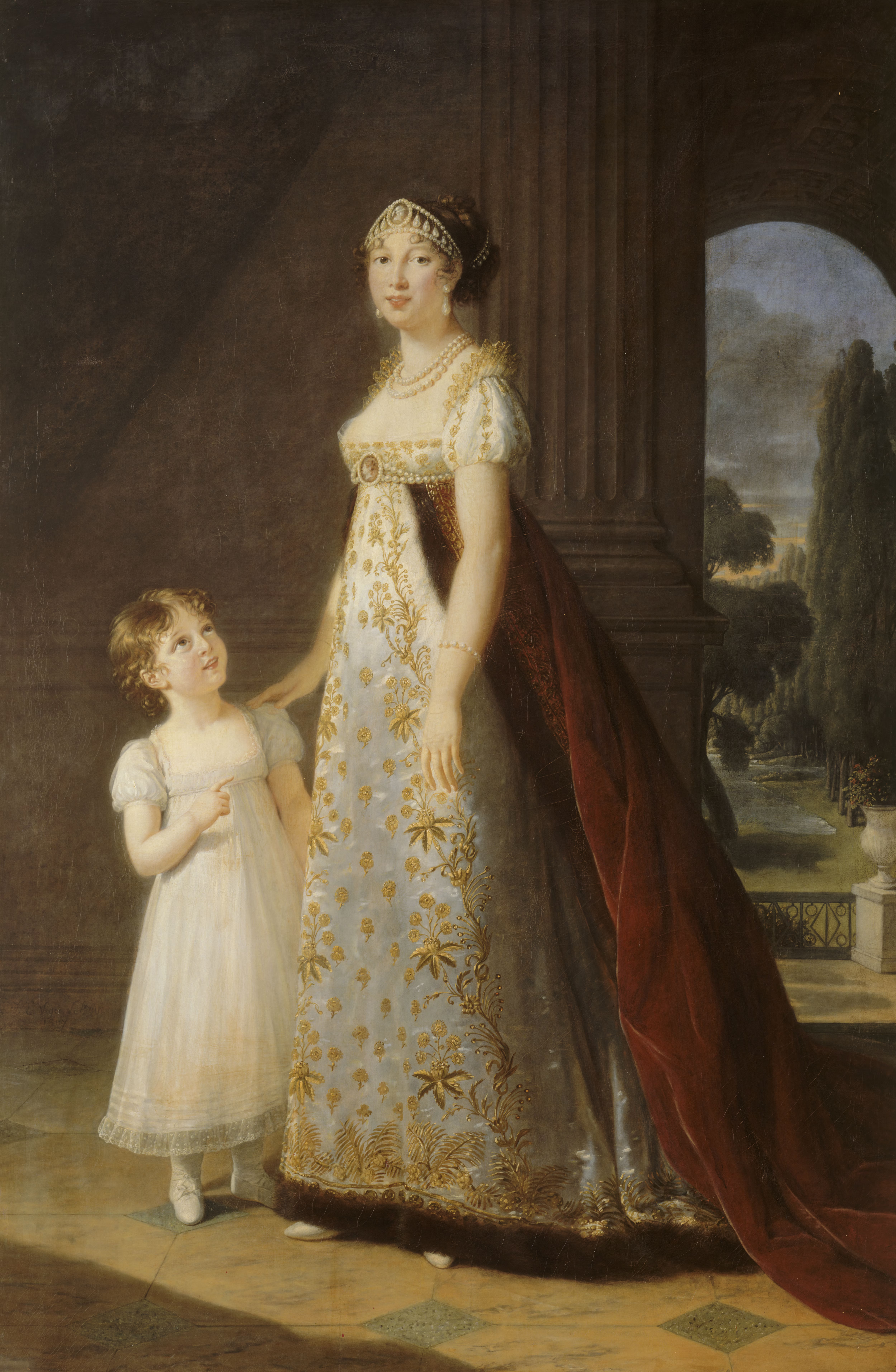
Here's the twist that upends the usual story. Ask most people where the wristwatch came from, and they'll say soldiers, trenches, World War I. That's not wrong, exactly, but it's not the beginning either. It's the second act. The real origin is far more romantic. In 1812, Breguet built a "repeater watch mounted on a wristlet" for Caroline Murat, Queen of Naples and Napoleon Bonaparte's own sister. It wasn't a stripped-down tool watch. It was an intricate, complicated timepiece woven into a bracelet of gold thread and hair. Although there's an older, murkier legend that Elizabeth I received a wrist-worn "arm watch" back in the 16th century, but Breguet's commission is the first version historians can actually stand behind.
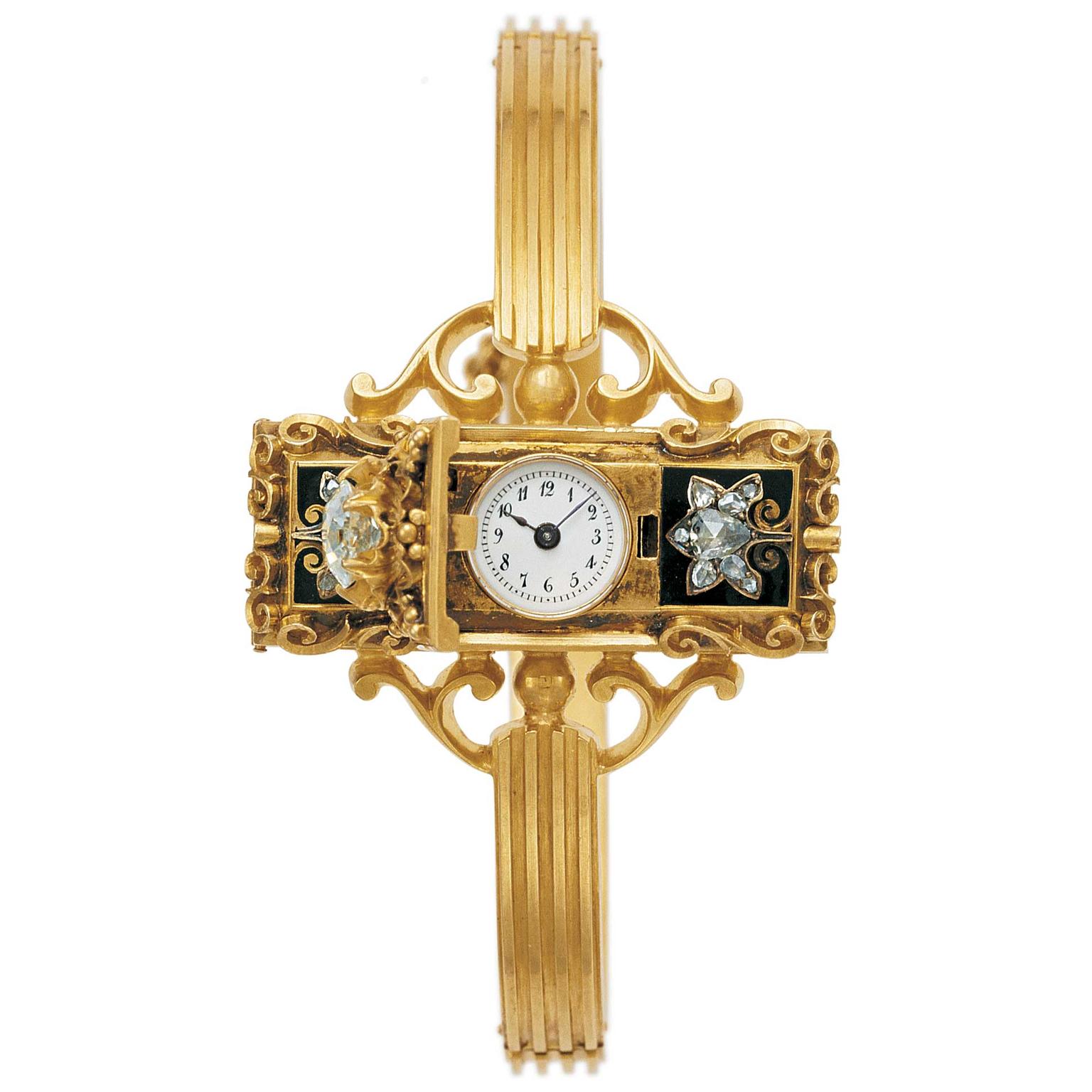
For the rest of the 19th century, the wristlet stayed almost exclusively a woman's ornament. Patek Philippe's very first wristwatch, made in 1868, went to Countess Koscowicz of Hungary again, jewelry first, timekeeper second. Meanwhile, men wouldn't touch the thing. A wristwatch was considered fussy, conspicuous, faintly ridiculous. The pocket watch was the serious, masculine choice. That divide held firm for decades, even as enamel work and gem-setting kept flourishing elsewhere. Vacheron Constantin's pocket watches from the era show just how far the ornamentation went. An 1824 piece with a map of Italy rendered entirely in blue champlevé enamel on the case is basically wearable cartography.
What It Took to Get Men to Wear One: A World War
The gendered stigma didn't crack because of fashion. It cracked because of trench warfare. Soldiers needed to check the time without fumbling a pocket watch out under fire or during a coordinated assault precision timing mattered for synchronized attacks. So officers started strapping pocket watches to their wrists with leather cuffs, a crude fix that became standard kit. By the end of World War I, the wristwatch had shed its "feminine bracelet" reputation entirely and been rebranded as something else altogether: modern, efficient, masculine. It's a strange irony that a device invented as a delicate gift for a queen became legitimate in men's eyes only after surviving a war.
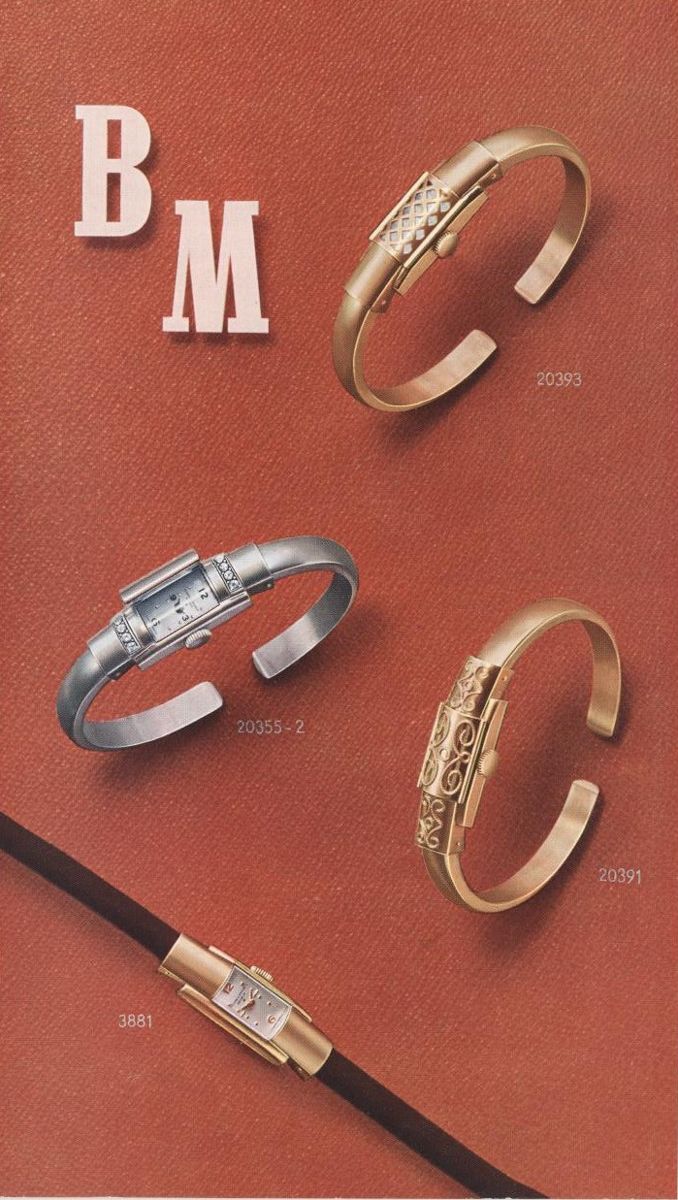
Once the wristwatch was functionally accepted, it didn't take long for decoration to come roaring back. This time with an entirely new visual vocabulary. Art Deco arrived, and with it, geometry: sharp lines, streamlined forms, bold symmetry. Cases stopped being round almost as a rule. Suddenly you had rectangular cases, tonneau (barrel-shaped) cases, cushion shapes, octagons, even deliberately asymmetric designs. Cartier led the charge with theatrical case experiments, and one of them the Tank, became a design icon that still looks modern a century later. Patek Philippe answered with the Calatrava, Jaeger-LeCoultre with the Reverso, originally built to survive polo matches. Baume & Mercier's Marquise line captured the post-war hunger for glamour in miniature form.
By the time the Art Deco wave crested, the wristwatch had completed a full-circle transformation: born as a woman's jewel, legitimized as a soldier's tool, and now reborn as a decorative object for everyone, regardless of gender. The decades following the Second World War were arguably the high-water mark of the jewellery watch as a symbol of glamour. Hollywood's golden age, an economy rebuilding toward prosperity, and a renewed appetite for opulence after years of wartime austerity all converged to make the "cocktail watch". A small, bejeweled instrument worn as much for evening drama as for legibility - a defining accessory of mid-century high society. Houses like Piaget, Van Cleef & Arpels, and Bulgari produced watches barely larger than a coin, their dials often concealed beneath a cover of gems or hinged gold, meant to be flipped open with a flourish. This was the era in which the jewellery watch fully reclaimed the identity it had carried in the 16th century: a piece of jewellery that also, discreetly, told the time, precision was almost beside the point.
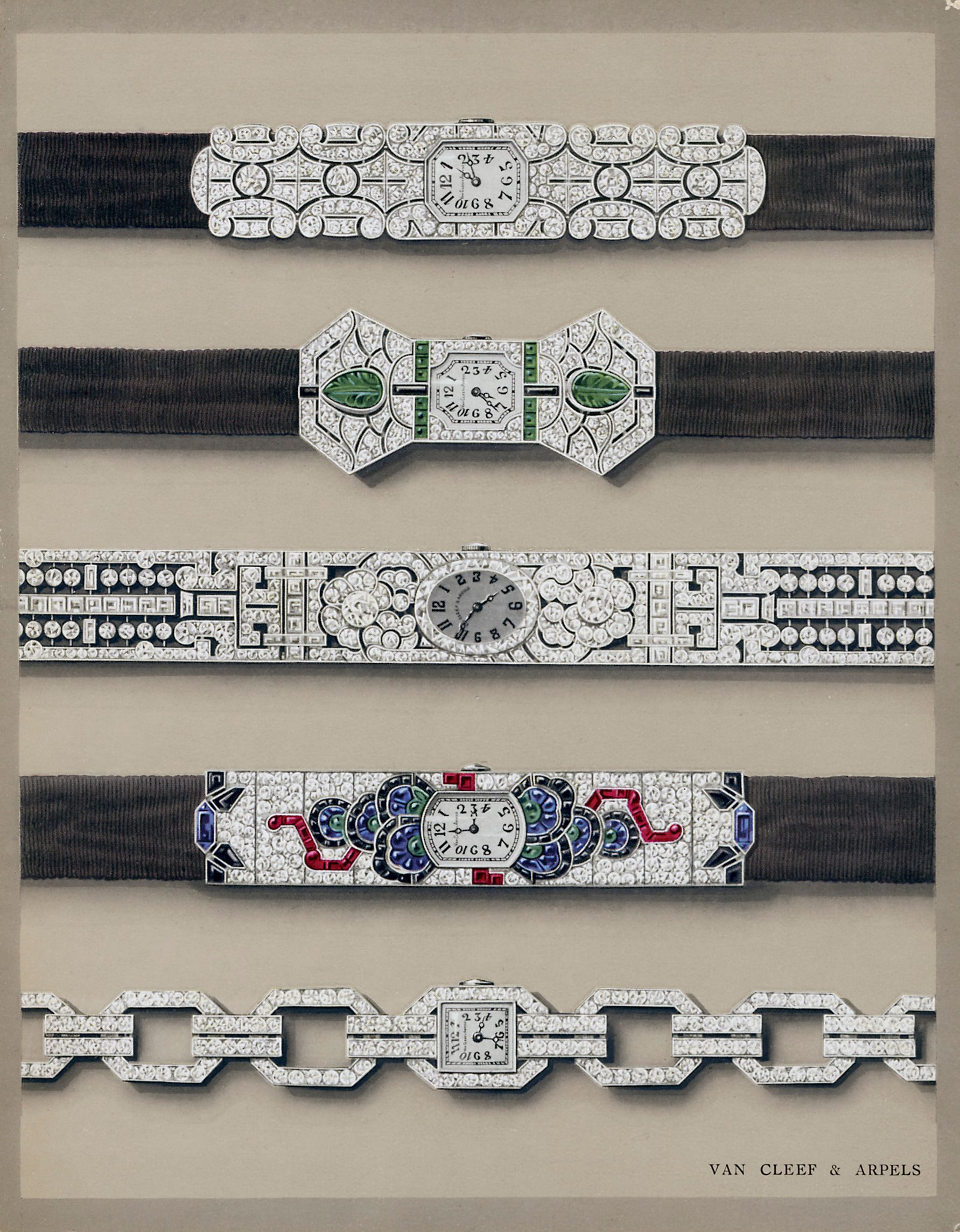
For roughly 350 years, jewellery watches had largely concealed their function. Dials hidden inside lockets, brooches, and pendant cases that had to be opened to be read. The dawn of the 20th century began to reverse that logic. As watches migrated toward the wrist and toward daily, practical use, the dial itself became the ornament rather than something to be hidden away. This shift was gradual and driven as much by necessity as by fashion: a watch worn openly on the wrist, checked constantly through the day, demanded a legible, visible face rather than a concealed mechanism. Jewellers responded by decorating the visible parts of the watch. The case, the bracelet, the bezel rather than disguising the watch's identity altogether, setting the stage for the modern jewellery watch as we recognize it today: unmistakably a watch, but unmistakably a jewel as well.
The Modern Resurgence of Jewellery Watches
After decades in which mechanical complexity and sports-watch masculinity dominated collector conversation, jewellery watches have been enjoying a pronounced revival. Industry coverage heading into 2026 points repeatedly to the "cocktail watch" as a defining trend: small, precious dress watches are being worn by figures like Timothée Chalamet, Tyler the Creator, Justin Bieber, and Usher, with vintage specialist dealers reporting brisk trade in the category. Major maisons have responded with new archival-inspired releases such a Jaeger-LeCoultre’s new Or Deco Cocktail Watch which reinterprets the cocktail watch with a twisted gold Milanese bracelet. While brands like Cartier have introduced a new collection called the Myst De Cartier that blurs the line between watch and jewellery. With a rich history in cuff watches, Piaget brought back the swinging sautiors and launched their new Sixtie collection that is a bold interpretation of its famed play of extraleganza.
So what is a jewellery watch, really? Maybe the honest answer is: it's never been just one thing. At every stage of its evolution, someone has tried to strip the watch down to pure function. And yet the decorative, artisanal, symbolic side of watchmaking is arguably more alive today than ever. Which tells you something almost defiant about human nature: given a perfectly good tool for measuring time, we will always find a way to make it beautiful instead of merely efficient. We'd rather wear a small piece of art on our wrist than settle for a number on a screen.