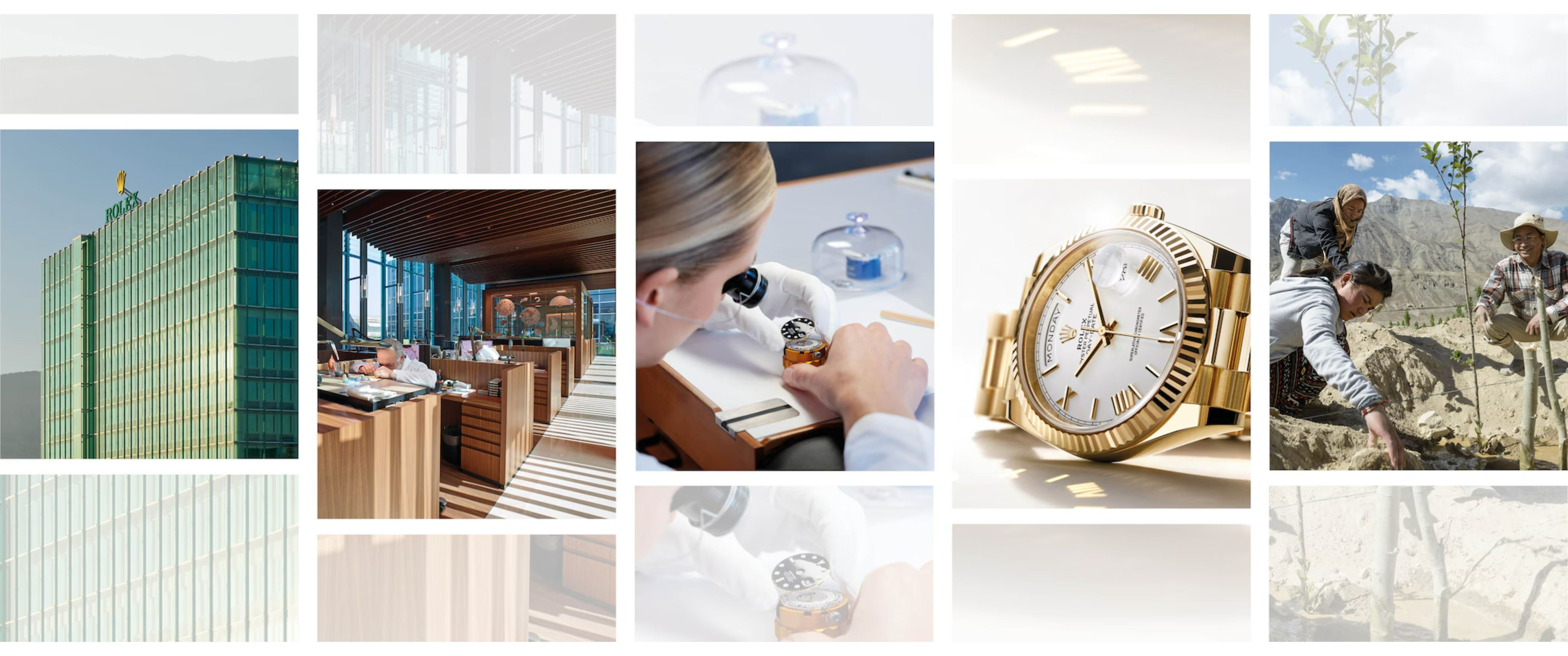
What Makes Rolex Great?
 7 min read

Part One - The People
Rolex is the world’s most popular watch brand.
Although everything that can be said about Rolex has already been said, that too, too many times, yet I find it difficult to sum up what exactly Rolex is. It’s like there’s a peculiar paradox with things that are deeply woven into culture: the more common, familiar, and central something is, the harder it becomes to articulate why it matters.
This happens because such concepts don’t operate as isolated facts we can point to and describe - they function as the very framework through which we understand everything else, so we lack an outside vantage point to evaluate them from. Take the example of trying to explain why God is “great.”
The same difficulty shows up with other culturally saturated entities.
What makes certain things great often isn’t a feature you can list, but the totality of experience, meaning, and belonging they generate - and totalities resist summary by their very nature.
That’s why explaining why Rolex is great creates a strange mental fatigue that without trying to resolve the said query is absolutely incomprehensible. Most of the time, the answer is, well, “you just know.” Rolex’s greatness can’t alone be judged on the merits of chronometry, sustainability, longevity, or relevance.
Part of the reason is that Rolex isn’t really competing on a single measurable axis anymore.
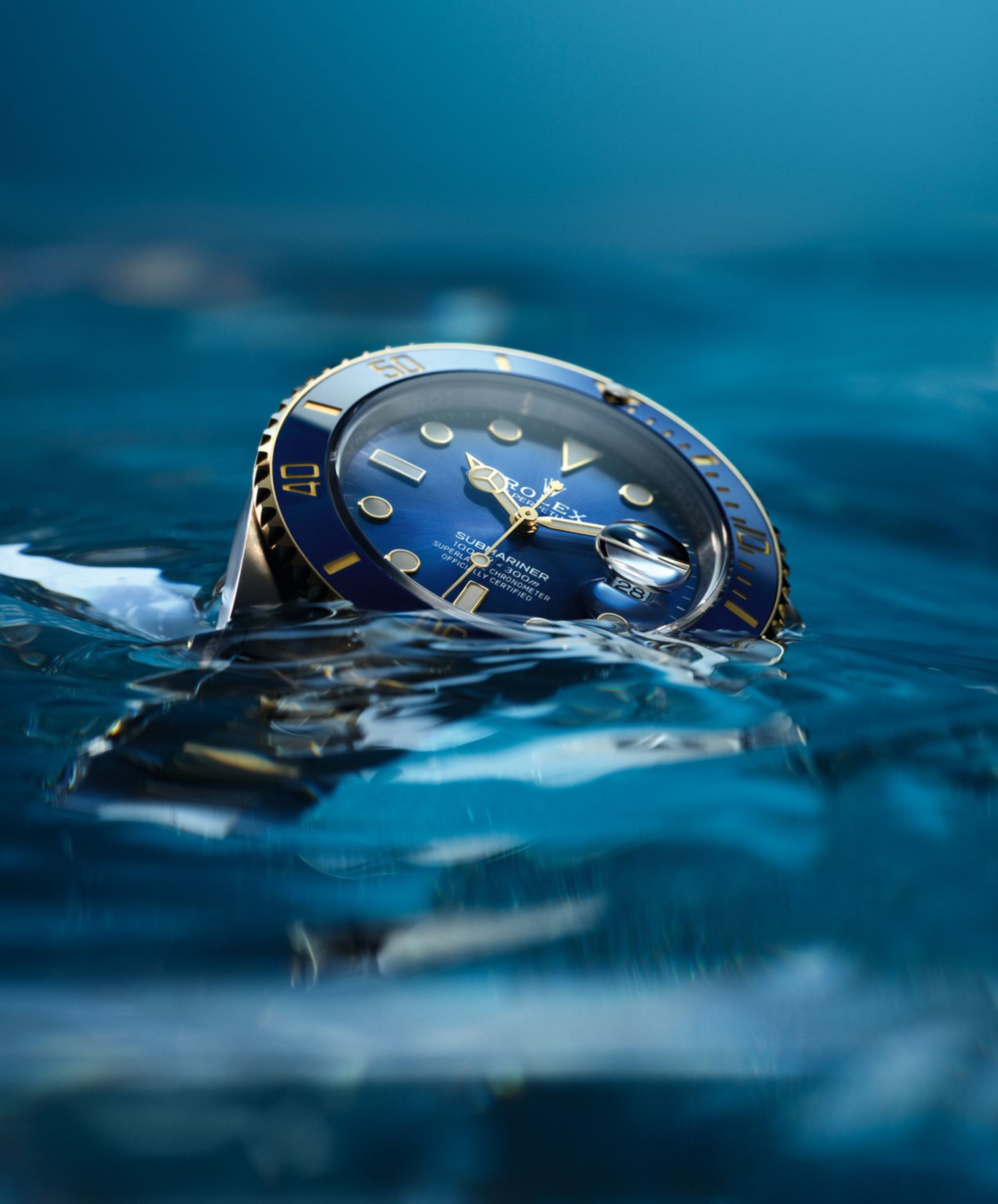
Rolex has become a kind of cultural shorthand - a symbol absorbed into ideas of success, permanence, and taste that people encounter so often it starts to feel self-evidently great. The “greatness” isn’t really located in the object anymore, it’s distributed across decades of branding, scarcity, value sustenance, cultural relevance, and quiet social signaling, all reinforcing each other until the brand feels obviously prestigious without any single thread of that web being enough, on its own, to explain why.
So, the greatness was never really about function to begin with, but about what the object has come to represent.
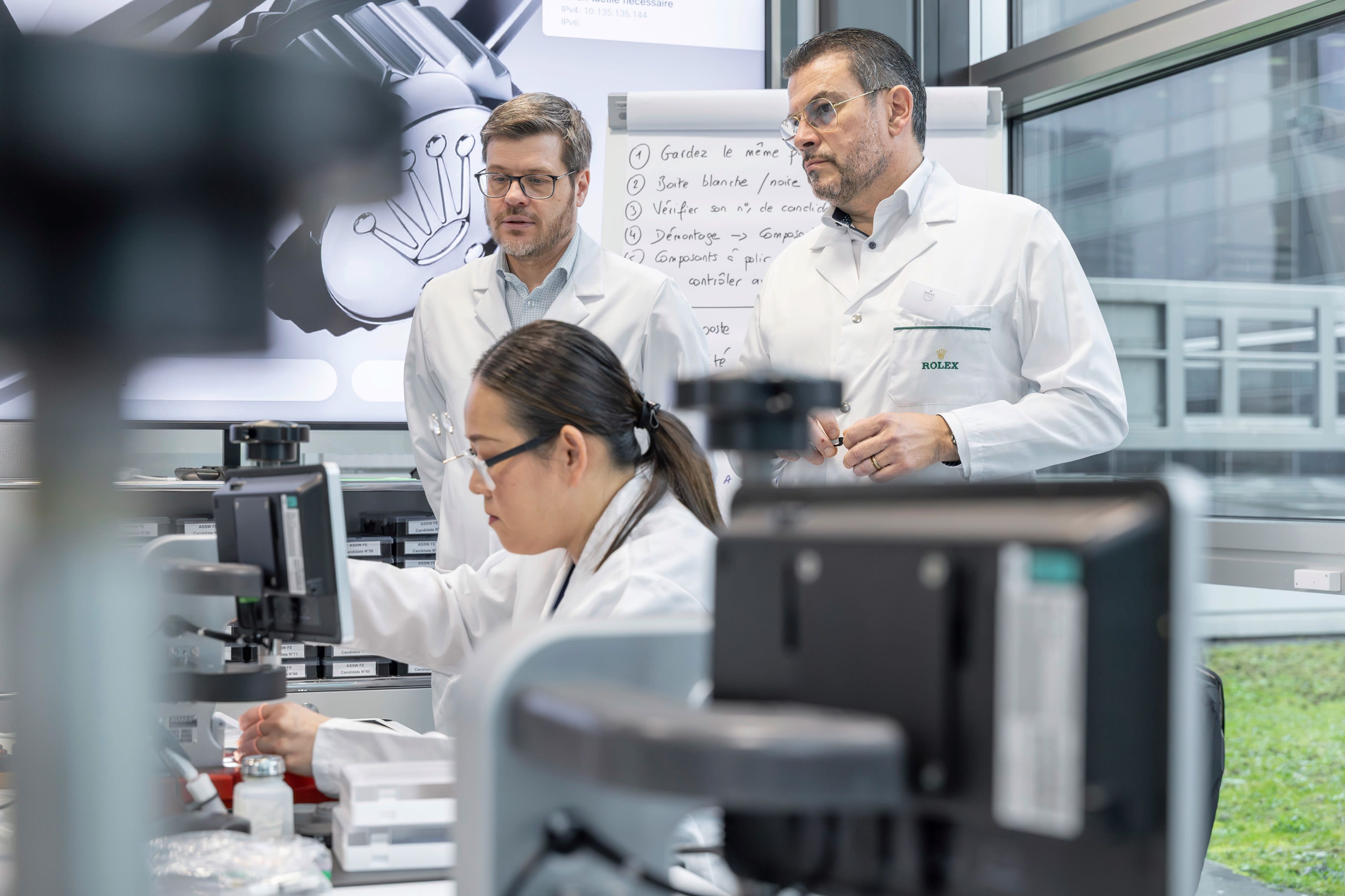
The might of Rolex
A historic watchmaker, a successful brand, a peak yield of modern industrialization, legitimate social currency, a very secretive vertically integrated empire, and creator of icons are only a few articulable attributes of Rolex. There are multiple aspects to Rolex’s greatness and, yes, watchmaking is one of those. Agreed, it’s the core objective, but not necessarily pivotal for its greatness.
Today, Rolex is one of the most vertically integrated luxury watch manufacturers in the industry, maintaining 97% control over all of its manufacturing processes. They achieve a very high level of quality consistency that becomes even more impressive considering the company’s production output which, according to LuxeConsult and Morgan Stanley Research estimates, was about 1,150,000 units in 2025, translating to an estimated turnover of about $14 billion.
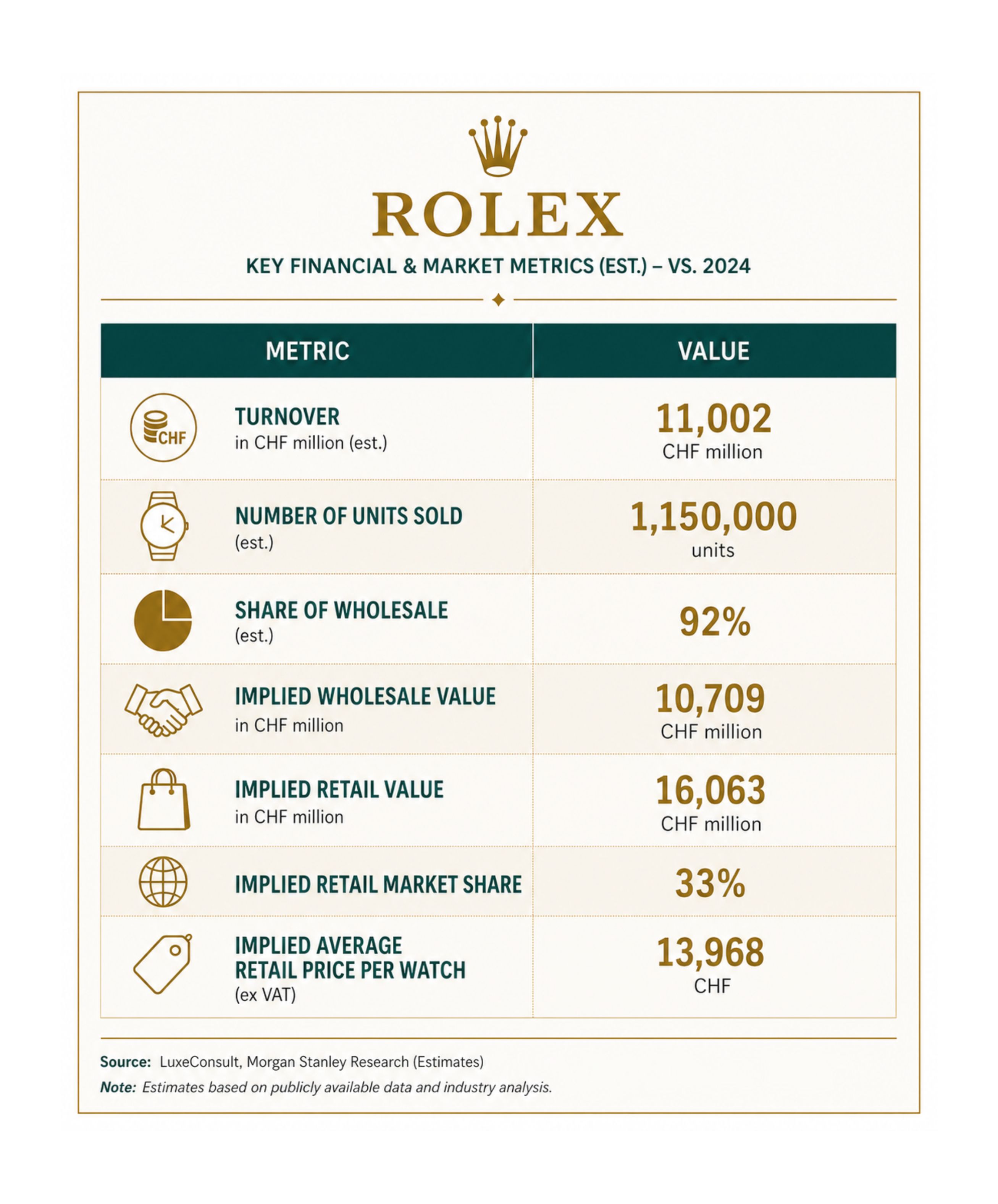
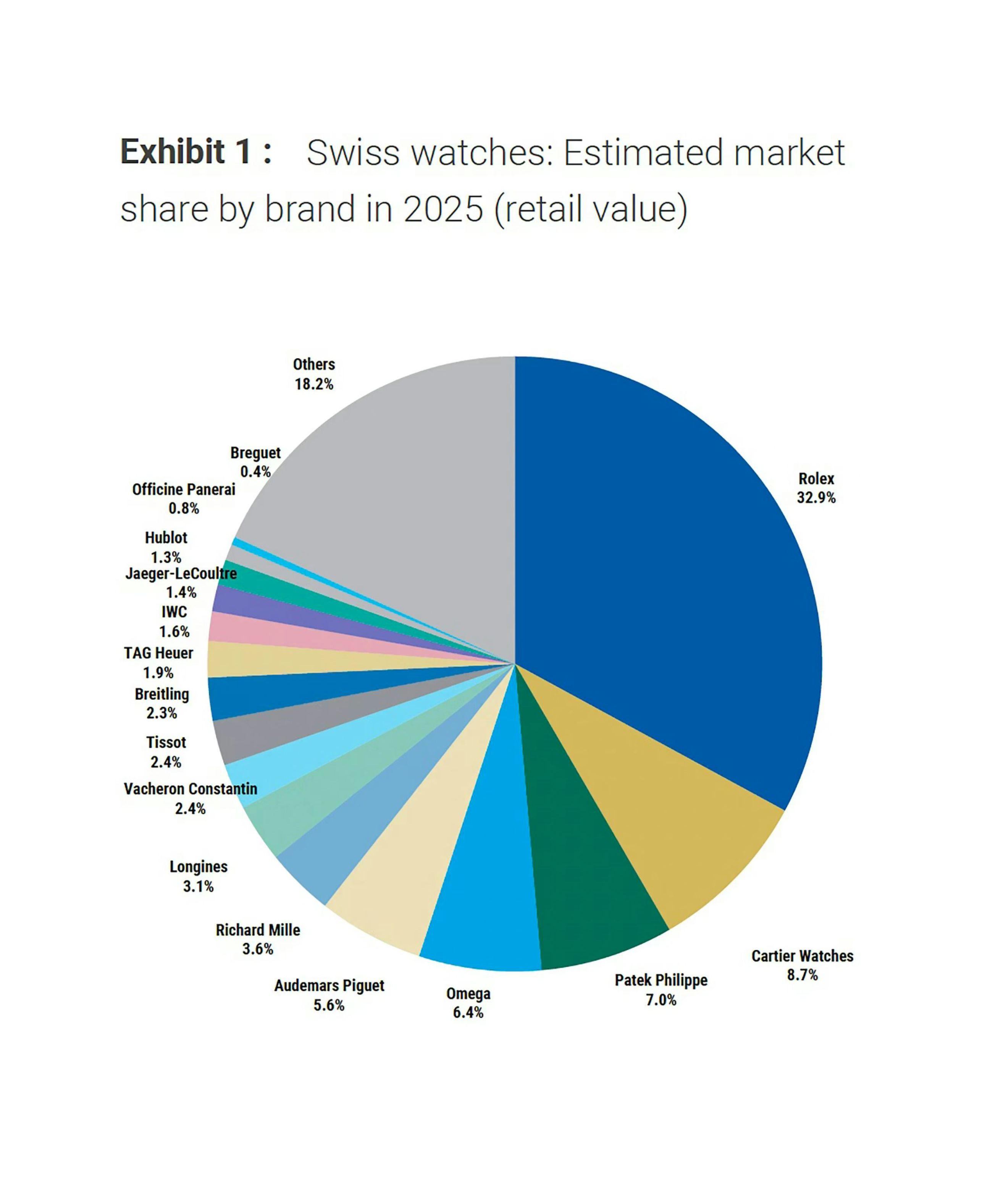
Rolex’s implied retail market share of 33% of the entire Swiss watch industry exceeds that of Cartier Watches, Audemars Piguet, Patek Philippe, Omega, and Richard Mille combined. The dominance is even more extreme in the pre-owned segment, where, as per Chrono24 analysis, Rolex commands roughly 34.2% of total transaction volume, generating about $5.6 billion in annual pre-owned sales in 2025.
Impressively, in absolute terms, Rolex holds the #1 as well as #2 spot in the luxury watch market in terms of annual turnover, with Cartier Watches trailing in third at $4.2 billion.
These numbers alone are staggering. If we compare the same to something more familiar for most - smartphones, according to IDC’s Quarterly Mobile Phone Tracker, Samsung (19%) and Apple (18.2%) marked a combined market share of 37.2% which shows how impressive Rolex’s performance is, that too in a luxury industry.
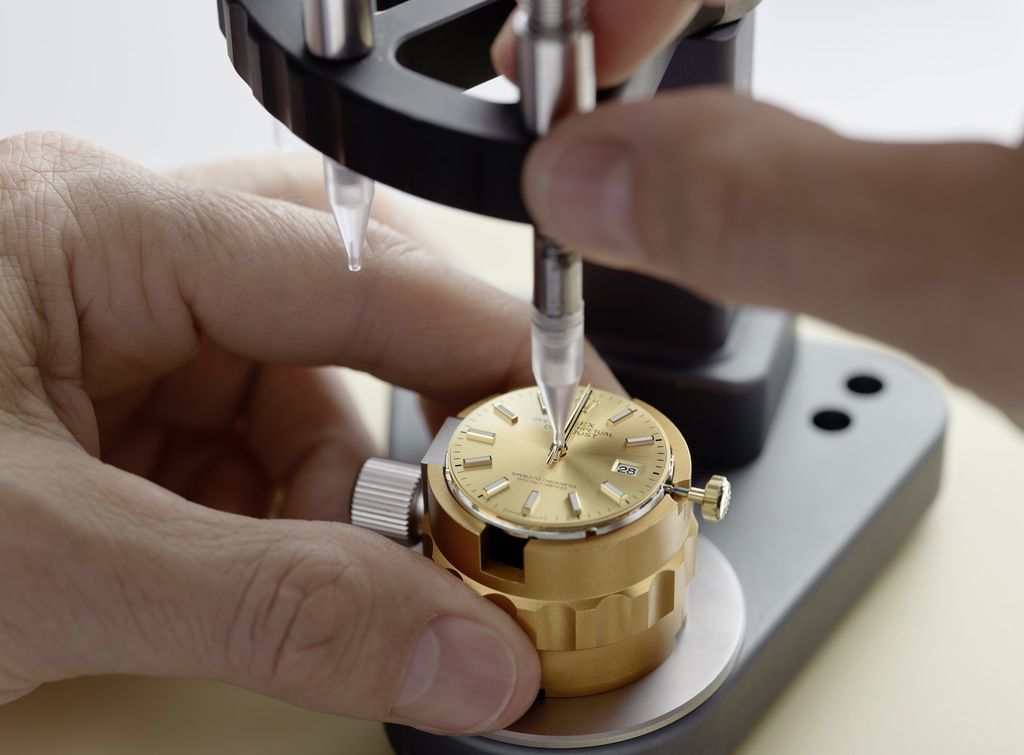
In more ways than one, Rolex’s contribution to watchmaking is beyond measure. If we perceive the brand, not necessarily from a personal or emotional POV, but via a lens of human behavior and brand psychology, we can justify the reasons as to why Rolex has the market share and success it does and why it continues to appeal and be the world’s most important watch maker.
We’ll start with the most important element: the people.
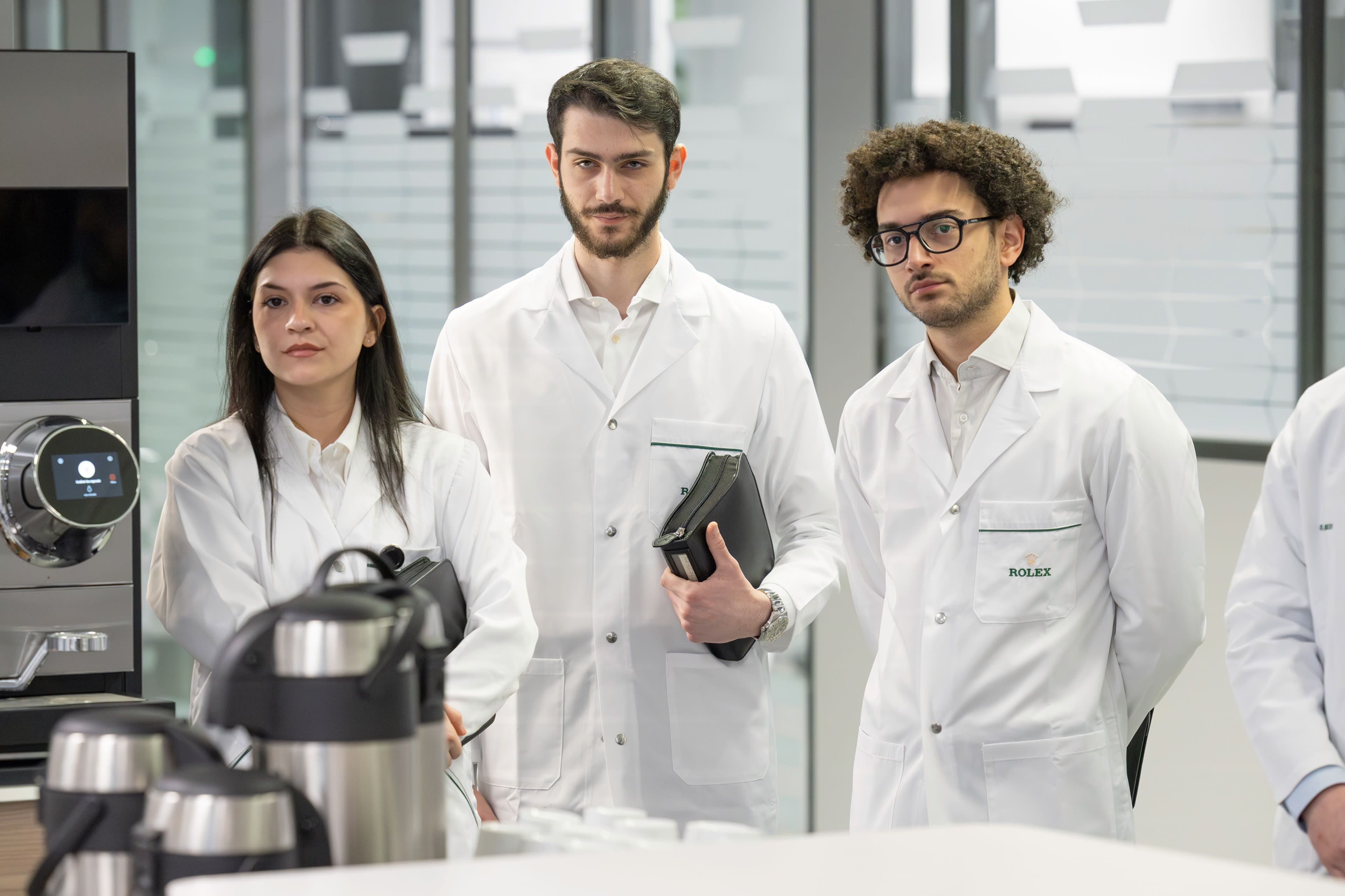
The talent making Rolex
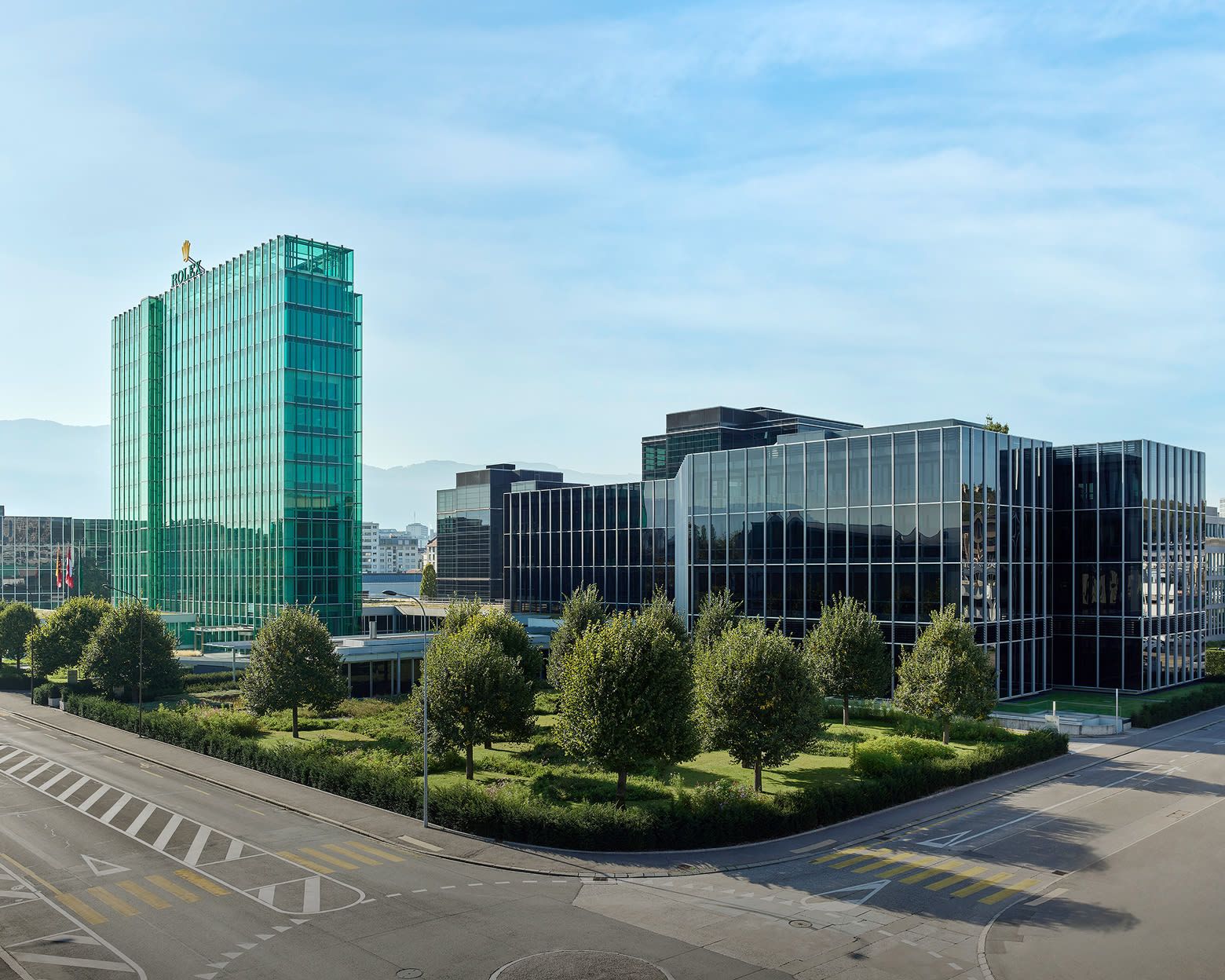
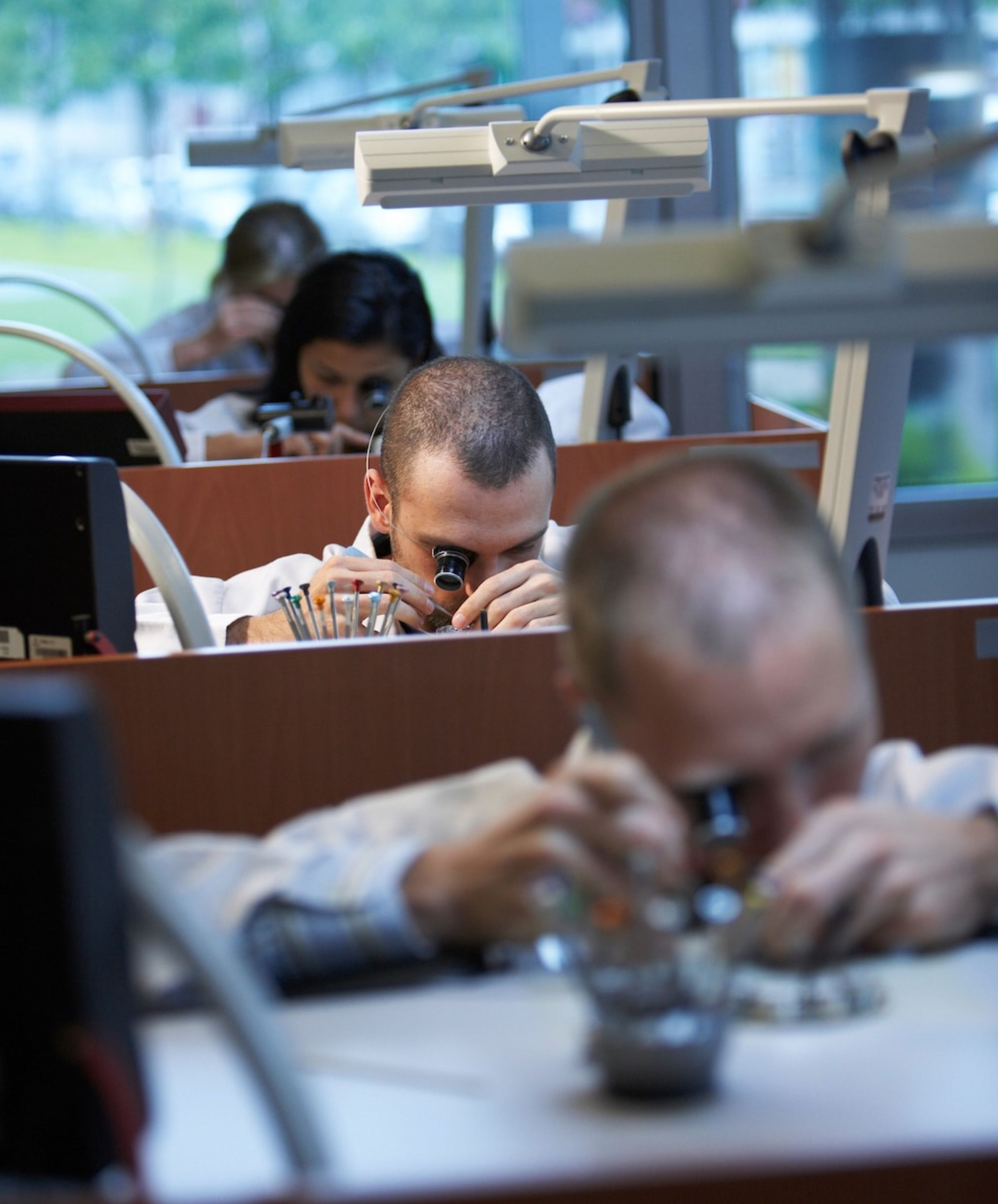
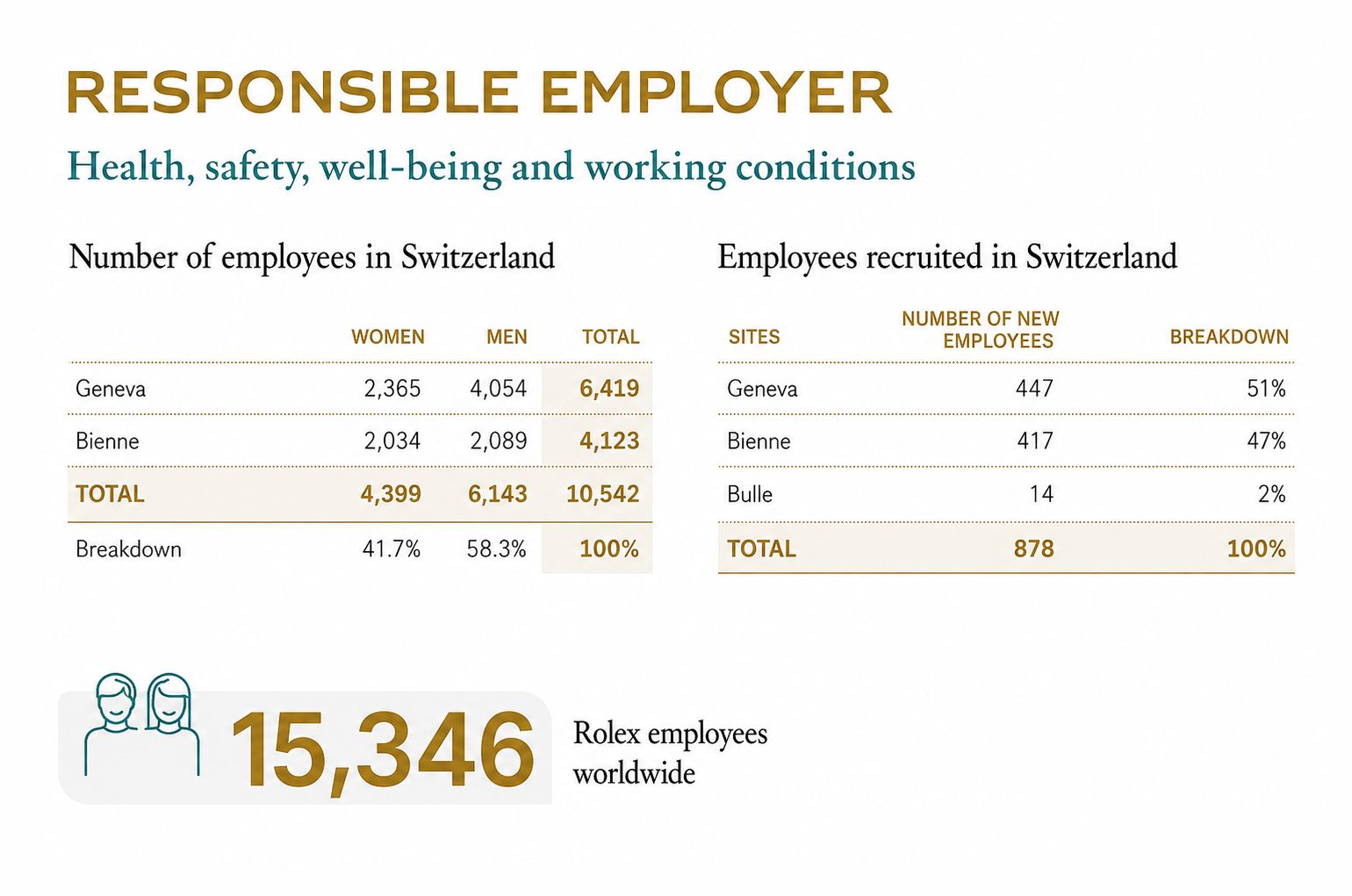
In terms of industrial quality, Rolex is at the absolute top of its category. It’s not only the infrastructure, but also Switzerland's largest concentration of watchmaking talent enabling it. The brand employs 15,346 people worldwide of which 10,542 alone are in Switzerland, distributed across its four facilities in Geneva, Bienne, Plan-les-Ouates, and Chêne-Bourg. Rolex has built one of the industry’s largest and most diverse in-house manufacturing workforces.
In its objective of stronger vertical integration, Rolex doesn’t rely on outsourced talent. With the scale of its in-house workforce, defined by a large number of specialized employees across metallurgy, machining, component production, assembly, testing, restoration, as well as servicing departments, Rolex earns a leverage to manufacture high-quality watches at scale.
It’s rare that Rolex has successfully implemented a strategy based on building a workforce that preserves very specialized skills while combining large-scale production with craftsmanship. Remember, they have done it in Switzerland - one of the world’s most expensive countries for labor.
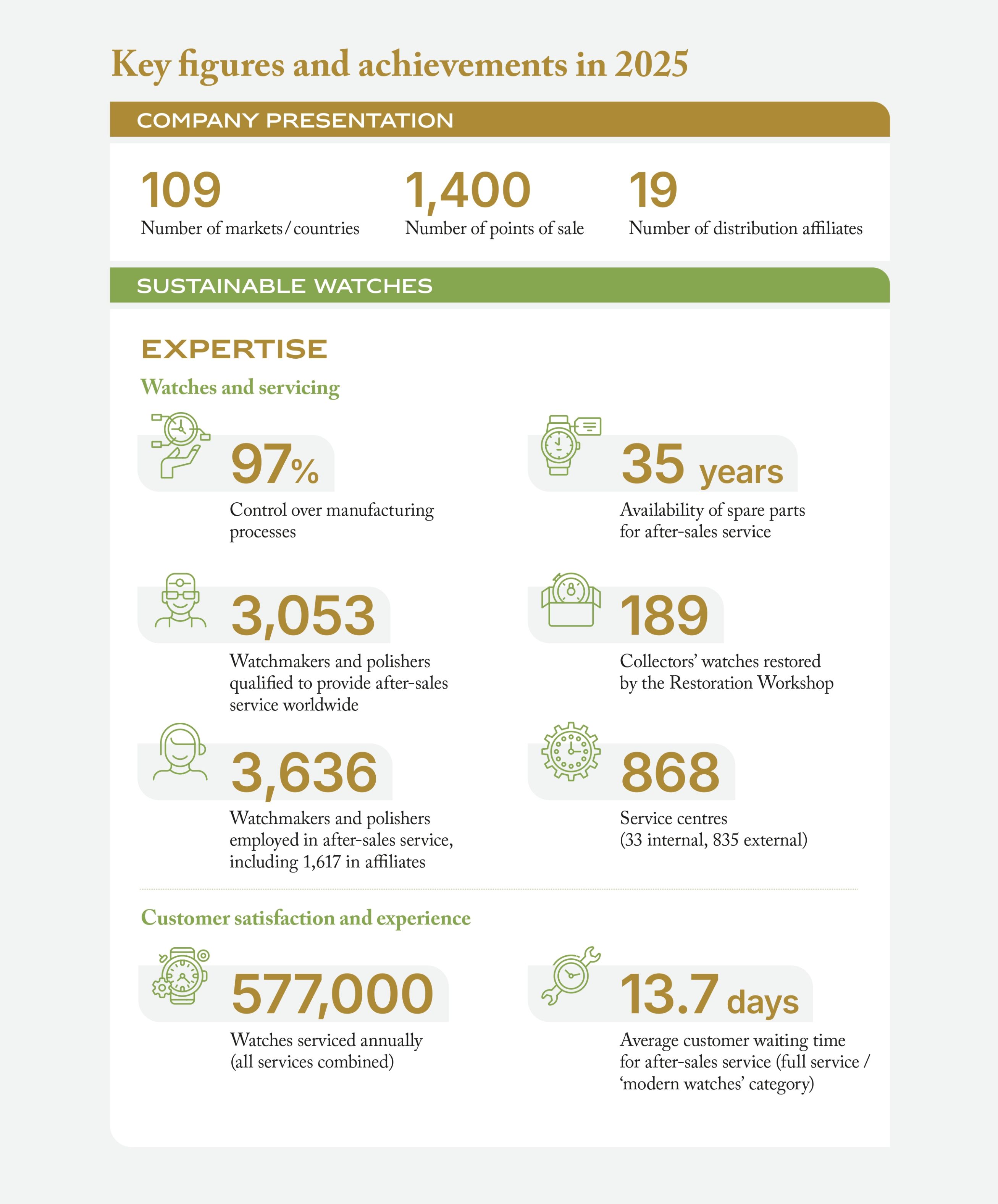
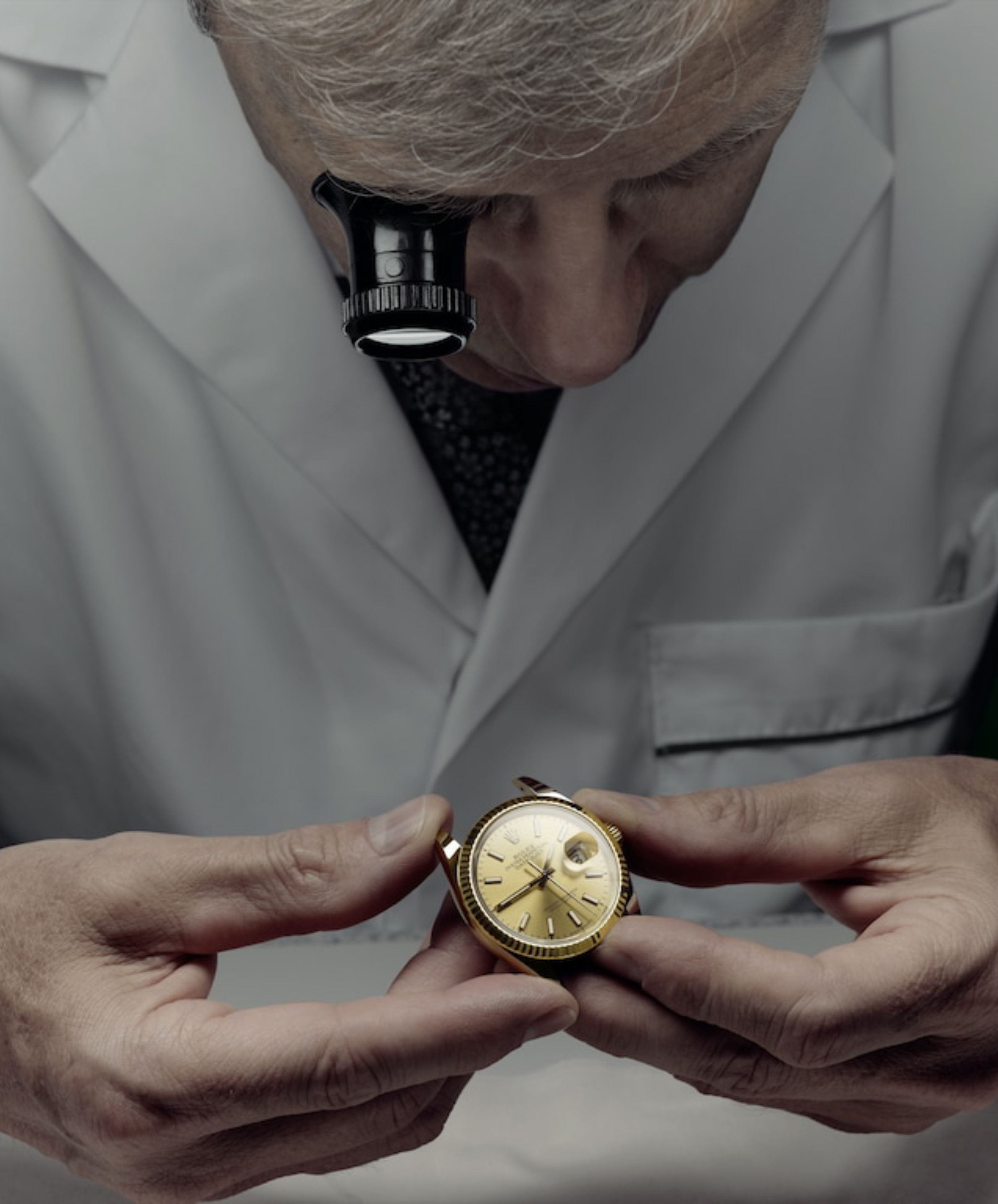
Beyond manufacturing, at Rolex, 3,636 professionals are associated with its global after-sales operation. Of those, 3,053 are watchmakers and polishers qualified to provide after-sales service at its 868 service centers worldwide. In 2025, they serviced 577,000 watches with an average turnaround time of 13.7 days for modern full-service repairs.
Workforce diversity for Rolex is another impressive factor for a company with nearly all of its history as well as its vertically integrated manufacturing concentrated in Switzerland. Its Swiss workforce alone represents 99 nationalities with 4,399, i.e. 41.7% of its employees being women. This is significantly higher than the 30% female workforce average in U.S. manufacturing. Impressively, 20.5% of all Rolex management positions are held by women who also make up 27% of the brand’s total 395 apprentices. At 6,143, its male workforce in Switzerland is 58.3%.
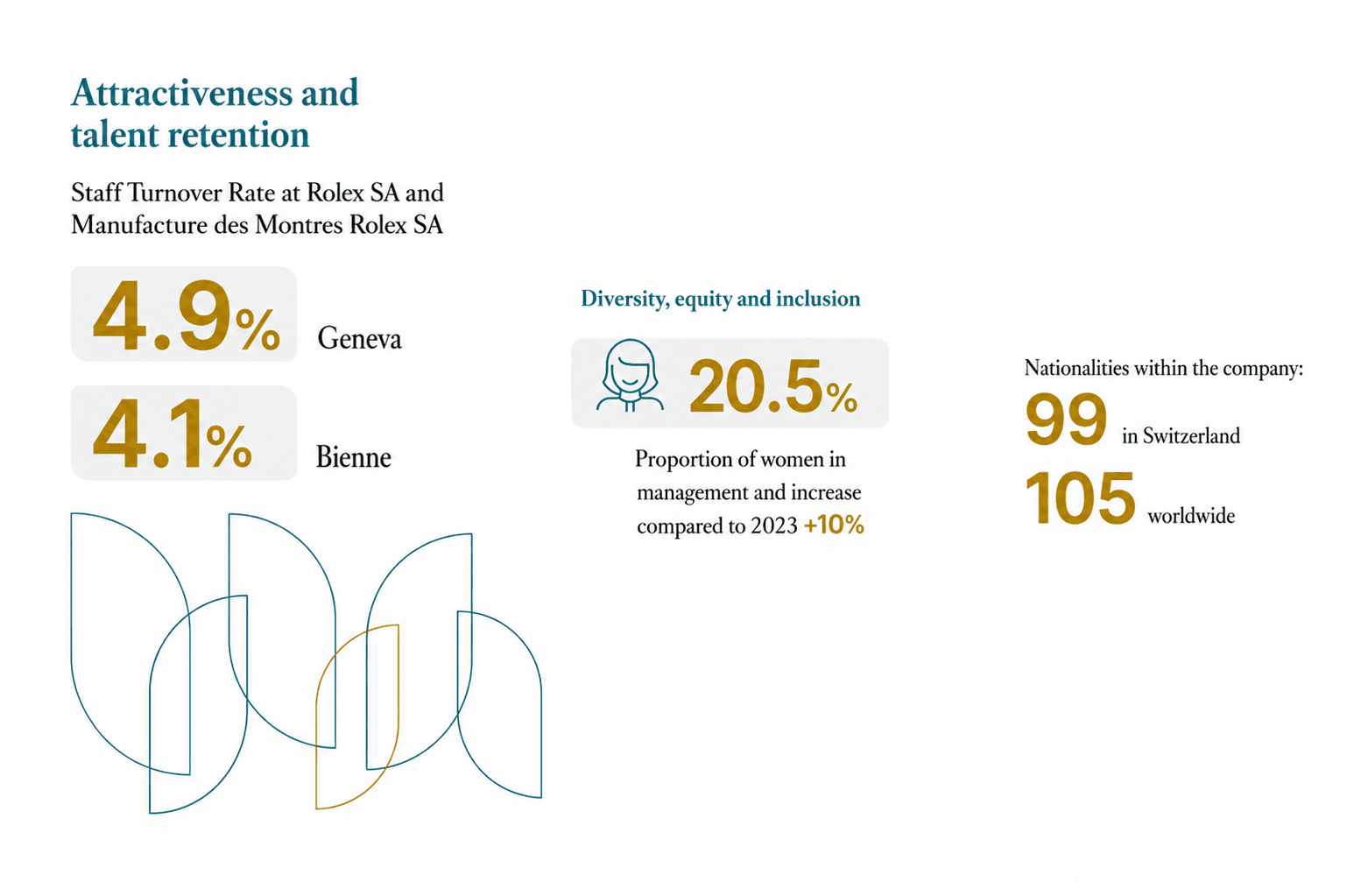
Also impressive for Rolex is its very low staff turnover considering that it employs more than 10,000 people in Switzerland. At 4.9% in Geneva and 4.1% in Bienne, Rolex is able to retain 95% of its employees each year.
A culture of training
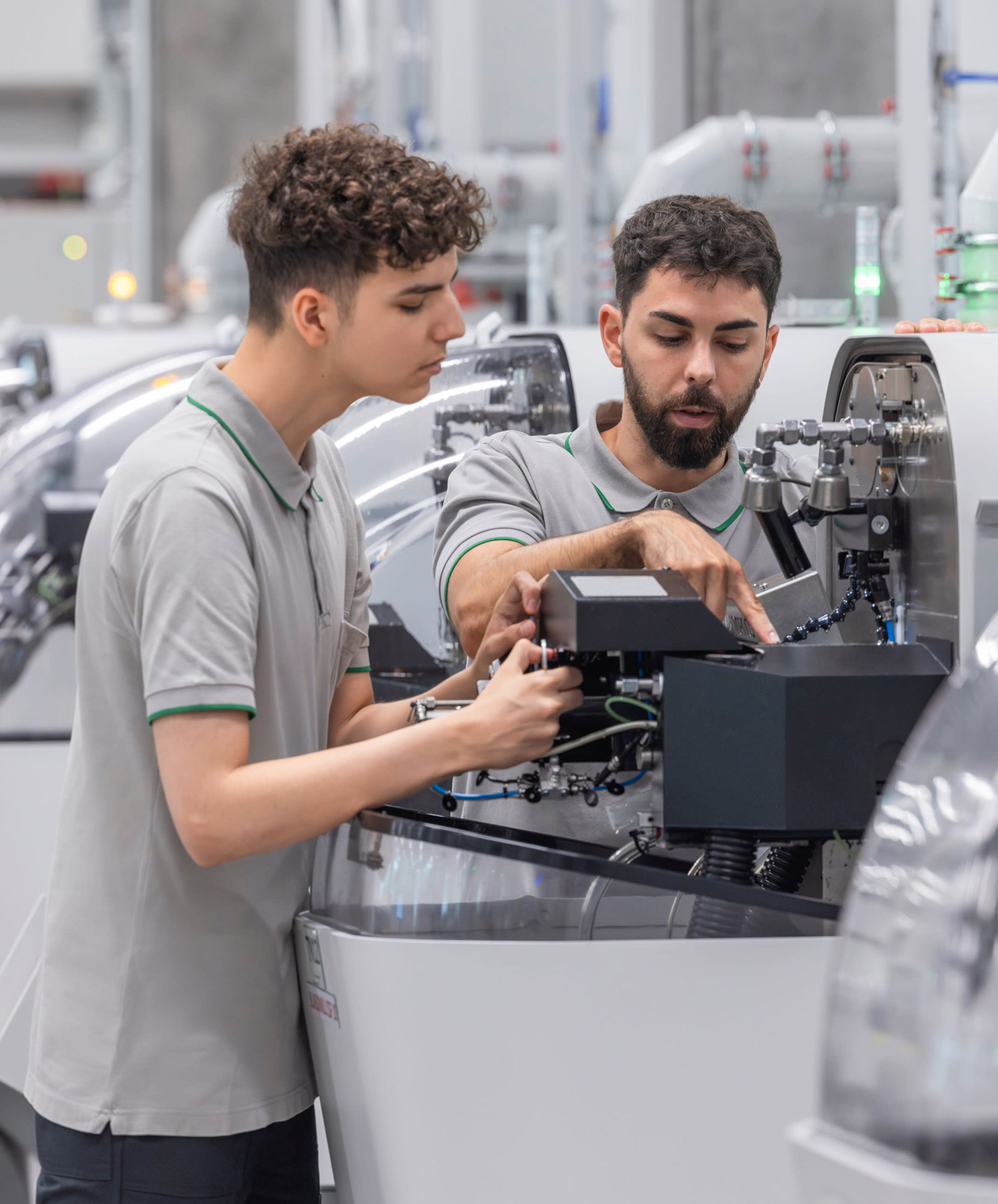
Employee training is also central to Rolex with almost its entire workforce receiving formal training each year via its comprehensive training programmes, both in Switzerland and abroad. In 1984, Rolex became the first employer in Geneva to provide in-house training for apprentices in the watchmaking industry.
Since 2018, the Rolex Training Centre (with nearly 12,000 square metres of space devoted to training facilities in Geneva, Bienne and Fribourg) has been responsible for all initiatives relating to staff training in Switzerland. This comprehensive, bespoke resource was designed to develop and enhance workforce skills at every level, from trainees to senior managers.
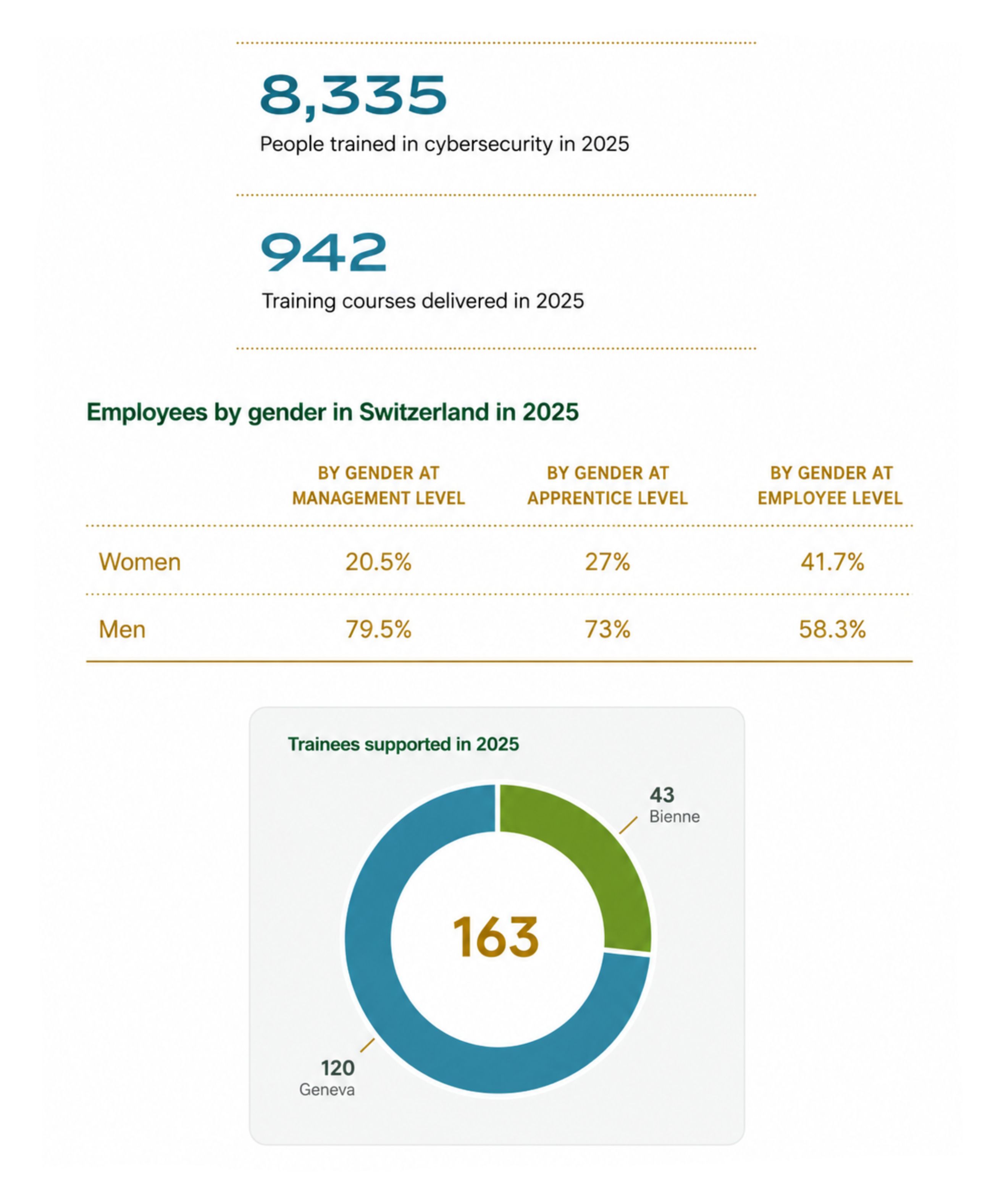
Launched in 2021, Rolex’s Perpetual Learning (PERLE) tool also enables its employees to benefit from blended learning programmes that combine face-to-face and digital learning. According to Rolex, every year, 942 different training courses are provided to the company’s 10,000+ employees.
Also, in 2022, Rolex launched an ambitious programme - “Project 500,” aimed, in particular, at doubling the number of apprentices within its group. Today, it offers a total of 26 courses.
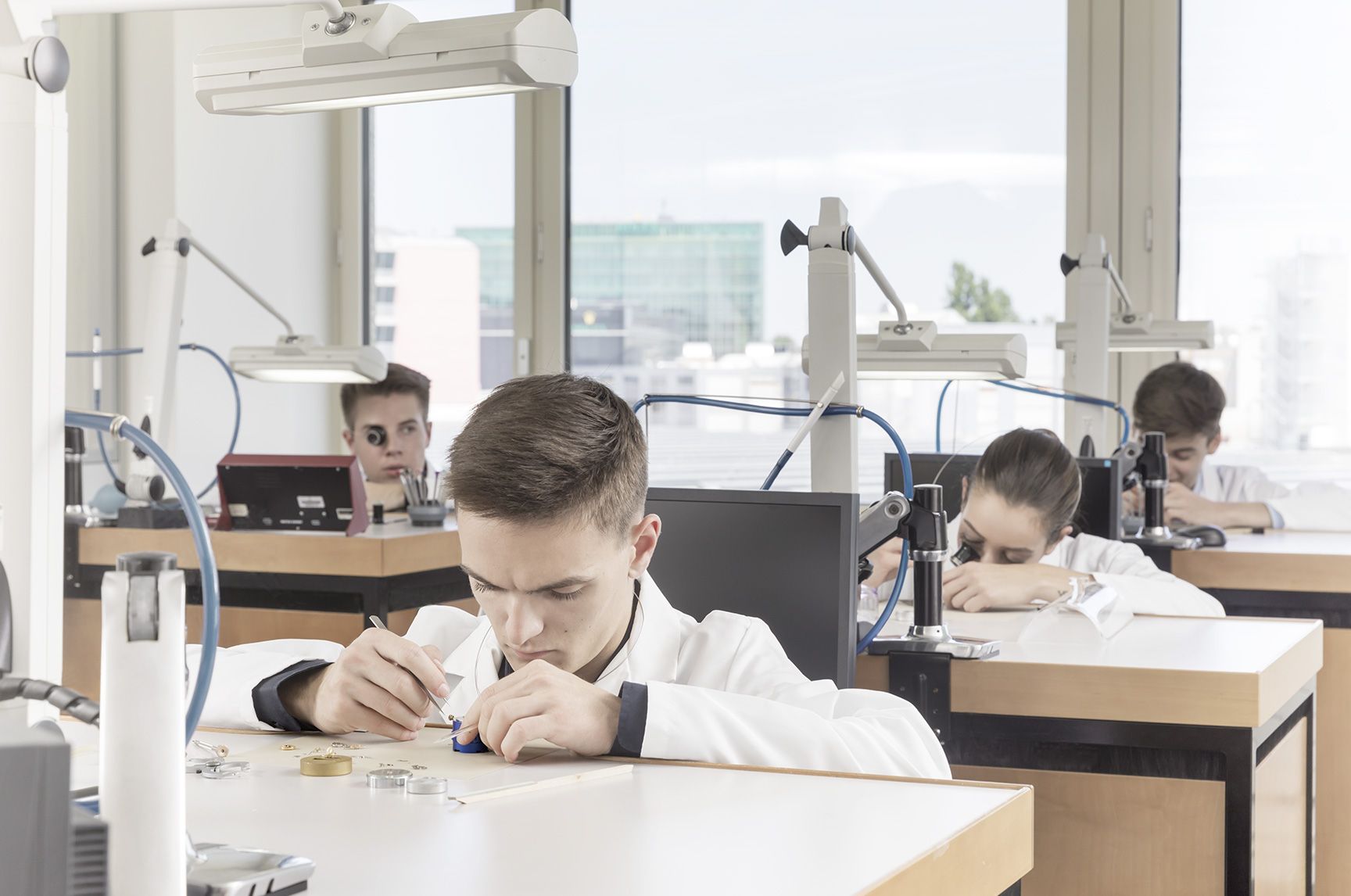
Launched in 2016, Rolex’s international After-Sales Service Watchmaker (ASSW) programme aims to offer training in after-sales services. This programme, which lasts one and a half years, covers all aspects of after-sales services. It functions as a training centre in Mumbai, India as well. In 2023, Rolex opened a training facility in Dallas, Texas, providing its 18-month training programme. In 2024, Rolex received 560 applications for 27 spots at this school, meaning that it matches in acceptance rate with Harvard. This makes it one of the hardest schools in the world to get into.
Caring for the talent
The scale of Rolex’s in-house workforce is impressive. But also impressive is the company’s catering for the same. Rolex is continually invested in offering optimal workplace conditions to its employees and in this objective, has deployed approximately 1,500 ergonomic sit-stand workstations across its manufacturing sites. Of these, 700 are set up in Bienne, 600 in Les Acacias, 110 in Chêne-Bourg, and 90 in Plan-les-Ouates. These specialized workstations allow electronic height adjustment and customizable settings aimed at reducing physical strain and fatigue during work.

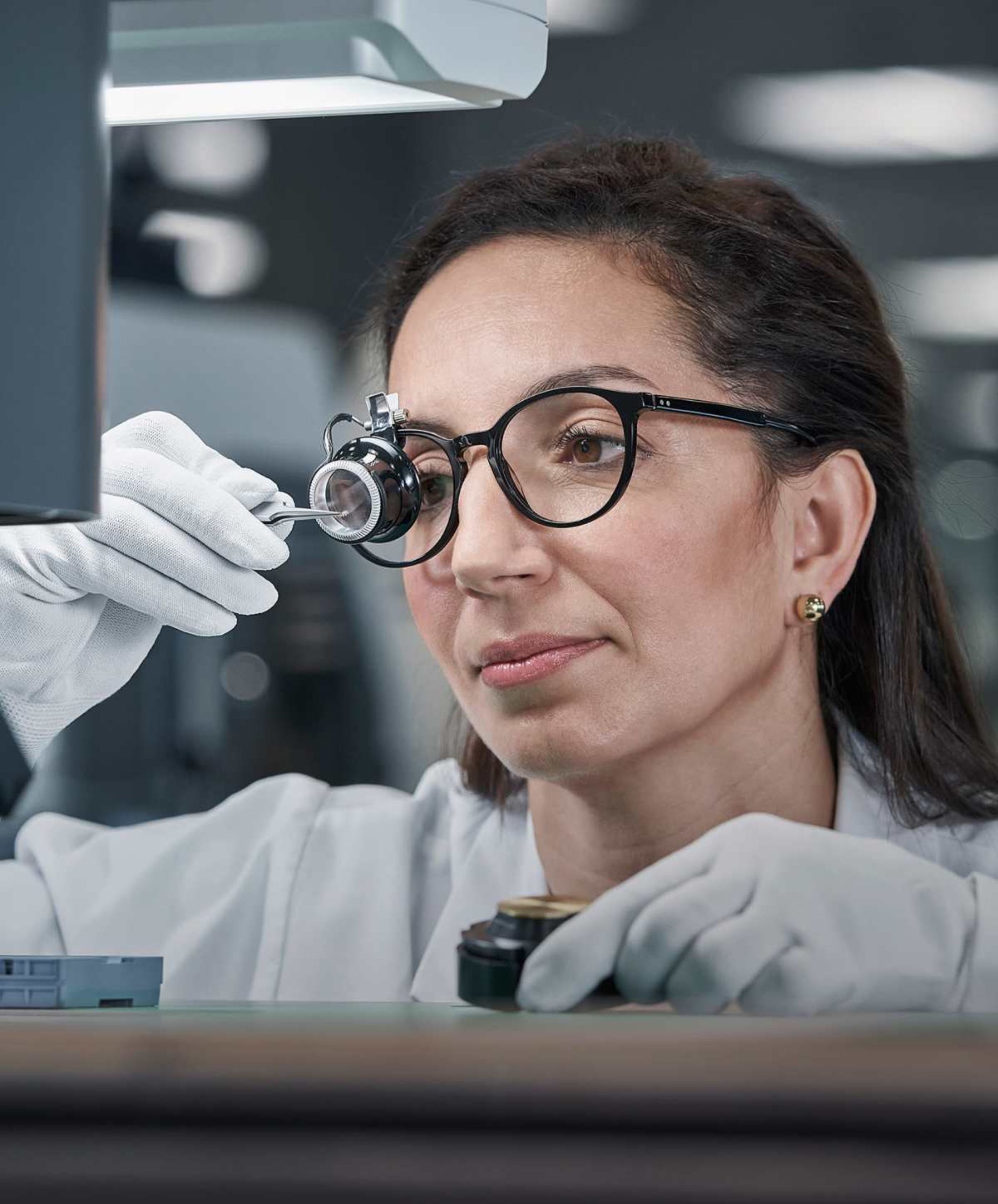
According to Rolex, in 2025, workplace accident frequency at the company declined to 2.9 incidents per 1,000,000 hours worked (compared to 3.2 per million hours worked in 2023). Rolex records both accidents and near misses through a centralized software while maintaining its in-house first-aid teams. The company has also set up prevention programs that cover subjects ranging from influenza to cardiovascular disease and cancer screening. Furthermore, to promote well-being at work, Rolex implements a whole range of measures such as flexible working hours, a mobility plan, sports incentives, organized ski days and a scheme that rewards staff for the distance they cycle.
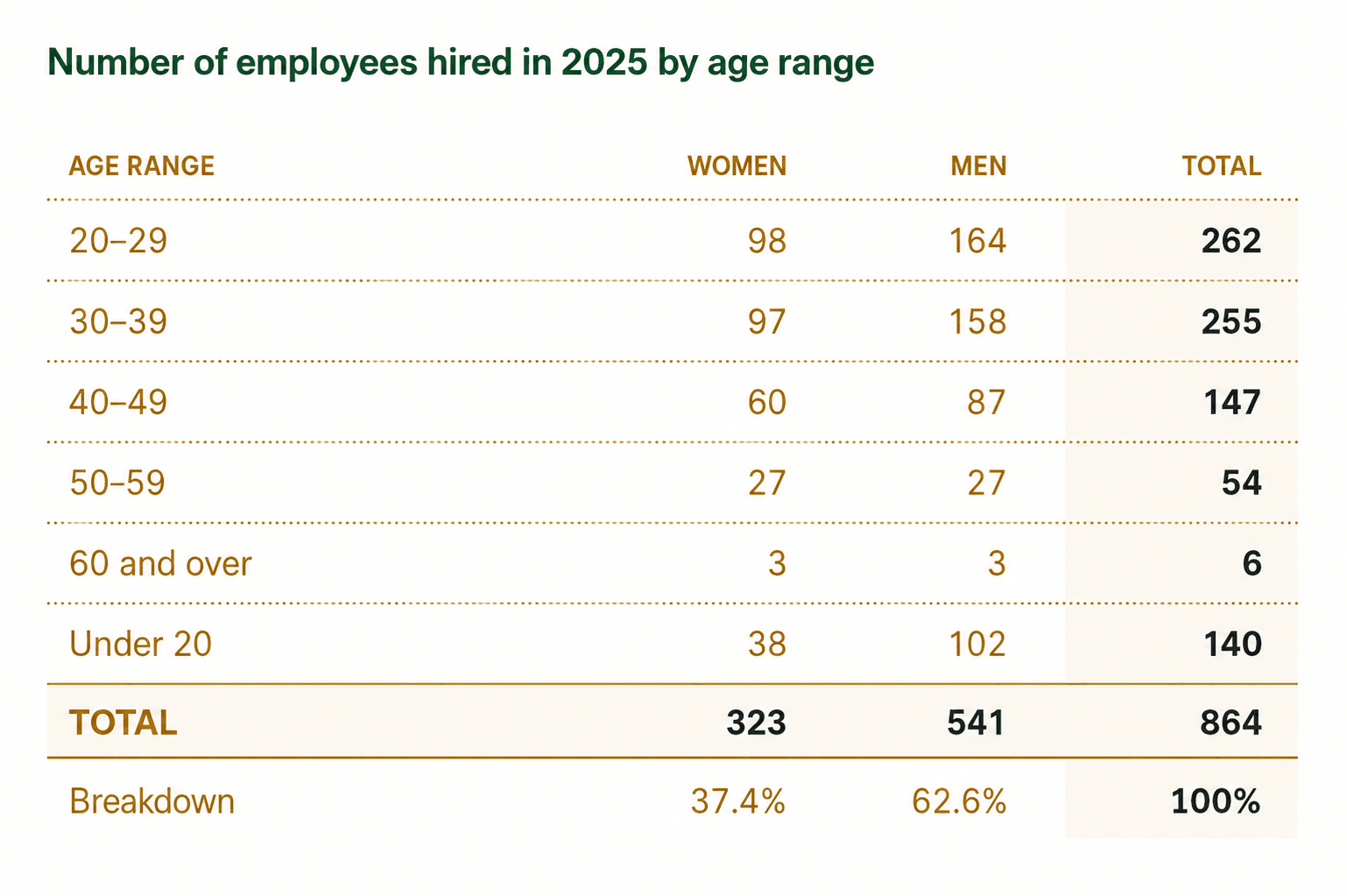
Yes. Rolex offers an incentive of CHF 0.30 per kilometre for bike commutes. In 2025, 1,795 employees from Geneva and Bienne made at least one journey to or from work by bike, and together they cycled a total of 1,920,000 kilometres! That's a measurable sustainability initiative.
One of many reasons (others to follow in future installments of this series) why no brand in watchmaking has been as influential and impactful as Rolex.


