

 3 min read


As one of the esteemed Holy Trinity alongside Patek Philippe and Audemars Piguet, Vacheron Constantin holds the deepest historical claim. Founded in Geneva in 1755 by Jean-Marc Vacheron, the Maison has never ceased production. The 1819 partnership between his grandson Jacques-Barthélemy and merchant François Constantin birthed the guiding ethos: faire mieux si possible, ce qui est toujours possible. By 1880, the Maison registered the Maltese cross emblem, derived directly from the ratchet wheel governing the mainspring, symbolizing an enduring instinct to let mechanics and ornament emerge from the same source.

The Setter’s Grammar and a Two-Centuries Romance
Mastering high jewellery requires an advanced vocabulary: the dense stone-packing of pavé, the continuous current of a rivière, and the exacting invisible setting (sertissage invisible) where no prongs break the surface. Cut dictates structure, from the sharp architectural lines of emerald cuts to the commanding volume of sugarloaf cabochons. Long before the wristwatch became universal, Vacheron Constantin created timepieces for women, supported by gem-set pieces dating to 1812 and an 1815 pocket watch studded with garnets that later inspired the Égérie collection. Women's watches were never treated as smaller versions of men's pieces; they served as canvases for the Maison’s most ambitious work.

From Kallista to Grand Lady Kalla
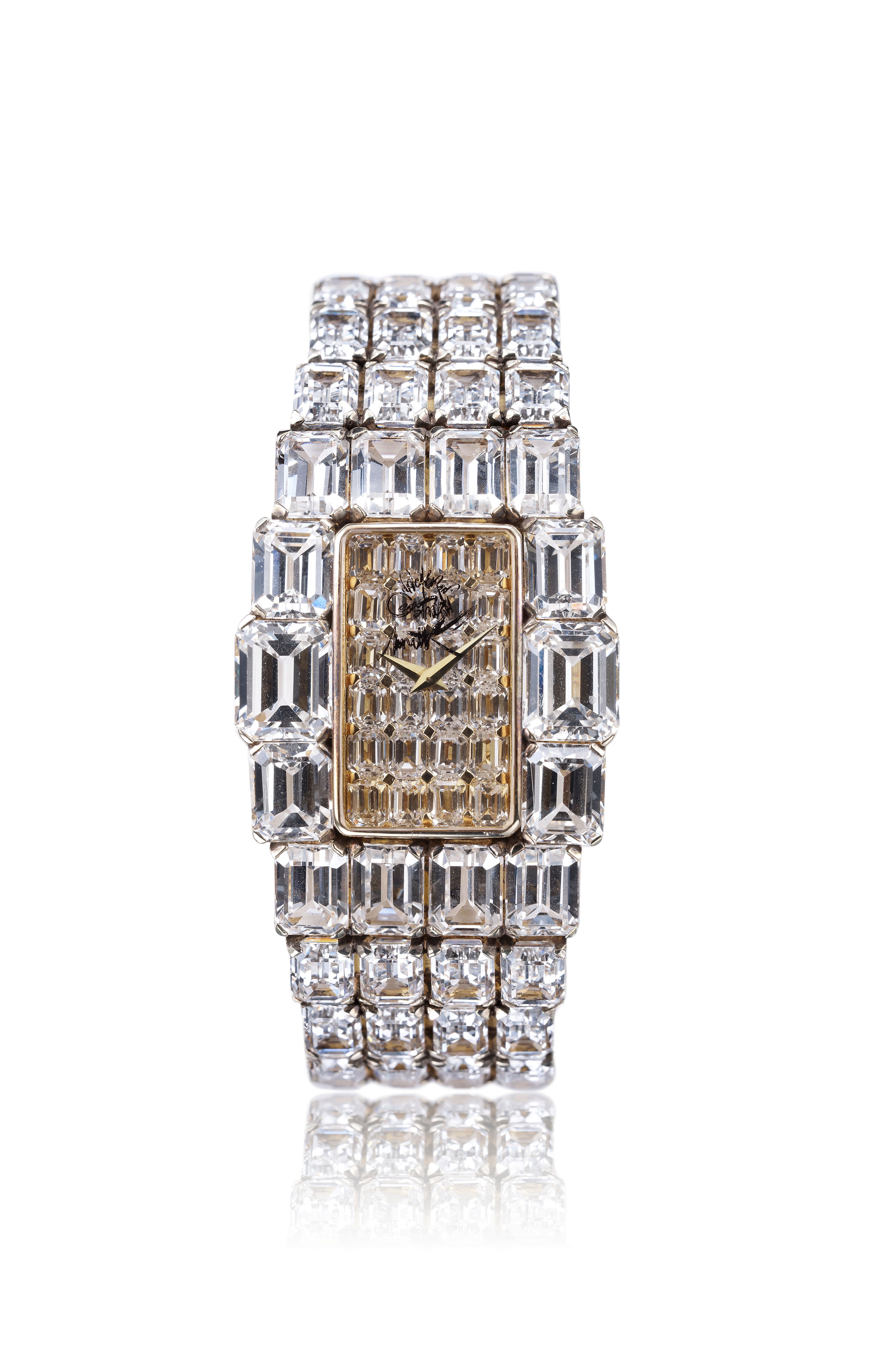
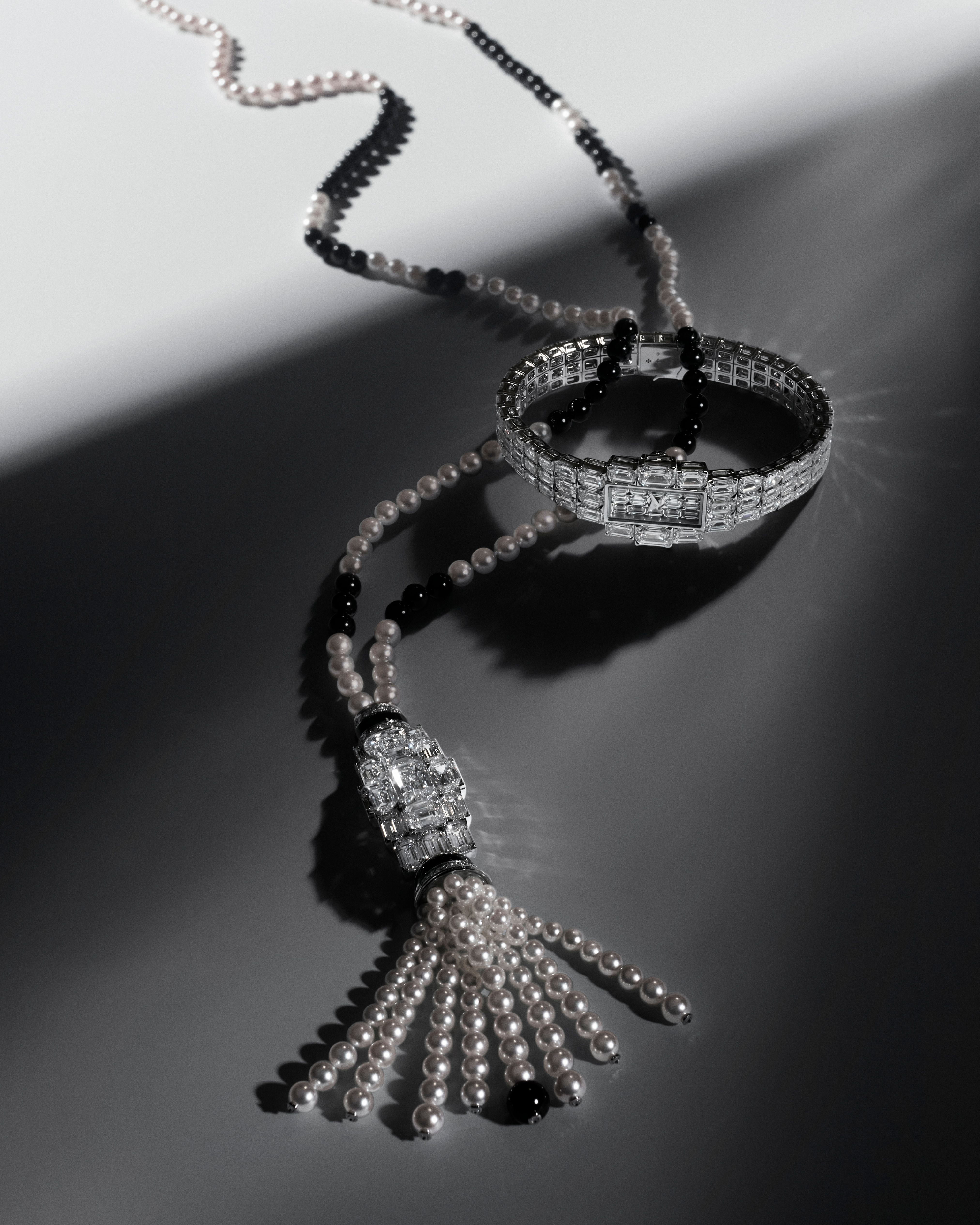
This ambition peaked in 1979 with the Kallista which is carved from a solid 18K gold ingot and set with 130 carats of diamonds. Its successor, the Kalla (1980), launched an iconic lineage including the white gold Lady Kalla, winner of the very first GHRG Jewellery Watch prize in 2001, and the Lady Kalla Flame (2010) featuring a registered 57-facet diamond cut. In 2024, the Grand Lady Kalla reimagined this legacy as a transformable jewel. Featuring a discrete fastening system, the watch shifts between a diamond-set bracelet and the pendant of an Akoya pearl and onyx sautoir necklace. For the Maison's 270th anniversary in 2025, the Grand Lady Kalla expanded into colour, introducing white diamonds paired with emeralds in platinum, alongside ruby and sapphire editions in 18K white gold. Hidden Maltese-cross shapes emerge wherever four colored stones meet on these masterpieces.
Mechanical Mastery: Traditionnelle and Égérie
Proving that serious complications match serious jewels, the Traditionnelle tourbillon High Jewellery houses the ultra-thin Calibre 2160 behind over 300 baguette-cut diamonds secured via invisible setting across every visible surface. Conversely, the Égérie collection, developed with designer Yiqing Yin, strikes a quieter, couture-inspired note. The Égérie moon phase jewellery deploys 1,377 diamonds across case, dial, and bracelet, playing warm pink gold against cool diamond brilliance while housing the in-house Calibre 1088 L.

From the transformative architecture of the Grand Lady Kalla to the mechanical bravado of the Traditionnelle tourbillon and the tailored restraint of the Égérie moon phase, Vacheron Constantin proves that stone-setting is never an afterthought. Across two centuries, the Maison ensures its creations are not merely dressed up, but precious by design.
The Hour Markers recently came across an opportunity for an exclusive tour of the Vacheron Plan-les-Ouates Manufacture on the edge of Geneva, in Geneva.
Vacheron Constantin recently launched the Overseas Perpetual Calendar Ultra-Thin.
Founded in Geneva in 1755 by Jean-Marc Vacheron, it is the oldest watchmaker in the "Holy Trinity" alongside Patek Philippe and Audemars Piguet and has maintained continuous production ever since.
Women's watches were never treated as scaled-down men's pieces. Instead, they served as canvases for the Maison's most ambitious work, dating back to a garnet-studded 1815 pocket watch that inspired the Égérie collection.
The Kallista was a landmark creation carved from a solid 18K gold ingot and set with 130 carats of diamonds, which later spawned the iconic Kalla lineage.


