The story of Credor began in 1974 when it was introduced not as a standalone brand, but as an ultra-exclusive sub-collection within Seiko’s Japanese domestic catalogues. Derived from the French "Crête d'Or," meaning "pinnacle of gold," the mandate for these timepieces was explicit. They were to be crafted exclusively from precious metals and finished to a standard that sat even above the already ambitious Grand Seiko models of the era. The brand’s distinctive logo, introduced in 1980, features three stars above a stylised mountain, representing its founding tenets of original Japanese aesthetics, precise manufacturing, and the preservation of artisanal craft. Initially created to prove that Seiko's pioneering quartz technology could be seamlessly married with traditional high-end, jewellery-level execution, Credor spent decades as a well-kept secret, remaining available almost exclusively to Japanese collectors.
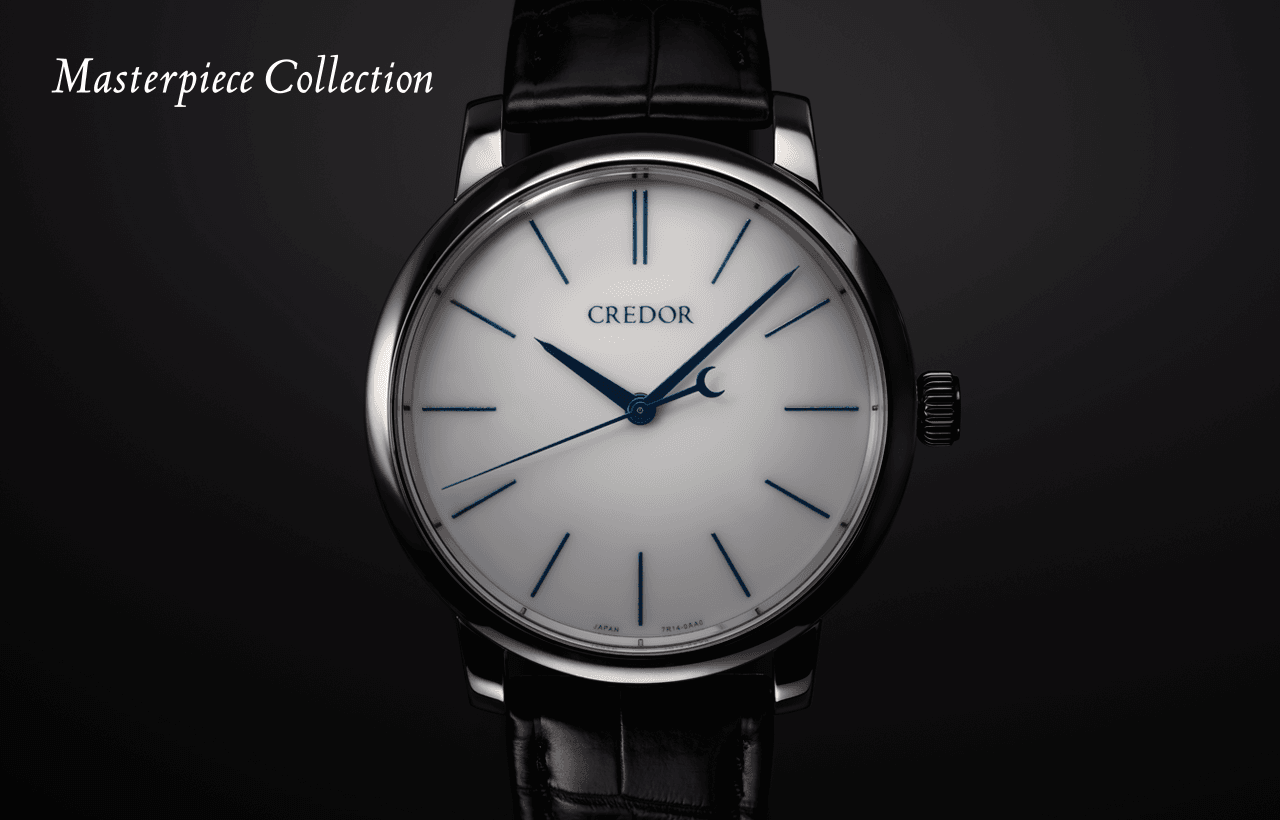
In the modern era, Credor has evolved into the ultimate expression of Japanese haute horlogerie, functioning as the stage where Seiko showcases its most extreme and artistic watchmaking capabilities. While Grand Seiko focuses on practical, everyday perfection, Credor operates free from those constraints, pursuing exotic complications, ultra-thin mechanical calibres, and breathtaking artisanal beauty. This philosophy is best exemplified by the masterpieces produced in Seiko’s elite Micro Artist Studio in Shiojiri, which has been responsible for groundbreaking creations like the Spring Drive Sonnerie, the Minute Repeater, and the legendary Eichi series. Characterised by its hand-painted pure white porcelain dials and flawless hand-finishing, the Eichi II has cemented Credor's global reputation as a peerless maker of minimalist, handcrafted masterpieces that rival the very finest of traditional Swiss watchmaking.