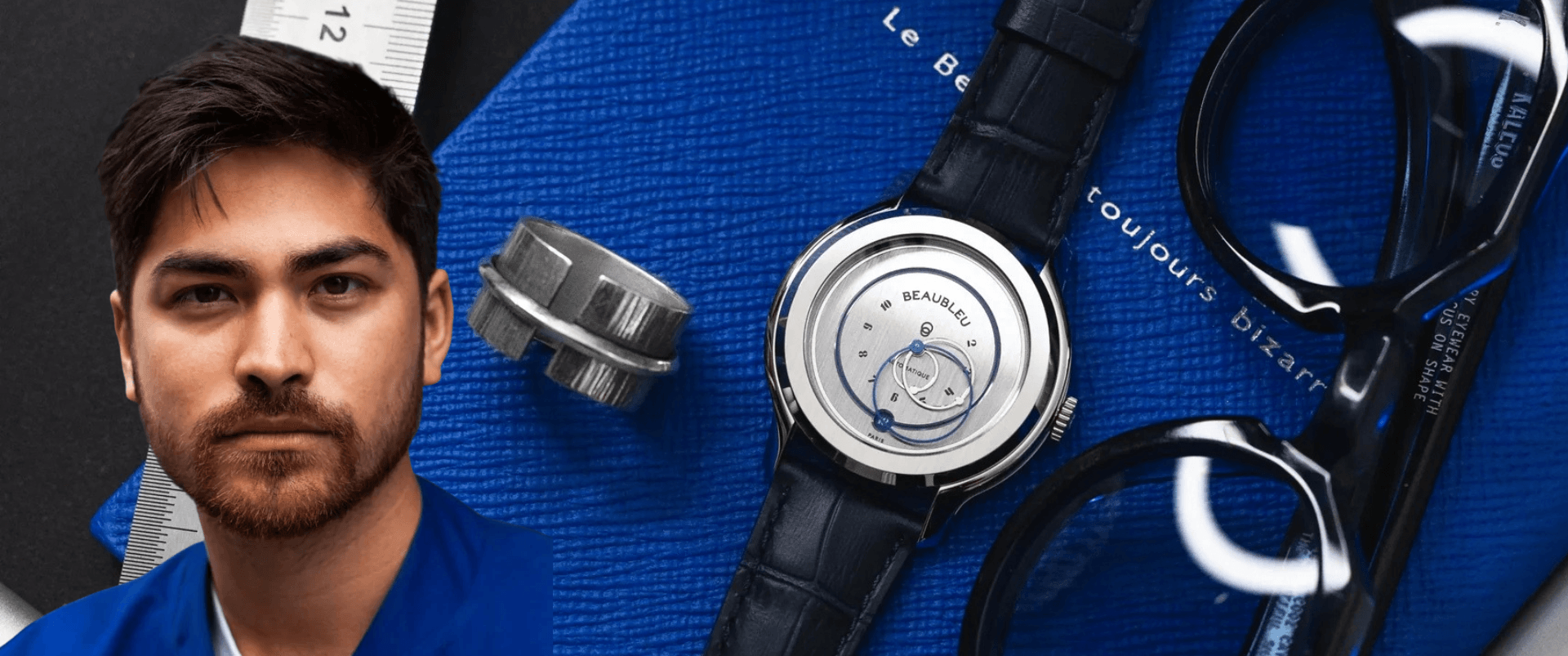
“India And Beaubleu Are In The Dating Stage,” Says Nicolas Ducoudert, Founder, Beaubleu
 10 min read


There is something rather wonderful about discovering that the founder of a Parisian watch brand has spent three months living in a tiny village in Karnataka, helping build the second floor of a school for Dalit children. For Nicolas Ducoudert, founder of Beaubleu, it was an experience that went far beyond travel. Accompanied by his best friend, he immersed himself in a part of India far removed from the familiar urban landscape, an adventure he describes as “very interesting and very mind opening”. It is perhaps this curiosity about people, cultures and different ways of looking at the world that makes his approach to watchmaking so refreshing.

But Ducoudert's journey to watchmaking is anything but conventional. Before becoming an entrepreneur, he was a professional fencer representing the French national team. He subsequently moved into design, specialising in luxury products and automotive design, before establishing his own design agency. While the project was significant, it was also a lengthy one, leaving him with something he had not anticipated: time on his hands. And rather than spend it doing more of the same, he decided to design a watch.
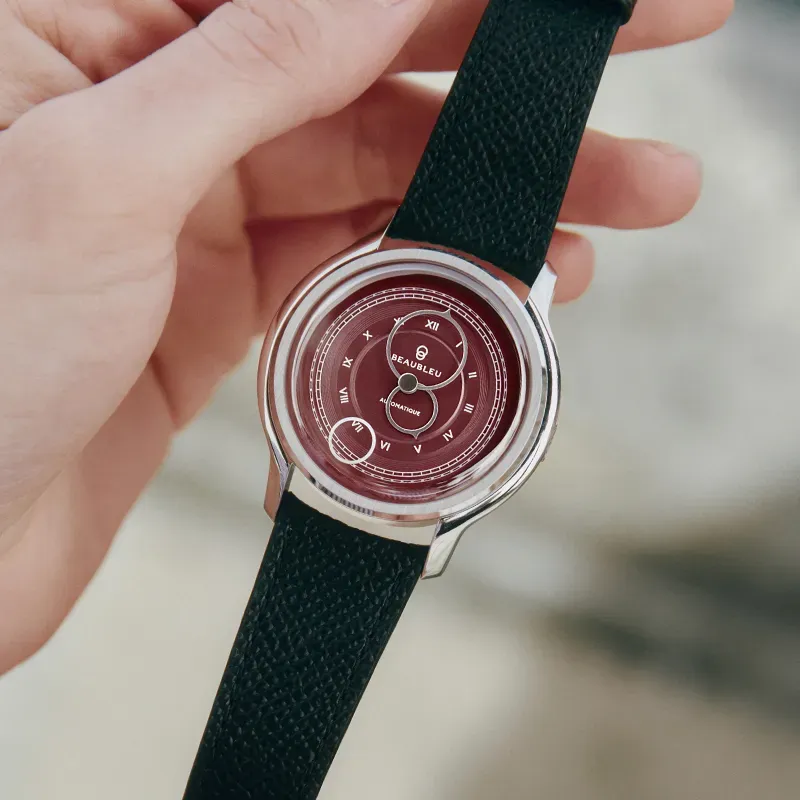
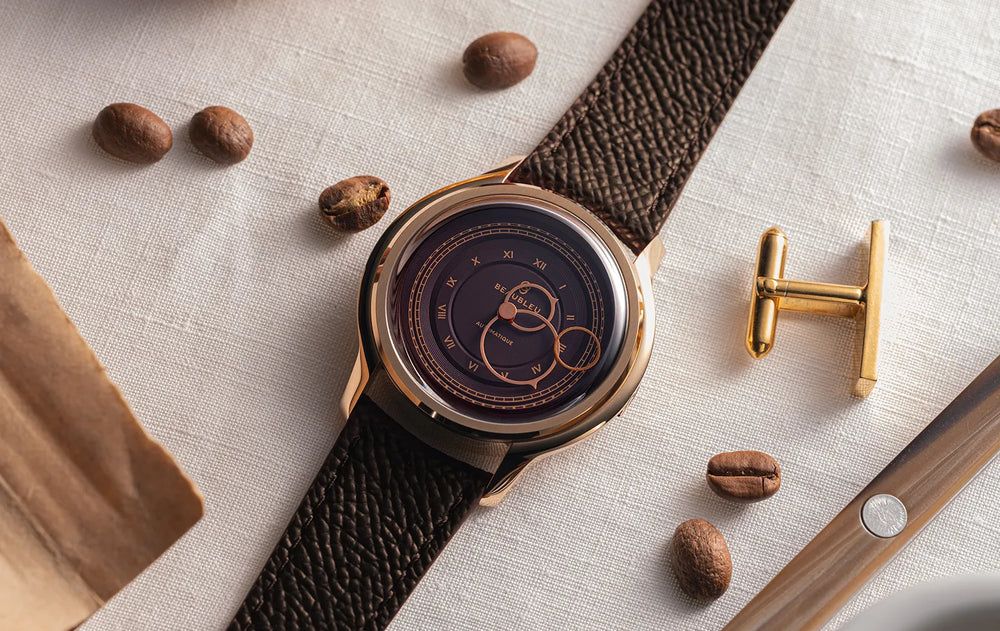
“I just wanted to design and create a sample for myself, just a watch for myself, without any ambition or idea of creating a brand or anything like that. I just wanted to give myself a very nice gift,” he recalls. That personal experiment would eventually become Beaubleu, a Paris-based independent watch brand that has built its identity around one rather unusual design signature: circular hands.
When time becomes a circle
The idea behind those distinctive hands can be traced back to Ducoudert's academic years. His thesis explored the philosophical concept of emptiness, and it was during this research that he became fascinated by the circle as a symbol of space. Across philosophy, mathematics and physics, he found that the circle was one of the most fundamental ways of representing space. It got him thinking about time. If time and space are so closely connected, why should time necessarily be represented by a straight line or an arrow? Why not a circle?
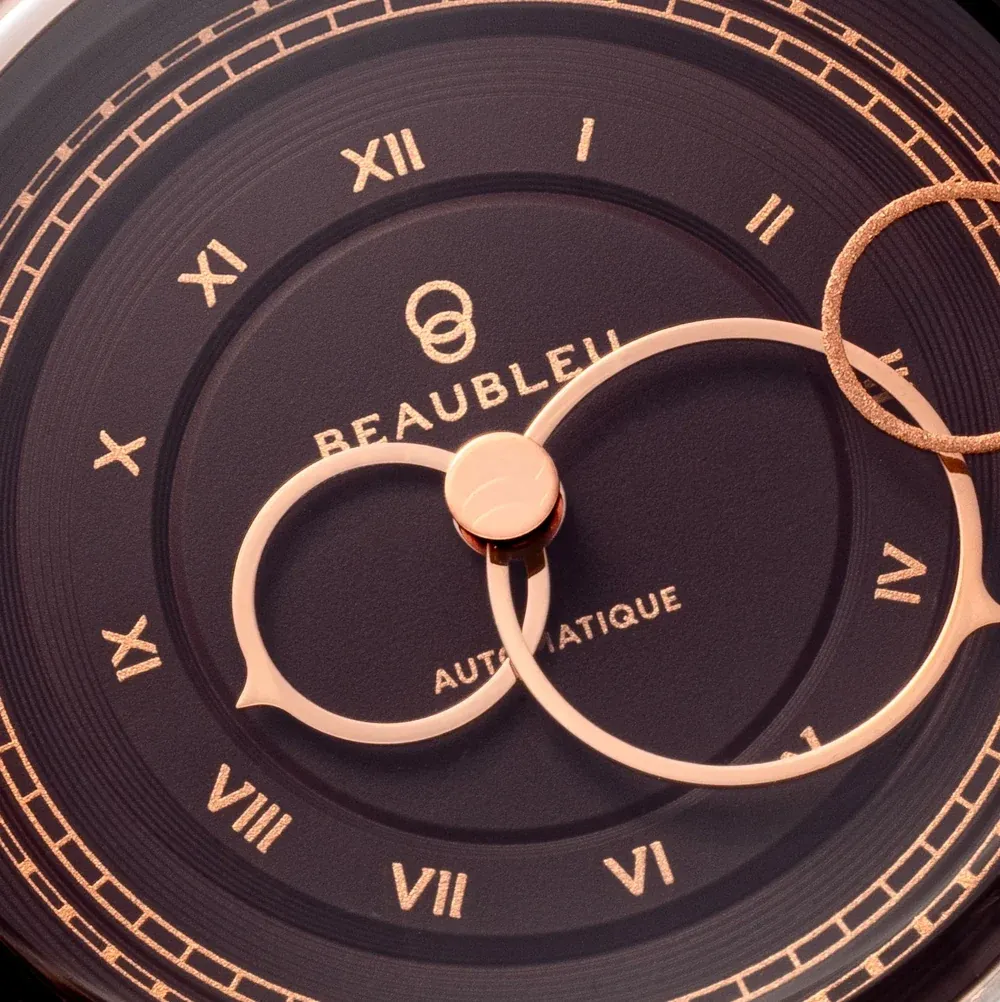
“And I was like, because time is very related to space, maybe the circle is the most obvious way to display time and not the arrow, not the straight line,” he explains. That thought became the foundation of Beaubleu's design language. The circular hands were never intended to be a decorative gimmick or a clever way to stand apart from other watchmakers. They were the very reason the brand came into existence. “I think without it, I would not launch Beaubleu. That's for sure,” he says.
Interestingly, Ducoudert did not set out to create watches exclusively for seasoned collectors. He wanted to make something that would appeal even to someone who knew very little about horology. “The idea was like, okay, you don't know about watches. You're not interested about watches. But when you're going to see that one, if we got lucky, you're going to like it. And if you don't like it, at least you recognise that it's different.”
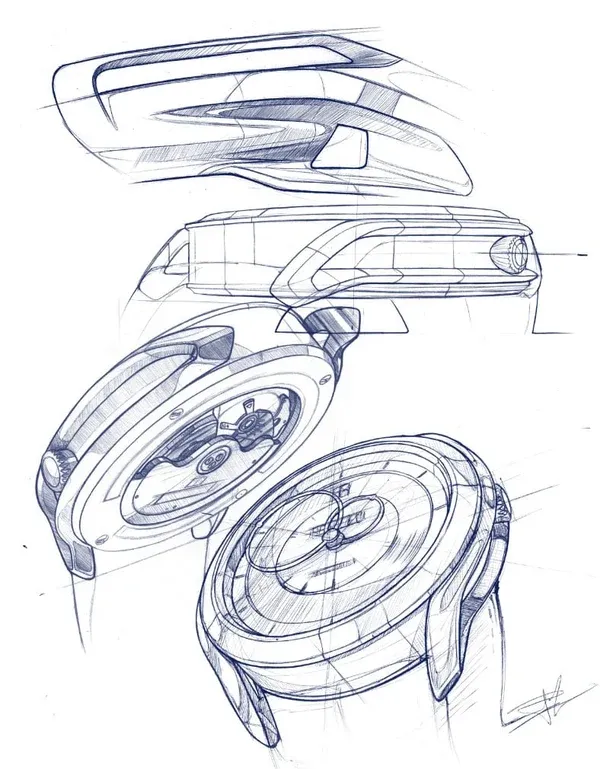
It is a simple but rather interesting proposition: a watch does not necessarily have to impress someone with its movement specifications or horological history. Sometimes, it just needs to make them stop and look. The first Beaubleu watches were presented in an art gallery in Paris. Ducoudert had no established media contacts, retail network or industry connections to lean on. He simply placed the watches on a table and waited to see what happened. The response, particularly from collectors and watch enthusiasts, was encouraging enough for him to begin production. Nine years later, what started as a personal design experiment has grown into a company of almost 20 people, with its own workshop and boutique in Paris.
The freedom to not follow the market
For a young independent watchmaker entering an industry dominated by maisons with decades, sometimes centuries, of heritage, carving out an identity is no small task. Ducoudert, however, believes Beaubleu's strength lies precisely in not trying to compete on the same terms as everyone else. He sees a distinct place for French watchmaking alongside the established Swiss and Japanese traditions. While Switzerland represents a strong legacy of watchmaking, industry and innovation and Japan is admired for its attention to detail and perfection, he believes France has a different contribution to make.
“We should not apologise for being here,” he says, referring to French watchmaking. “We have our legitimacy to exist thanks to something else, things that Swiss or Japan doesn't really focus on, which is more the design and the experience.” For Ducoudert, a watch can be more than a precision instrument or a piece of jewellery. It can be an expression of personality, aesthetics and lifestyle. This distinction is particularly relevant today, when a new generation of buyers is discovering watches but can sometimes feel overwhelmed by the industry's hierarchy, technical language and vast differences in pricing.
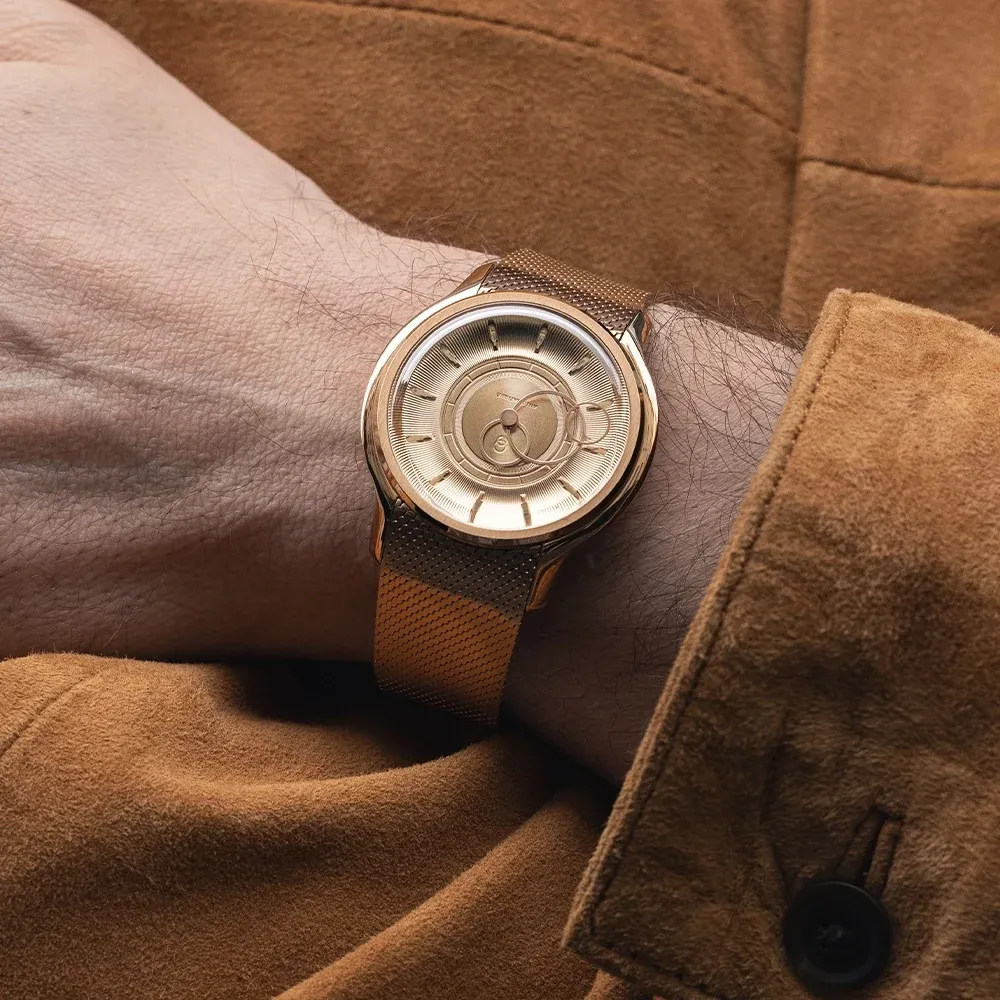
He recognises two distinct audiences gravitating towards Beaubleu. The first comprises people who may not necessarily be traditional watch enthusiasts but want something distinctive, something that does not look like every other watch on the wrist. The second consists of experienced collectors who have already explored established names and are looking for something a little more unexpected. “They've done, you know, I've been a very good student, I get my Tissot, then my Omega, whatever and MB&F... but I want something maybe a little bit more fresh,” he says.
For these collectors, Beaubleu offers a different kind of satisfaction. It may not be about owning the most complicated movement or the biggest horological name, but about discovering a watch that brings a fresh perspective to the wrist. And that philosophy extends to how the company approaches creativity. Ducoudert is particularly firm about one thing: the marketing department does not dictate what gets designed. “Like the design only comes from my intuition or because I want to do this, or I would like to do this and that. But it's not about like, okay, what's the market wants? Like, is it like a bigger or smaller watch? Do we need more colour or which colour, et cetera? Like that's basically something that's forbidden at our company.”
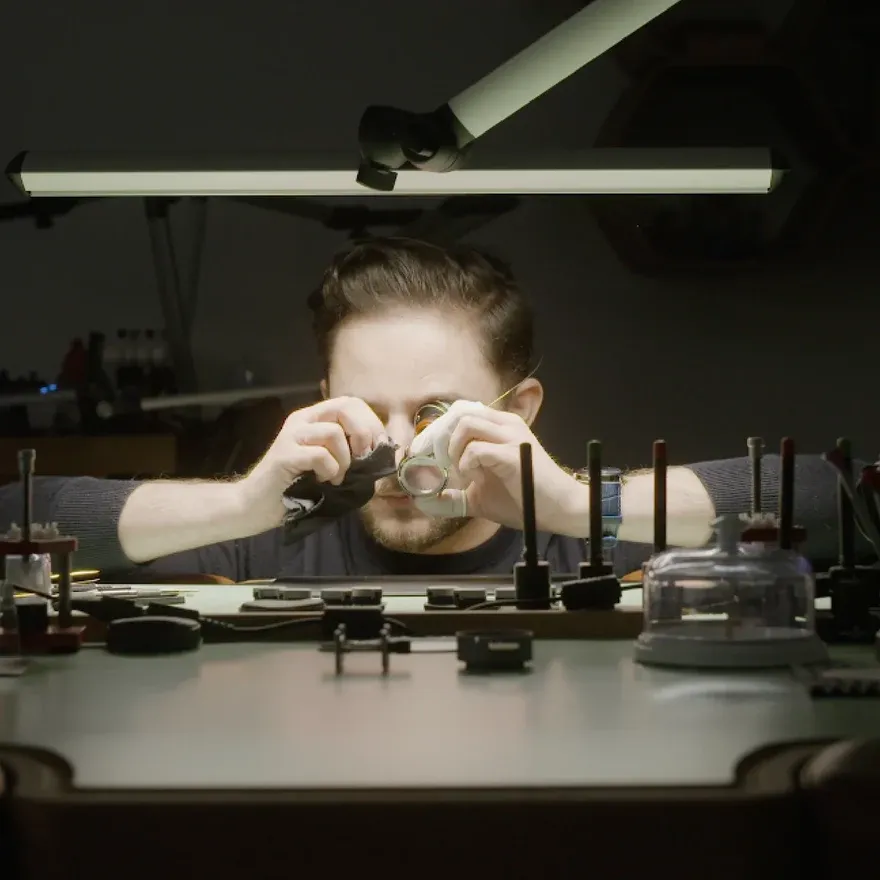
It is an unusually candid admission in an industry where commercial considerations often influence everything from case dimensions to dial colours. But Ducoudert believes that taking creative risks is essential to building an authentic identity. “When you take a risk, people see it. So they see that it's genuine. It's a genuine move and it's not like a calculated commercial move.”
A fencer's discipline, a designer's curiosity
Ducoudert's earlier careers have also shaped the way he runs Beaubleu. Fencing, in particular, taught him a lesson that he now applies to building a business: consistency can be more valuable than a moment of brilliance. He recalls advice from one of his national coaches, who told him that to become the best fencer, one did not necessarily have to be the most talented. One simply had to keep showing up and practising.
“My national coach told me, to be the best at fencing, you have to be the only one who practises. That's it. No more than others.” He later watched friends who had remained in the sport steadily progress, eventually becoming some of the best fencers in the world. Their success was not necessarily built on being exceptional from the outset, but on staying committed. “I think dedication in time, it's maybe sometime more efficient than being spot on just one time, to be the best in a very short period of time.”
His experience as a designer taught him something equally valuable, albeit rather different. Working with clients across various industries showed him that the ability to experiment and execute ideas matters just as much as the pursuit of perfection. “Of course, if it's perfect, it's nice, but it's better to be done than to be perfect. So more you do, better it is. It's not better you do, better it is.”
It is an interesting philosophy for a watchmaker, where precision and perfection are often treated as non-negotiable virtues. But for Ducoudert, the creative process requires movement, experimentation and, occasionally, the courage to get things out into the world. This willingness to experiment has also found expression in Beaubleu's limited editions. For its first five years, the brand introduced a new limited edition every two years, never reproducing the same reference. The idea was to give each design its own space and allow collectors time to connect with it.
Rather unexpectedly, Ducoudert discovered that this slower approach helped build stronger relationships with customers. Rather than chasing a constant stream of novelties, collectors began anticipating each new release. The brand subsequently introduced a permanent collection, allowing it to offer watches that represent its broader design identity, while limited editions continue to explore more conceptual ideas about time.
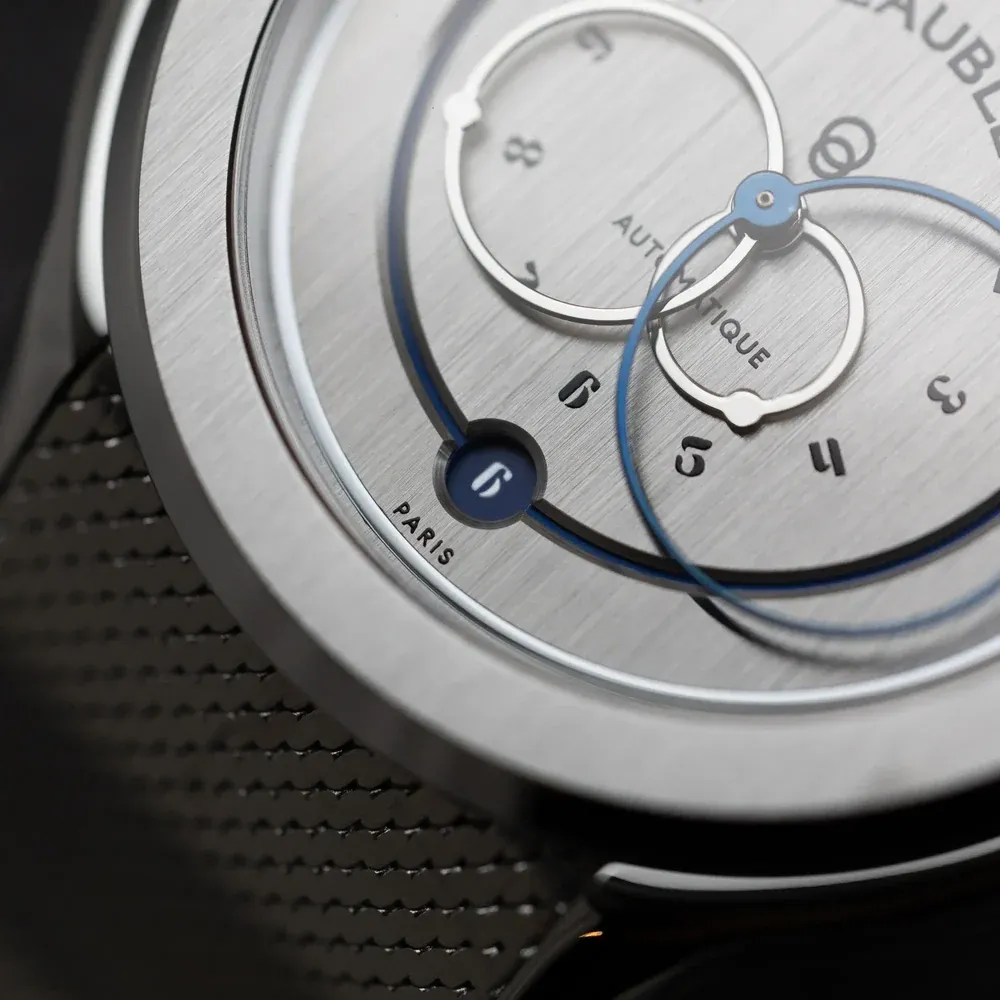
One such exploration involved the seconds hand, which Ducoudert felt was often overlooked despite being one of the most familiar elements of a watch. His response was to create a floating hand that brought attention to this seemingly insignificant component. The watch was nominated in the Challenge category at the Grand Prix d'Horlogerie de Genève (GPHG). Another project, created in collaboration with the historic French institution Monnaie de Paris, also received a GPHG nomination. For a relatively young independent brand, these projects reflect an ambition to explore watchmaking through design rather than simply follow established conventions.
India, and a relationship still taking shape
Given Ducoudert's personal connection with India, it is hardly surprising that he views the country with particular affection. His three-month stay in Karnataka gave him an appreciation of its cultural depth, but he is also aware that understanding the Indian consumer requires more than simply recognising the country's growing appetite for luxury watches.
He is careful not to approach India as another market waiting to be conquered. Instead, he wants to understand what drives Indian consumers in terms of aesthetics, design and watchmaking. “India is very unique in the way that you cannot really compare it with Asia in general, or Middle East, or Europe, or obviously, US. There is a very deep and shiny culture.”
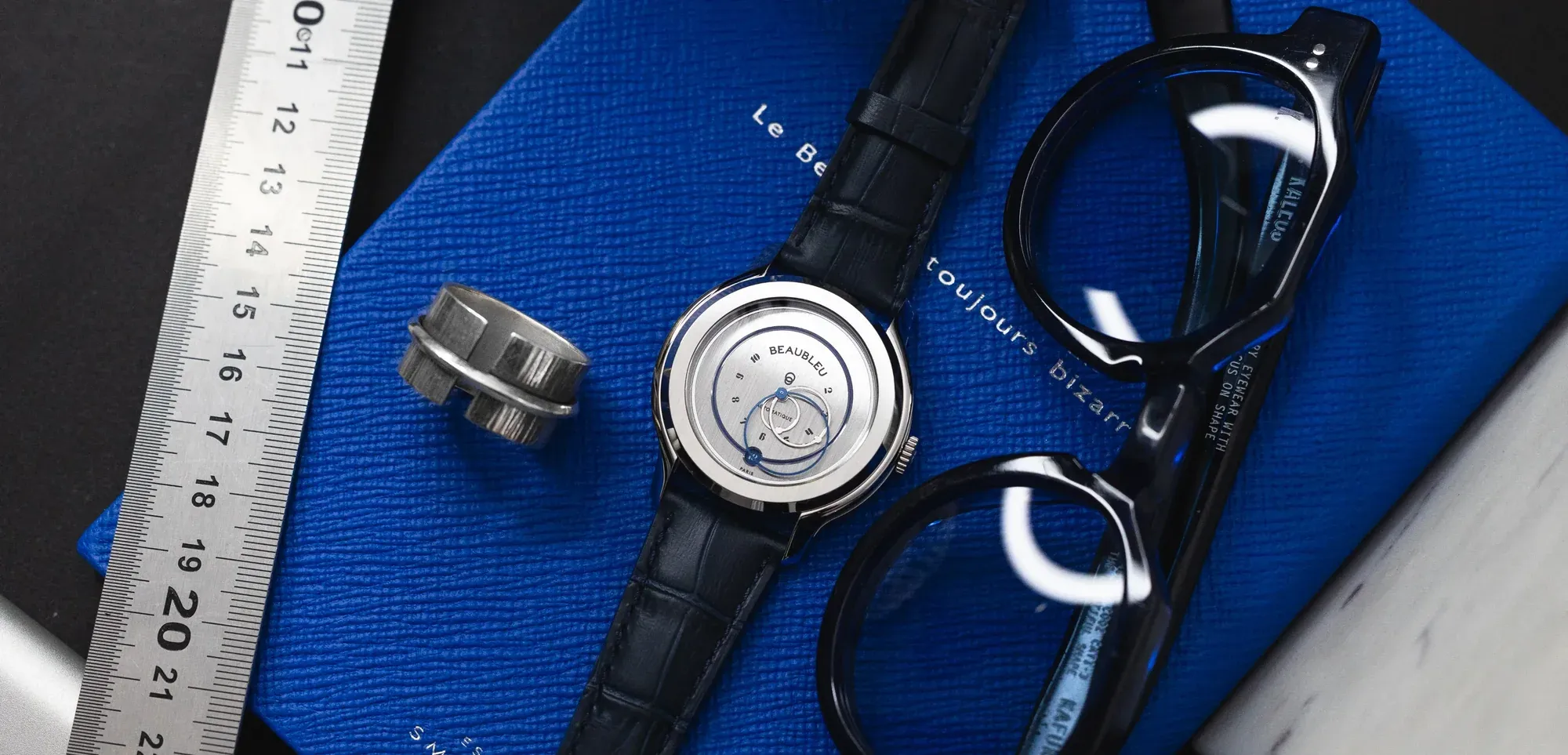
He also believes Western brands need to be mindful of how they approach different markets. Being a European brand should not automatically be considered the strongest selling point. Understanding the people who will actually wear the watches is far more important. Interestingly, Beaubleu has already begun seeing encouraging interest from Indian collectors, with sales picking up over the past few months. But Ducoudert is looking at something beyond immediate commercial success. “The only objective of Beaubleu is to be here in 20 years,” he says. “If we sell 10 watches a year, or 10 million watches a year, I don't really mind.”
The brand remains independent, without external investors, giving Ducoudert the freedom to pursue his creative vision without the pressure of chasing aggressive growth targets. His approach to India, therefore, is less about expansion for the sake of expansion and more about building a meaningful relationship. He describes the current phase rather charmingly: “India and Beaubleu, we are on our dating phase, you know, trying to understand each other.”
The next chapter
As Beaubleu approaches its tenth anniversary next year, Ducoudert sees the milestone as the end of a decade-long proof of concept. The brand has spent the last nine years testing its ideas, developing its collections and establishing its place in the watchmaking landscape. The next decade, he hopes, will be about becoming more established internationally while retaining the creative freedom that brought the brand to life. He wants Beaubleu to carry a distinctly French sensibility wherever it goes, offering not just a watch but an expression of a particular way of living and looking at the world.
And when asked to sum up Beaubleu in just a few words, he offers a line that neatly captures everything we have discussed: “Beaubleu is a watchmaker who twists the way we see time.” Perhaps that is the best way to understand Nicolas Ducoudert, too. A former fencer who values perseverance, a designer who questions convention, and a founder who would rather trust his intuition than follow a market trend. His watches may begin with a circle, but his ambition is to keep finding new ways to make us look at time differently.

Frequently Asked Questions
Beaubleu was founded by Nicolas Ducoudert, a French designer whose signature design feature is its distinctive circular watch hands, inspired by his philosophical exploration of the relationship between time and space.
Ducoudert believes in following intuition rather than market trends. His design philosophy prioritises creativity, individuality and experimentation, allowing Beaubleu to offer a fresh perspective on traditional watchmaking.
India holds a special place for Ducoudert, who spent three months in Karnataka. He sees India as a culturally unique market and is keen to understand its consumers better, building a meaningful relationship with Indian collectors rather than pursuing growth at any cost.