 6 min read


There’s more to Gallet’s return than the act wherein another dormant Swiss marque is being dusted off for a heritage-led product launch. It is the reappearance of a two-century-old house whose greatest contribution to watchmaking was not a single iconic silhouette, but an unusually practical idea: that a watch should be shaped around the task it must perform. In 2026, under Breitling’s House of Brands, Gallet has resumed that role with a broad, accessible collection built around aviation, travel, motorsport and exploration.

A house built for purpose
Founded in La Chaux-de-Fonds in 1826 by Julien Gallet, the firm began as a trader and manufacturer of pocket watches, with an early and consequential foothold in the United States. By the late nineteenth century, Gallet had established distribution through Jules Racine & Co. in New York, a relationship that helped make the name especially familiar to American buyers.
The brand’s defining instinct emerged early: rather than treating a chronograph as a generic complication, Gallet configured cases, dials, scales and movements around specific professional uses. Its watches served pilots, racing drivers, sailors, navigators, technicians and explorers, the result was a catalog of unusually purposeful instruments rather than a narrow lineage of dress watches.


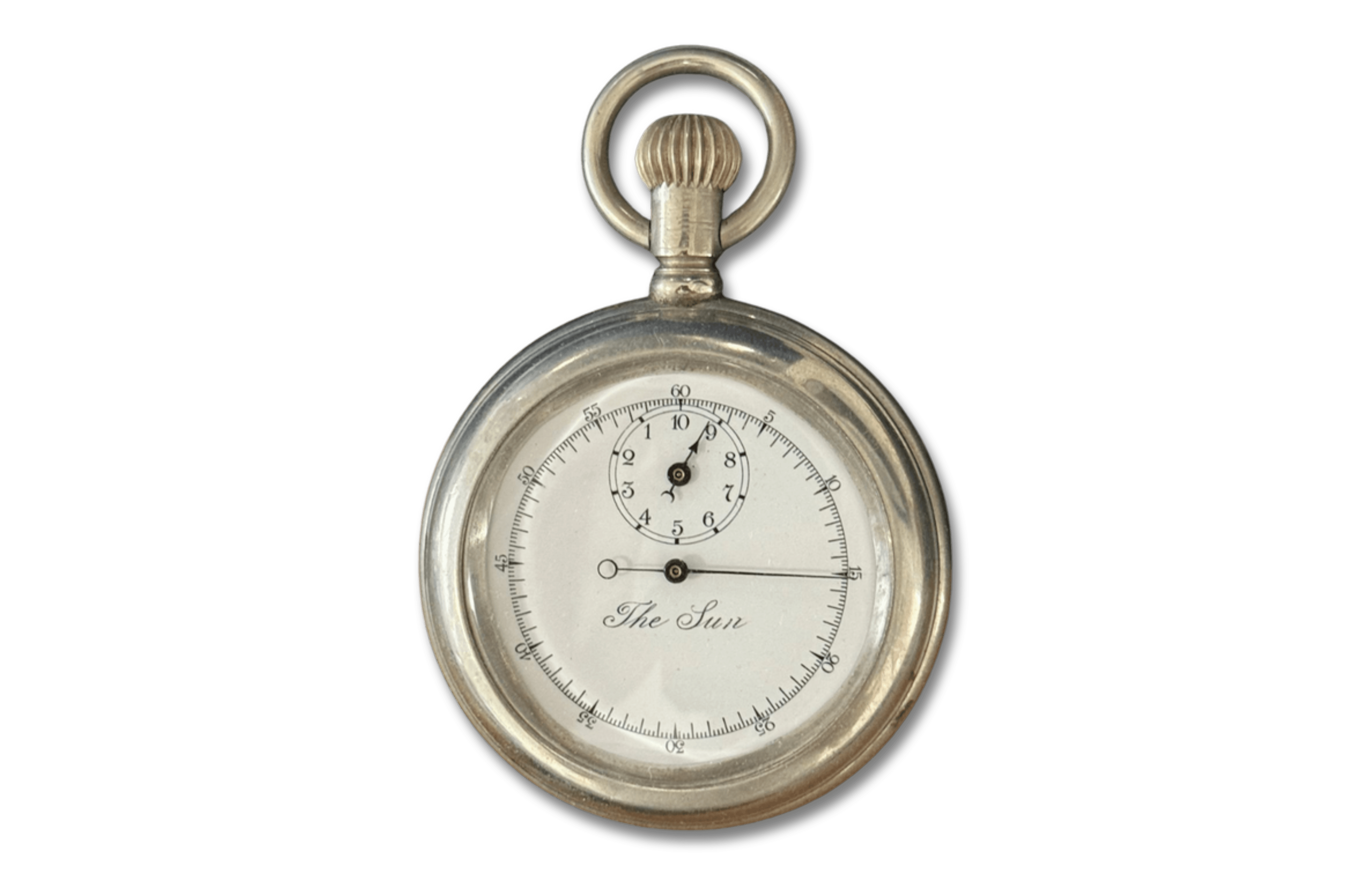
That philosophy gave Gallet a place in some of the twentieth century’s most consequential moments. A Gallet “The Sun” stopwatch was used to time the Wright brothers’ first powered flight at Kitty Hawk in 1903, which lasted 59 seconds. In 1939, Senator Harry Truman received a Gallet Flying Officer from his staff, he later described it as the most elaborate watch he had ever seen.
The golden age of Gallet
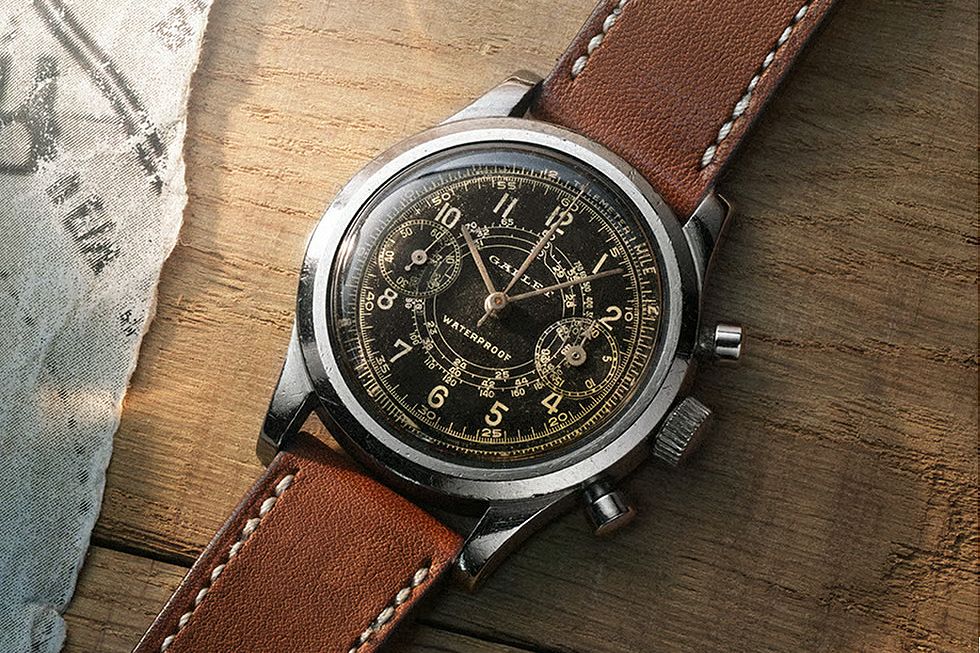
Gallet’s peak-era reputation rests chiefly on its chronographs. The MultiChron Regulator, introduced in 1936, placed elapsed time ahead of conventional timekeeping and became a reference for pilots, racing drivers, radio operators and laboratory technicians. Its logic was radical in its clarity: if the job was to measure an event, the watch should make that measurement effortless.
The 1938 MultiChron Clamshell was among the earliest water-resistant wrist chronographs, anticipating the environmental demands that would later define serious sports watches. The 1939 Flying Officer introduced a rotating city ring that allowed pilots to calculate time across international routes - an early, elegant solution to the practical problem of long-distance aviation.

Model | Era | What made it important |
The Sun stopwatch | Early 1900s | Used to time the Wright brothers’ first powered flight. |
MultiChron Regulator | 1936 | Prioritized elapsed-time measurement for professional users. |
MultiChron Clamshell | 1938 | Among the first water-resistant wrist chronographs. |
Flying Officer | 1939 | Introduced a rotating city ring for international travel and aviation. |
MultiChron Navigator | 1945 | Combined a compass-style orientation function with a 24-hour display. |
MultiChron 12 Pilot | 1969 | A tri-compax pilot chronograph associated with long-duration timing and second-time-zone tracking. |

The Flying Officer remains Gallet’s most culturally resonant creation. Its rotating bezel did not merely display cities, it translated the abstract idea of global time into a mechanical interface. In an age before digital flight planning, that was not decoration. It was infrastructure for the wrist.
Why the name disappeared
Like many mechanical Swiss houses, Gallet could not escape the quartz revolution. The brand remained visible in Swiss watchmaking, particularly in the United States, until the late 1970s, it later left family ownership in 1994 and was acquired by the Neresheimer family in 1996 before falling dormant.
Its absence, however, preserved something valuable. Gallet never became overexposed through decades of continuous modern production. Instead, it survived as a collector’s name: known deeply by vintage-chronograph specialists, admired for its Excelsior Park-powered references, and appreciated for design ideas that feel more inventive than much of today’s retro revivalism.
Breitling and the “House of Brands”
Breitling acquired Gallet in 2025, placing it within Georges Kern’s House of Brands alongside Breitling and Universal Genève. The strategic logic is clear: Gallet enters beneath Breitling as an accessible-luxury proposition, while Universal Genève occupies the more elevated collector and haute-horlogerie territory.
The brand with lots of nostalgia is relaunched as part of Georges Kern’s House of Brands. It now forms the ground upon which the trifecta alongside Breitling and Universal Genève is founded. The relaunch is extensive with four new watch collections functioning upon a hefty dosing of Sellitas.

This is not a casual badge revival. The new watches are manufactured within Breitling’s industrial structure, with “Manufactured by Breitling” appearing on the caseback, and they benefit from Breitling’s durability, reliability and distribution systems. Gallet is therefore positioned as the entry point into the group rather than a diluted version of its parent brand.
The commercial challenge is equally clear. Breitling’s premiumization has left space below it, but an affordable Breitling would undermine the value of Breitling itself. A distinct Gallet, priced on a bracelet from roughly INR 2,83,500 for three-hand models and INR 4,30,500 for chronographs, can serve that customer without dragging the flagship marque downmarket.
The 2026 resurrection
Gallet relaunched during Geneva Watch Days 2026, its bicentenary year, with four collections: Flying Officer, MultiChron Pilot, MultiChron Sport and Gallet Classics. The strategy is unusually expansive for a brand returning from dormancy: rather than launching one hero reference, Gallet has presented a full catalog of travel, aviation, motorsport and heritage-inspired watches.


Collection | Core inspiration | Key modern execution |
Flying Officer | International travel and aviation | 40mm world-time city ring, chronograph and automatic versions. |
MultiChron Pilot | Exploration and long-duration timing | 42mm tri-compax chronograph with 12-hour bezel and telemeter scale. |
MultiChron Sport | Motorsport and performance timing | 41mm chronograph with tachymeter scale and orange timing accents. |
Gallet Classics | Specific vintage Gallet chronographs | Three 38mm hand-wound models powered by Breitling’s B09. |
The Flying Officer is the most faithful conceptual revival. Its modern city ring no longer points only toward refueling stops, it includes destinations such as the Azores, Lima and Barbados, turning a wartime aviation tool into a contemporary travel instrument. The automatic version, with its orange dial inspired by aged luminous material on original Flying Officers, is perhaps the clearest expression of Gallet’s new visual identity.


The MultiChron Pilot is the most recognizable historical revival. It reinterprets the 1969 original with a 42mm steel case, bi-directional 12-hour bezel, pump pushers, tri-compax layout and a telemeter scale. It is larger and more contemporary than its ancestor, but its architecture remains unmistakably Gallet.
Market demand and auction reality
The vintage market has long recognized Gallet’s importance, though it remains less uniformly expensive than Rolex, Heuer or Omega. That is precisely its opportunity. At Sotheby’s, a circa-1930 MultiChron Regulator Champion Spark Plugs “first series,” made for Indianapolis 500 race winners, carried an estimate of US$12,000-18,000.
Christie’s has offered significant Gallet references, including the MultiChron 12 “Jim Clark” chronograph and a rare MultiChron Astronomic triple-calendar chronograph, which Christie’s describes as among the rarest Gallet wristwatches. A 1940 MultiChron 30M “Clamshell” Pilot also appeared in Christie’s Important Watches sale, confirming the continued presence of the brand’s most historically significant models at major auction houses.
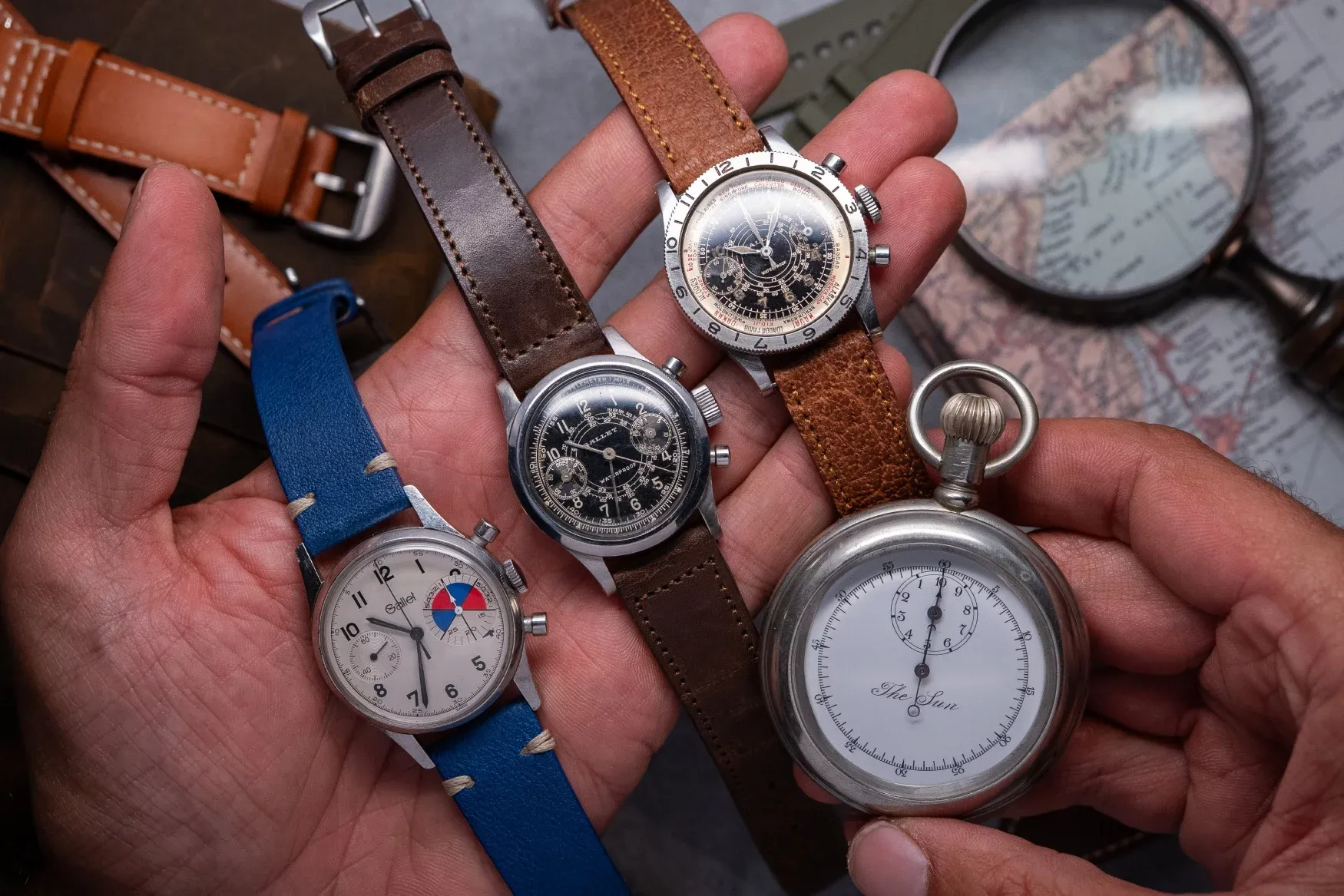
Gallet is not yet a market where every reference commands an automatic premium. It is a market where provenance, originality, dial condition, movement quality and the specificity of the model still matter - exactly the environment in which informed collecting remains rewarding.
What the revival must preserve
Gallet’s revival succeeds only if it remembers what made the original brand compelling. It will succeed if it remembers what the name meant. Gallet never sold prestige. It sold an answer to a specific problem. A revived brand has one real asset, and it is not nostalgia. It is a standard of usefulness that the market once recognized and can recognize again.
The new collection understands this better than many revivals. Quick-release straps, 100-meter water resistance, legible dials, practical case sizes and a coherent adventure narrative give the watches a contemporary purpose. The risk is aesthetic proximity to Breitling: if Gallet becomes merely a less expensive Breitling, it will lose the eccentric, instrument-first character that made its vintage watches so compelling.
Learn about the trend of reviving dormant watchmaking brands with interesting histories.
The new collections are Flying Officer, Multichron Pilot, Multichron Sport and Gallet Classics.
The Gallet Classics use Breitling’s hand-wound B09 chronograph caliber, other models use Sellita-based movements.
The brand struggled through the quartz crisis and later became dormant after changing ownership.