
Before GTA 6: The Three Years That Rewired The Watch World
 7 min read


Rockstar made the world wait almost three years and was paid handsomely for it. The watch industry spent the same three years discovering that waiting only works when it is earned. On 19 November, a video game set in a neon, sun-cooked version of Florida went on sale, and by some estimates took US$1.84 billion before most of its buyers had finished the opening mission. Grand Theft Auto VI was first shown in December 2023, promised for 2025, delayed twice, and turned into a running joke along the way. "Things that happened before GTA 6" became the internet's shorthand for anything that sounded too unlikely to happen.
The watch industry has its own list, and it is not a joke. In the time it took Rockstar to finish one game, Swiss exports went into reverse, Washington slapped a 39% tariff on Switzerland, gold went past US$5,000 an ounce, a plastic pocket watch caused a riot in Paris, and a watch made in 2000 by one man in Geneva sold for US$13.9 million. Any one of those would have defined a normal year. We got all of them in three. Read together, they tell one story. It is a story about scarcity: who has it, who fakes it, and who has just found out that customers can tell the difference.
2024: the hangover nobody wanted to name
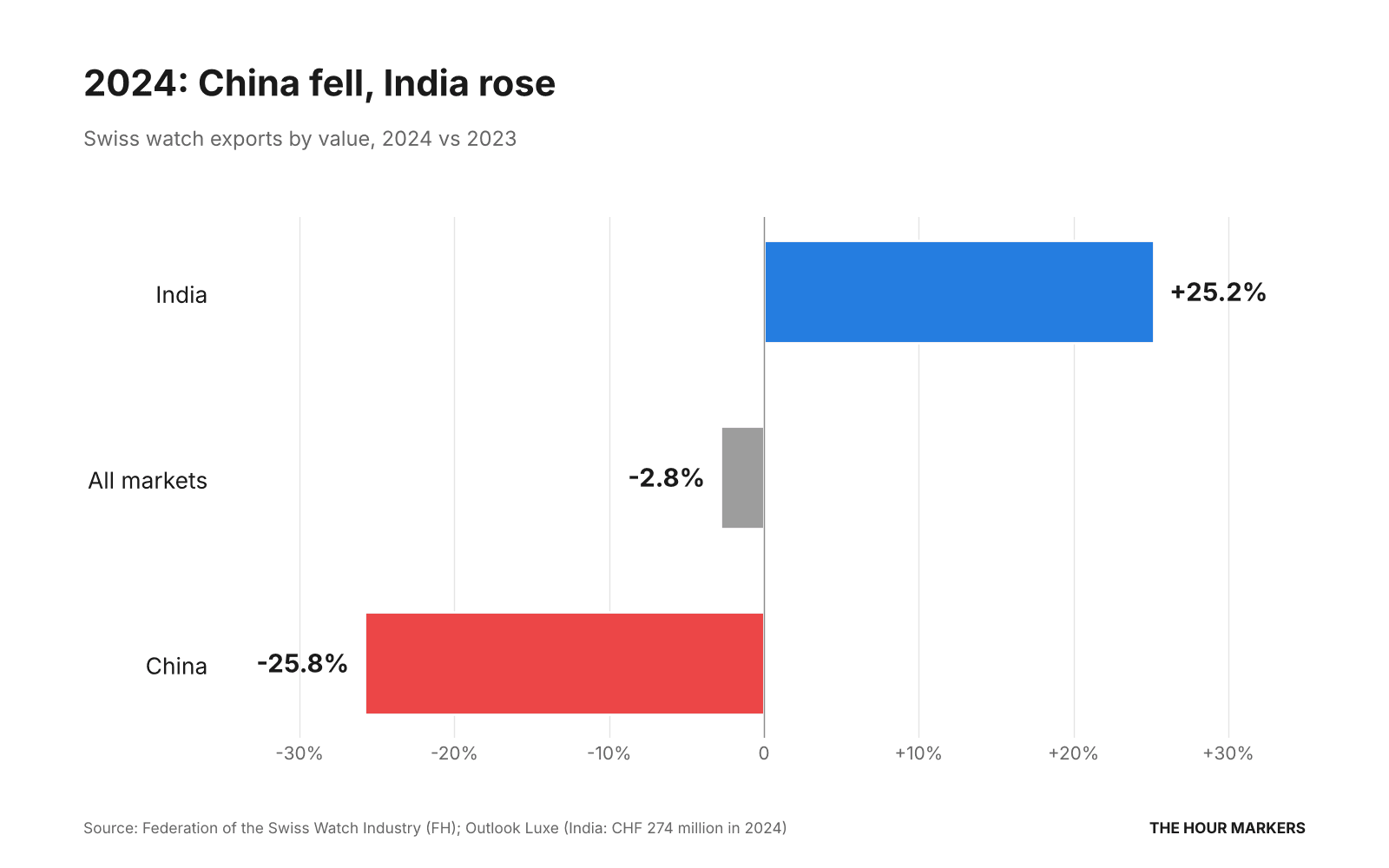
The boom of 2021 to 2023 was built on a convenient story. Waiting lists were treated as proof of desire, and price rises as proof of value. In 2024 the story started to fray. Swiss watch exports fell 2.8% to about CHF 26 billion, according to the Federation of the Swiss Watch Industry (FH). China, which had carried the industry for a decade, fell 25.8%. Swatch Group's profit fell by three quarters.
The industry called it normalisation. A more honest word would have been correction. A lot of the "demand" of the boom years was speculators buying watches to flip, and when the flipping stopped, so did the waiting lists that had made everyone feel clever.
One line in the 2024 figures deserved far more attention than it got. Exports to India rose 25.2%. While Geneva worried about Shanghai, Mumbai was quietly becoming a different kind of market: younger, less speculative, and still underserved.
2025: the year the bill arrived from Washington
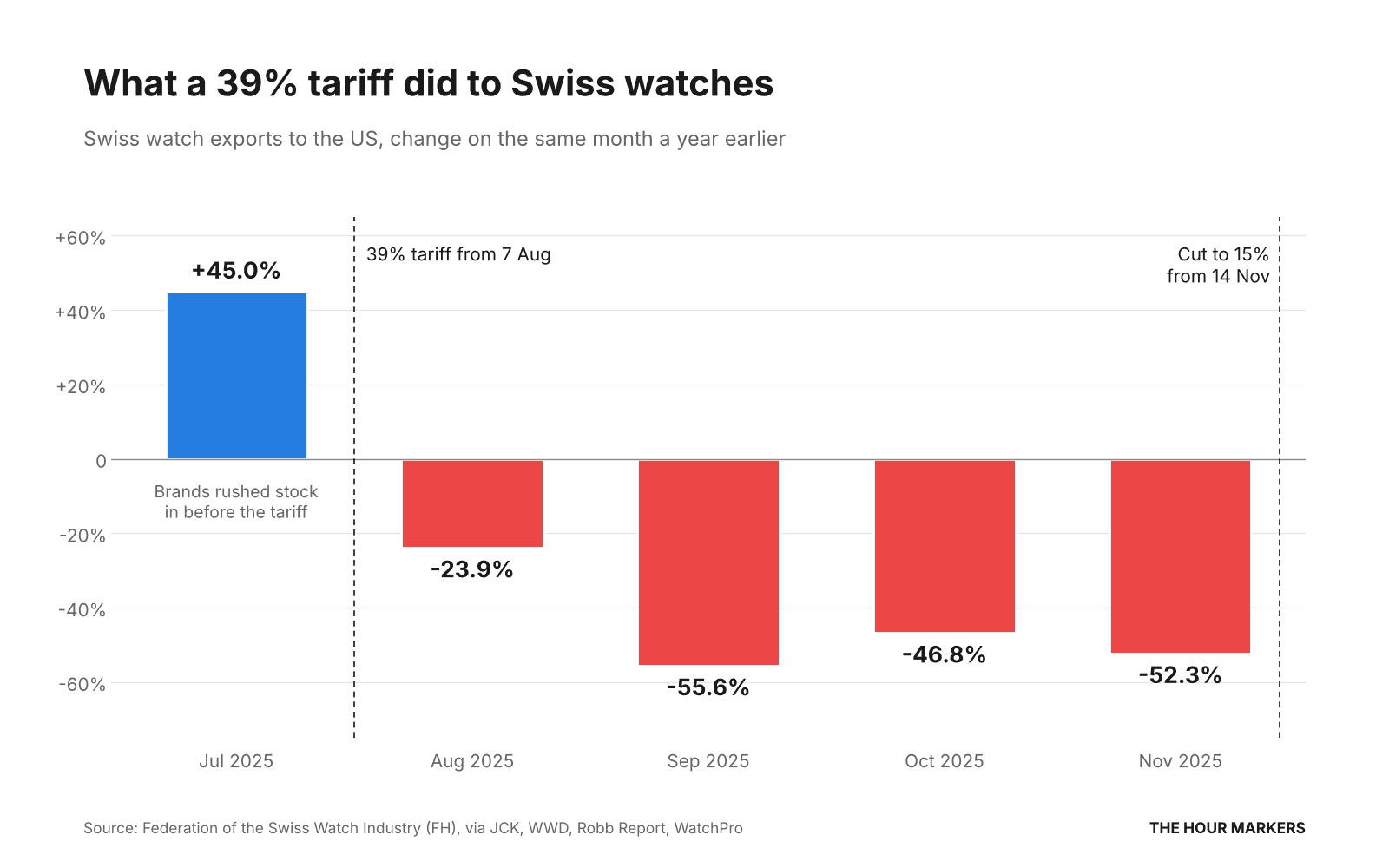
In August 2025 the United States imposed a 39% tariff on Swiss goods. The rate before had been 2%. Exports to America, the industry's biggest market, fell 56% in September. Brands that had spent years telling clients their prices were about craft suddenly had to explain why the same watch might cost far more in New York in October than it had in July.
The rate was cut to 15% in November, and the industry exhaled. But the episode exposed something uncomfortable. Swiss watchmaking likes to present itself as timeless and above politics. It turned out to be one phone call away from a crisis, heavily dependent on one market, and with very little control over its own pricing once the government of that market decided to act.
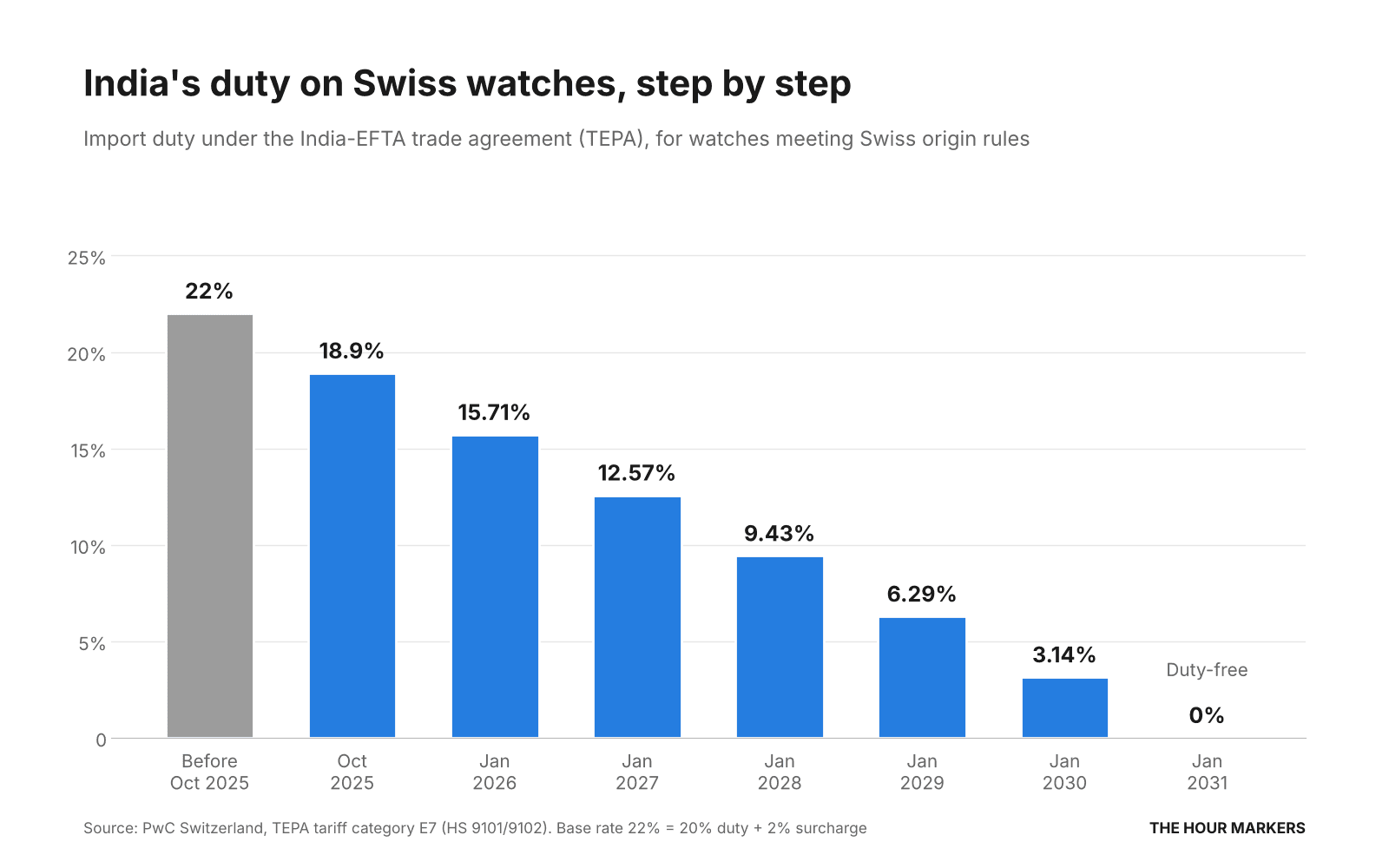
The more important trade story of 2025, happened six weeks earlier and with far less noise. On 1 October, India's Trade and Economic Partnership Agreement (TEPA) with the European Free Trade Association (EFTA), which includes Switzerland, came into force. It phases out India's 22% duty on Swiss watches over seven years. Before anyone celebrates, do the arithmetic. Spread evenly, that is roughly three percentage points a year. In 2026 alone, a white gold Rolex Daytona rose 14% in the United States. On gold watches, the duty cut is being overtaken by the price list. It will matter a great deal by 2032. It does not mean your next gold watch will be cheaper.
2026: gold sets the price, and the queue loses its meaning
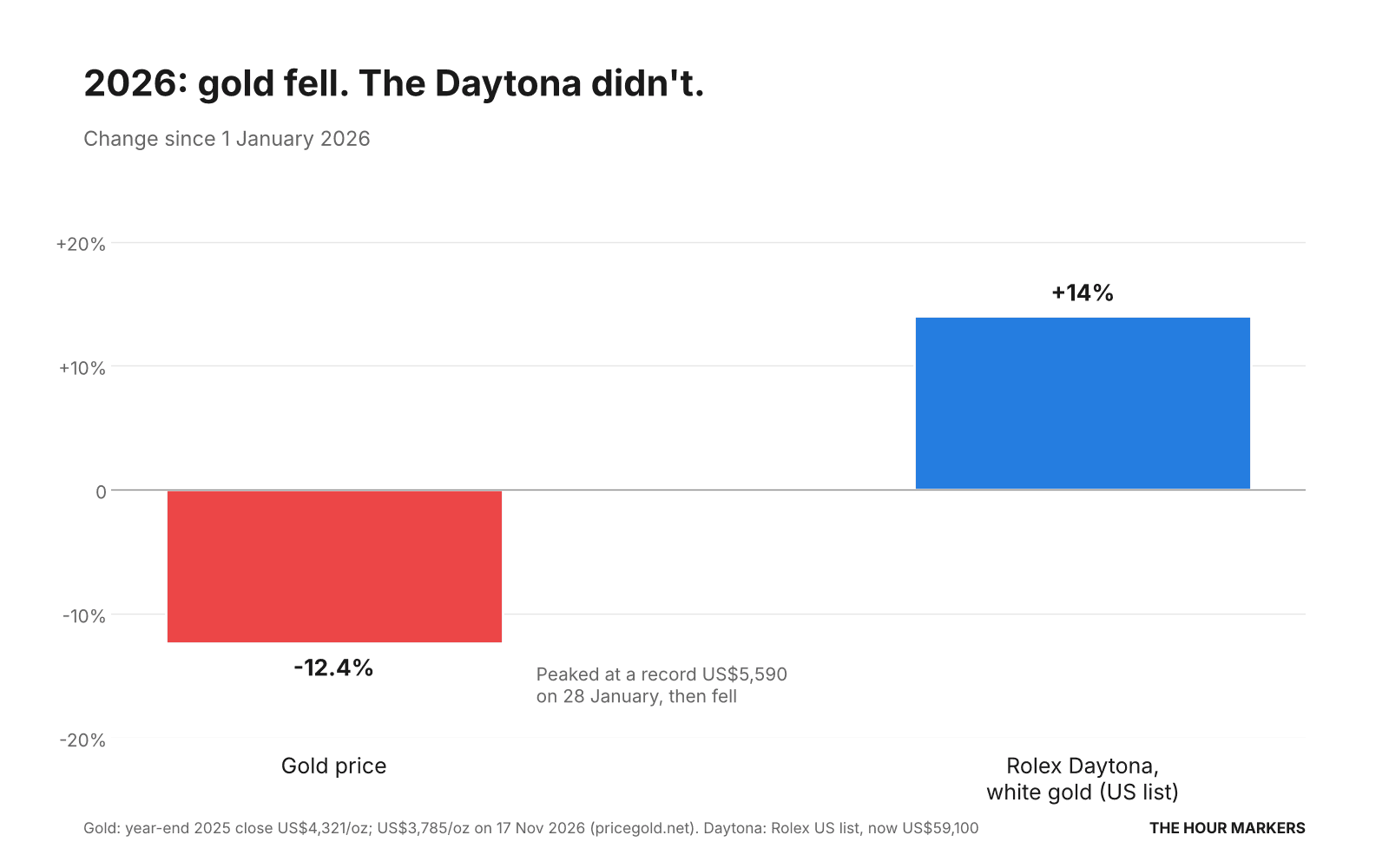
Gold hit an intraday record of US$5,590 an ounce on 28 January 2026. Rolex had already raised its US prices by around 7% on 1 January, its third meaningful increase in twelve months. In June it raised gold-watch prices again, by about 5%. The white gold Daytona now lists at US$59,100 in America, a third more than in 2024.
Look closely at what Rolex was doing. These were not rises into booming demand. Analysts were openly describing weakness in mid-range luxury spending at the time. Rolex was pricing for the client it had kept, the very wealthy buyer for whom 5% is a rounding error, and accepting that some aspirational buyers would drift away. That is a rational strategy for a brand with Rolex's power.
Then look at what happened next. Gold did not stay at its peak. By mid-November it was trading below US$3,800 an ounce, around 12% lower than where it started the year and a third below January's record. The Daytona's price did not follow it down. Price rises are sold to clients as the cost of gold. Price cuts, when gold falls, are not part of the story. That is worth remembering the next time a brand blames the metal.
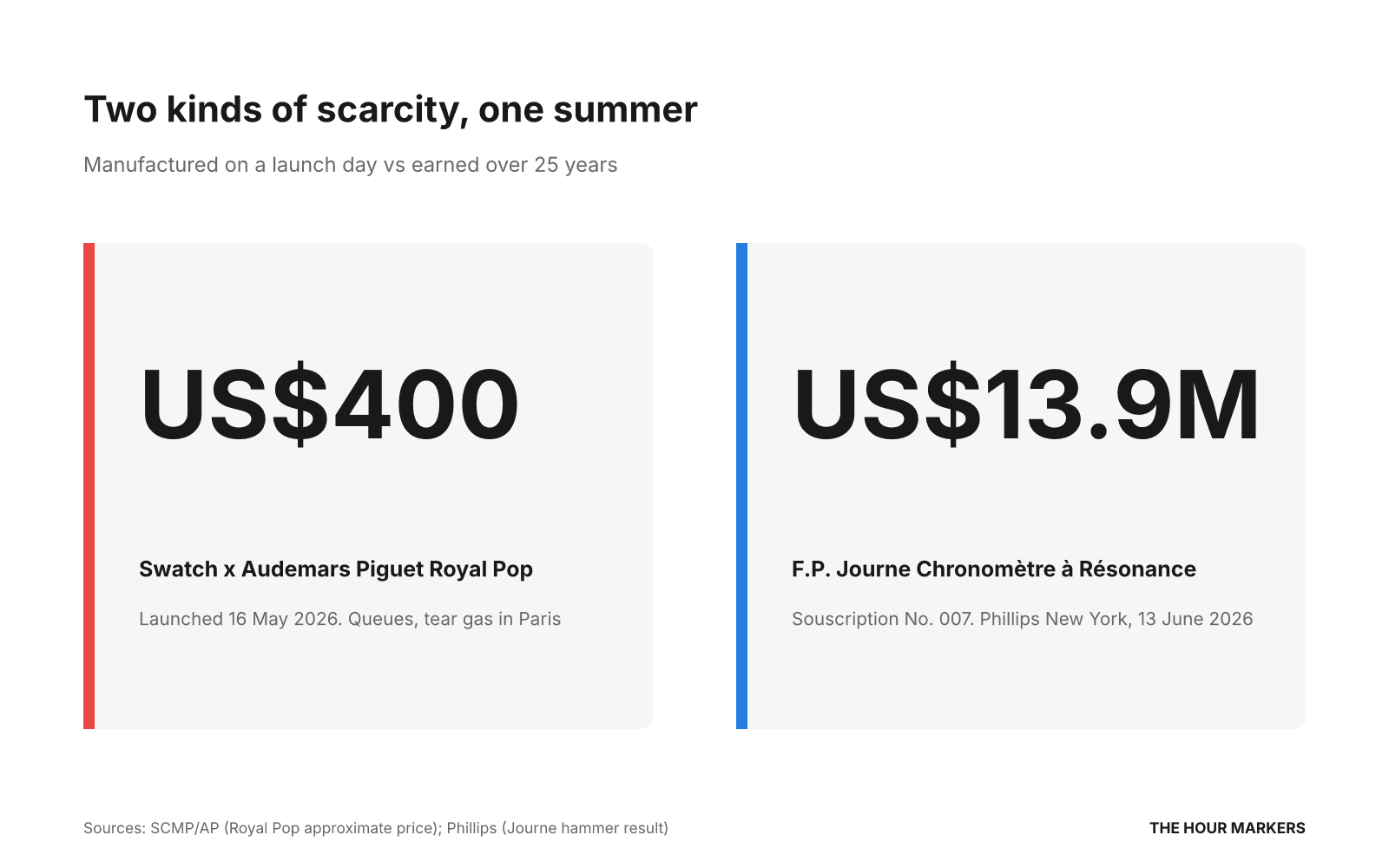
Then came 16 May. Swatch and Audemars Piguet (AP) launched the Royal Pop, a bioceramic pocket watch borrowing the Royal Oak's octagon, for around US$400. Queues formed days in advance. Police used tear gas outside a store in Paris. A fight broke out in Milan. Launches in Dubai were cancelled on safety grounds, and Swatch had to ask people, publicly, to stop rushing its shops. It was the most GTA 6 thing the watch industry did in three years: a famous name, a low price and a release built for the camera. And it was a brilliant piece of marketing. But it is worth being clear about what it proved. It proved that scarcity can be manufactured. It said nothing about whether anyone in that Paris queue will ever walk into an AP boutique. Most of them were there for the queue, not the watch.
Meanwhile, the real scarcity was sitting in Geneva
On 13 June 2026, at Phillips in New York, an F.P. Journe Chronomètre à Résonance "Souscription No. 007" sold for US$13.9 million after almost nine minutes of bidding. It is the highest price ever paid at auction for a watch by an independent maker.
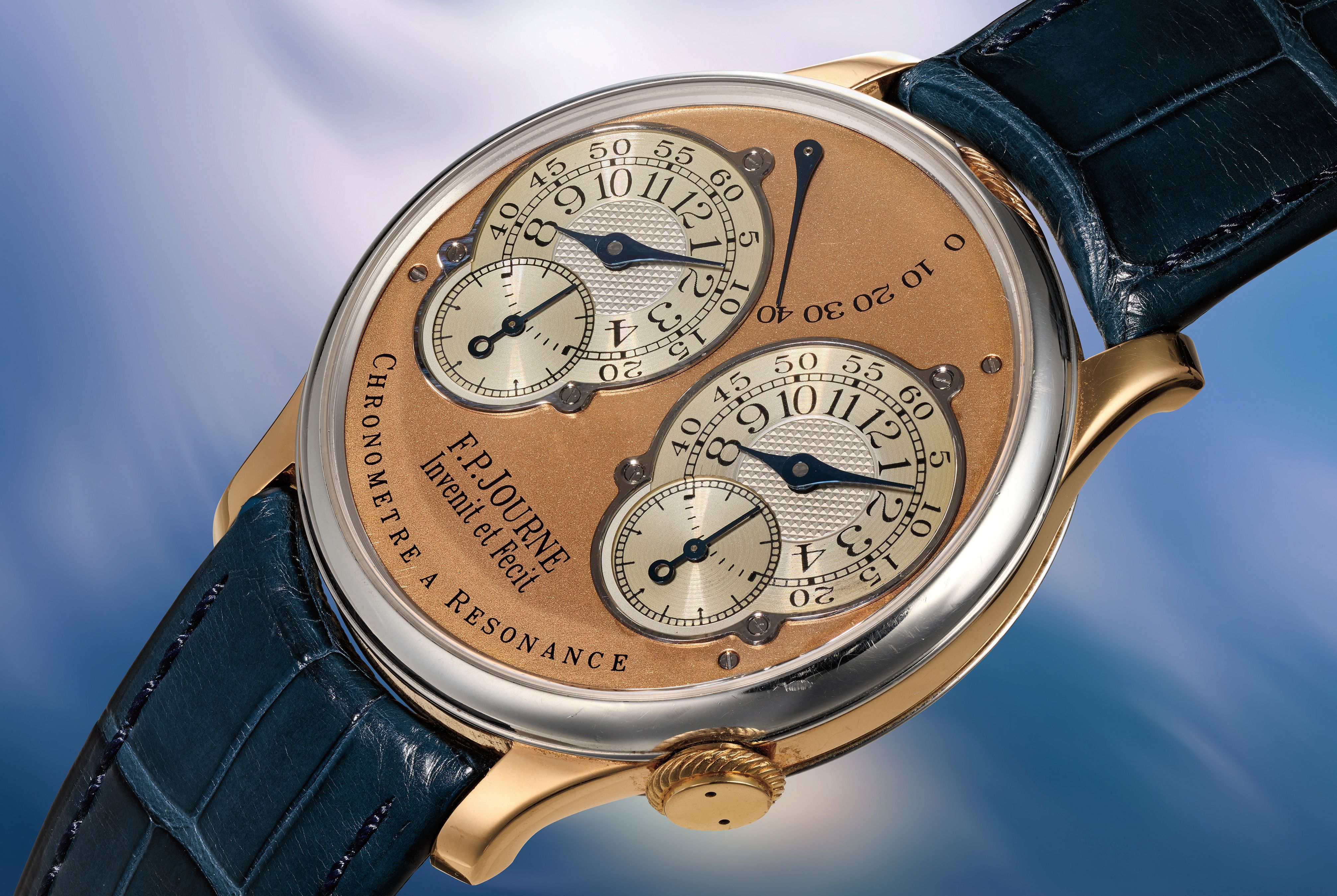
Set that next to the Royal Pop and the lesson is hard to miss. The Journe was made around 2000, by a watchmaker who sold it by subscription before it existed, to clients who paid upfront and waited. Nobody manufactured that scarcity. It was the natural result of making very few watches, very well, for a very long time. The market took a quarter of a century to price it properly, and when it did, it did not hesitate. In November, Rexhep Rexhepi took the Aiguille d'Or, the top prize at the Grand Prix d'Horlogerie de Genève (GPHG), with his first flyback chronograph. Ten years ago he was largely unknown outside a small circle of collectors. Today he is the benchmark the big houses are measured against.

The twist: the independents are becoming what they replaced
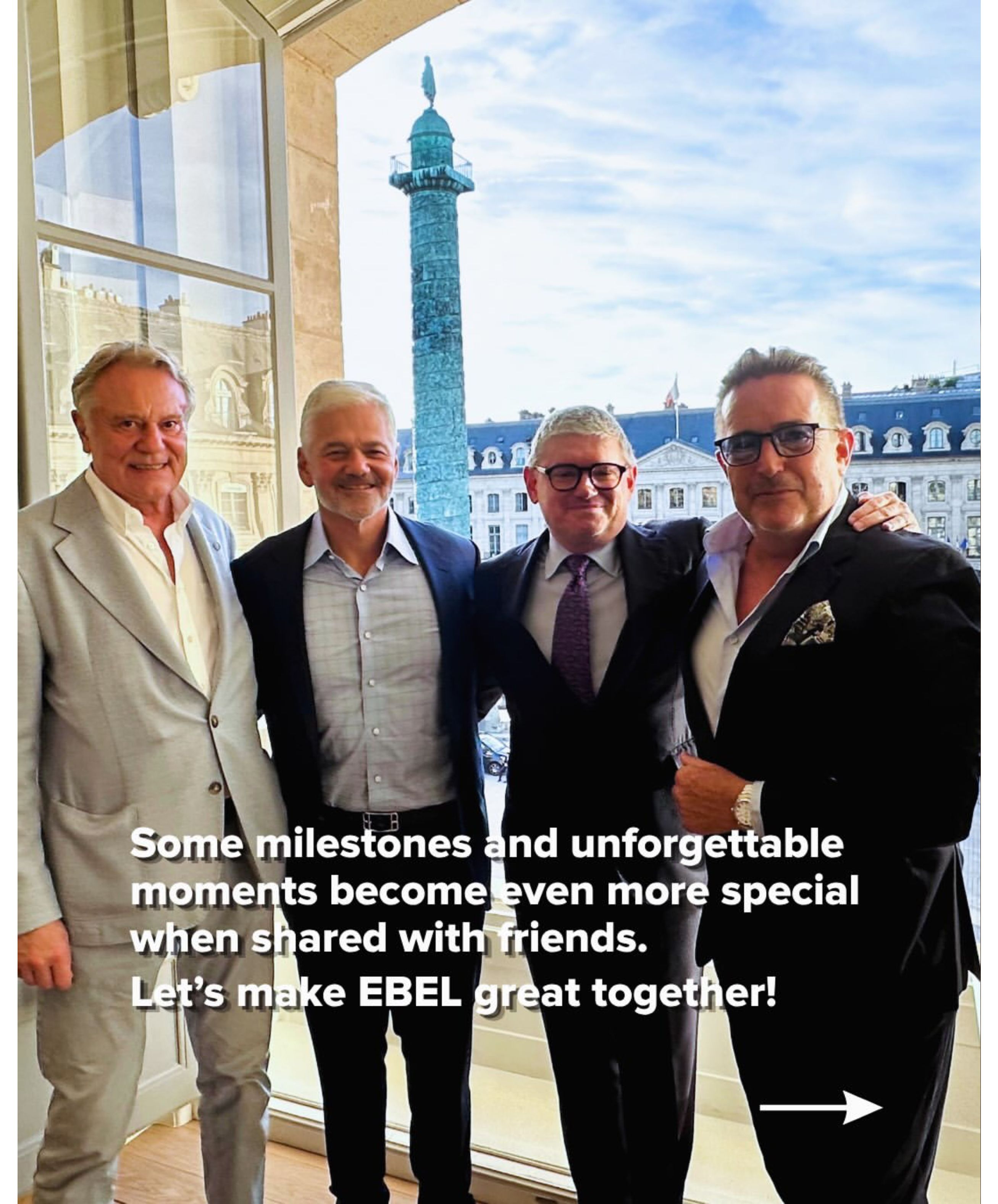
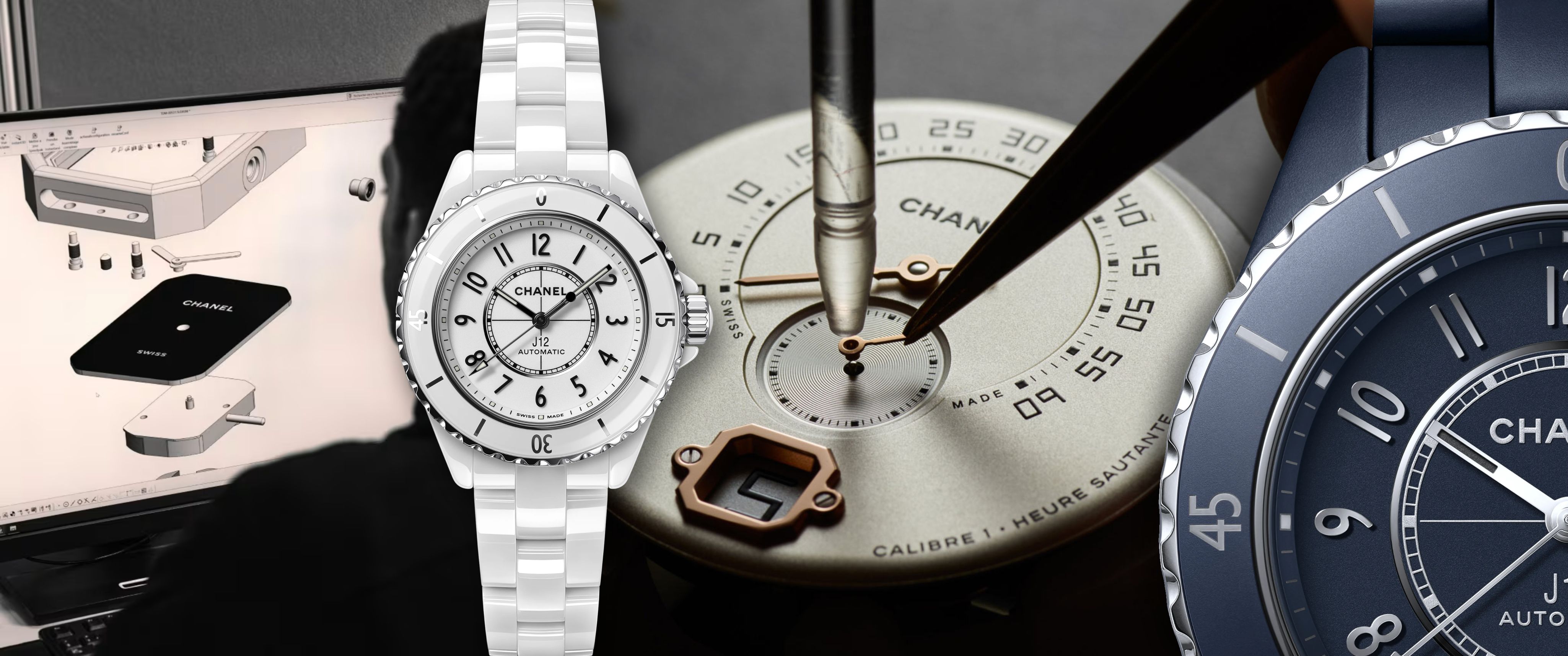
Here is the part of the story the celebratory coverage tends to skip. In October, a consortium led by Montres Journe, with Chanel and former De Bethune chief executive Pierre Jacques, bought 95% of Ebel from Movado Group for US$66.5 million. Chanel, which has held a stake in Journe since 2018, already owns 25% of MB&F. None of this is sinister. Independent watchmakers need capital, successors and suppliers, and Chanel has been a patient, hands-off partner. But it does change what the word independent means. The makers who defined themselves against the big groups are now building small groups of their own, with luxury-house money in the cap table. The next three years will show whether that money buys them freedom or slowly turns them into what they once rebelled against.
What the GTA years leave behind
Strip away the noise and three things are left standing.
The first is that collectors can now tell earned scarcity from manufactured scarcity, and they price the two very differently. A launch-day queue and a 25-year-old waiting list are not the same thing, and the gap between US$400 and US$13.9 million is a fair measure of it.
The second is that the middle of the market is the most exposed place to be. The very top kept raising prices and kept its clients. The very bottom sold plastic by the truckload. Brands in between, too expensive for impulse and too ordinary to wait for, had the hardest three years of anyone.
The third is that India stopped being a footnote. Exports up a quarter in a single year, a trade deal that will take the duty to zero, and a collector base that is younger and less speculative than most. Brands that still treat India as a stopover on the way to Dubai are making a mistake they will be explaining to their boards by the end of the decade. Rockstar was rewarded for making people wait because it delivered something worth waiting for. That is the only kind of scarcity that has ever lasted in watches, too. The industry spent three expensive years being reminded.
F.P. Journe Chronomètre à Résonance Souscription No. 007 makes history with record-breaking $13.9 million sale
GPHG 2026: The Winners That Took It All Home

Frequently Asked Questions
The US imposed a 39% tariff on Swiss goods in August 2025, up from 2%. Swiss watch exports to the US fell 56% in September 2025. In November 2025 the rate was cut to 15%, in line with the rate applied to the European Union.
Gradually. Under the India-EFTA trade agreement, in force since 1 October 2025, India's 22% duty on Swiss watches is being phased out over seven years. On gold watches, brand price increases driven by record gold prices have so far outpaced the yearly duty reduction.
Mainly gold, which hit a record US$5,590 an ounce in January 2026, along with currency movements and US tariffs. Rolex raised US prices by about 7% on 1 January and lifted gold-watch prices by another 5% or so in June. Other major groups made similar increases.