

 10 min read

For much of the modern watch world's history, Switzerland has been the obvious answer to the question: where are the finest mechanical watches made? But there is another European watchmaking story that has become increasingly impossible to ignore. It is a story of destruction and revival, of state ownership and reunification, of forgotten names returning to life and young brands building entirely new identities. It is the story of German watchmaking.

And German watchmaking is not one thing. It does not begin and end with A. Lange & Söhne, nor is Glashütte the only place where the country's horological character can be found. Look closely and you discover a landscape of remarkably different philosophies. There is haute horlogerie, industrial-scale manufacture, Bauhaus-inspired design, military engineering, independent craftsmanship, traditional hand finishing and a new generation of microbrands experimenting with everything from movements to materials. What connects them is not a particular dial layout or movement architecture. It is an attitude towards making things: precise, purposeful and technically considered. To understand why Germany has become such an important watchmaking destination again, however, we have to go back to where the story began.
The Glashütte Beginning
German watchmaking has deep roots, but the defining chapter began in the 19th century in the small Saxon town of Glashütte. In 1845, Ferdinand Adolph Lange established a watchmaking operation there with financial support from the Kingdom of Saxony. The choice of location was not accidental. The local mining industry was in decline, and watchmaking offered the possibility of creating a new economic future for the region.

Lange's vision extended beyond his own workshop. He encouraged a system of specialised production in which different craftsmen focused on individual components and processes. This created something much more valuable than a single successful watch company: it created a watchmaking ecosystem. The town gradually accumulated expertise in movement construction, precision manufacturing, finishing and regulation. Watchmakers trained other watchmakers. Suppliers emerged. Knowledge travelled from one workshop to another. In 1878, the German Watchmaking School was established in Glashütte under Moritz Grossmann, further institutionalising the education of watchmakers and helping establish the town as a centre of precision horology. The foundations of modern German watchmaking were being laid.
When History Interrupted Horology
The rise was followed by devastation. Two world wars disrupted German industry, and the aftermath of the Second World War fundamentally changed Glashütte's watchmaking landscape. The town was located in East Germany, and in 1951 the remaining independent watch companies were consolidated into the state-owned VEB Glashütter Uhrenbetriebe, commonly known as GUB. The old family names disappeared as independent commercial entities. Watchmaking continued, but under a completely different economic and political system. The priority was industrial production rather than luxury positioning, while the arrival of quartz technology added another enormous challenge to traditional mechanical watchmaking. The important thing, however, is that the knowledge did not vanish. The watchmakers remained. The skills remained. The machinery and manufacturing culture evolved. And when the Berlin Wall fell and Germany was reunified, that dormant knowledge suddenly had a new opportunity.
The Lange Effect
Few events have had as profound an effect on contemporary German watchmaking as the return of A. Lange & Söhne. Walter Lange, a descendant of Ferdinand Adolph Lange, re-established the family company in 1990, exactly 145 years after his ancestor had founded the original Glashütte operation. Working with Günter Blümlein, he set out to create something far more ambitious than a nostalgic revival. The goal was to establish a modern German haute horlogerie manufacture. The first collection, unveiled in 1994, made the ambition unmistakable. The Lange 1, with its asymmetric displays and distinctive outsized date, looked unlike the conventional Swiss luxury watch. The Tourbillon Pour le Mérite demonstrated that Germany could compete at the highest level of mechanical complexity. To know why A. Lange & Söhne is the benchmark of German watchmaking, click here.

This is where an important historical distinction needs to be made. A. Lange & Söhne did not simply "close down during the quartz crisis". The original company had effectively ceased to exist as an independent entity after the Second World War and its subsequent nationalisation in East Germany. The quartz crisis was part of the broader decline of traditional mechanical watchmaking, but the decisive event in Lange's disappearance was the political division of Germany. Its 1990 resurrection therefore meant something much bigger. It demonstrated that German watchmaking could return to the international luxury stage and compete not by copying Switzerland, but by creating its own language. Click here to know some never heard before facts about the maison.
Glashütte Original: Continuity Through Change
If A. Lange & Söhne represents one interpretation of Germany's post-reunification revival, Glashütte Original represents another. Its roots lie in the former GUB manufacturing structure, giving it an unusually direct connection with the industrial history of Glashütte. After reunification, the company transformed itself into a modern luxury manufacture while retaining elements of the town's historic production culture.

That dual identity remains one of its strengths. Glashütte Original can move effortlessly between traditional watchmaking and modern manufacturing. Its collections encompass elegant dress watches, technical pieces and complicated movements, while its manufacture infrastructure gives the brand a degree of vertical integration that would have been difficult to imagine during the GUB years. It is a reminder that the story of German watchmaking after reunification was not simply about bringing old names back. It was also about taking the industrial foundations that survived the 20th century and reinventing them for a luxury market.
NOMOS and the New German Design Language
Then there is NOMOS Glashütte, which took German watchmaking in an entirely different direction. Founded in 1990, NOMOS arrived at almost exactly the same historical moment as the rebirth of A. Lange & Söhne. But where Lange immediately positioned itself at the highest end of traditional mechanical watchmaking, NOMOS focused on clean design, accessibility and contemporary German identity.
The Tangente became the defining expression of that philosophy. Its restrained typography, slender proportions and minimalist dial architecture drew on the broader German tradition of functional design. It was not simply about making a watch look simple. It was about eliminating everything that did not need to be there.

That philosophy gave NOMOS an important role in the modern German story. It introduced a younger audience to mechanical watchmaking without requiring entry into the world of traditional high luxury. More importantly, NOMOS progressively built its own manufacturing capabilities. The company developed its own calibres and, eventually, its own escapement technology. German watchmaking was therefore no longer being reconstructed solely through historical prestige. A new generation was building its own future.
The Independent Spirit
Perhaps the most fascinating facet of German watchmaking, however, is found in the independents. This is where the story becomes intensely personal. Take Lang & Heyne, founded in Dresden by Marco Lang and Mirko Heyne. The brand operates on a much smaller scale than the major Glashütte manufactures, allowing its watches to reflect a very personal interpretation of traditional Saxon watchmaking. Elaborate movements, classical architecture and extensive hand finishing become part of the identity.
Moritz Grossmann represents another interpretation of the same heritage. Named after the 19th-century Glashütte watchmaker and founder of the German Watchmaking School, the modern brand was revived in the 21st century and has established itself around highly traditional craftsmanship and painstaking hand finishing. Then there is Kudoke, where Stefan Kudoke has taken German independent watchmaking into more artistic territory. Engraving, skeletonisation and sculptural movement decoration become as important to the identity of the watch as its timekeeping function.

D. Dornblüth & Sohn offers yet another perspective. Based outside Glashütte, the family-run company has developed a reputation for small-series production and individually crafted mechanical watches. None of these brands needs to be measured against Lange or NOMOS. They are doing something different. And that difference is precisely what makes the independent scene so valuable.
German Watchmaking Beyond Saxony
The German watchmaking story also becomes much richer once we leave Glashütte. In Frankfurt, Sinn Spezialuhren has built an international following around a philosophy almost completely removed from traditional haute horlogerie. Its watches are instruments first. Legibility, durability, water resistance, magnetic resistance, temperature stability and specialised case technologies have become central to the brand. Sinn demonstrates that German watchmaking can be intensely technical without being conventionally luxurious.

Damasko follows a similar engineering-first philosophy, particularly in its exploration of hardened cases, proprietary materials and robust mechanical construction. Further south and west, Germany's watchmaking history extends into the Black Forest and Pforzheim, where industrial watch and jewellery manufacturing created another important horological ecosystem.
Junghans, meanwhile, represents one of the great names of German industrial watchmaking. Its history encompasses everything from mass production to precision chronometers and design icons such as the Max Bill watches. Stowa and Laco bring another important chapter into the story through German pilot and military watches, while MeisterSinger has created an entirely contemporary niche with its single-hand timepieces. The point is that "German watchmaking" cannot be reduced to "Glashütte watchmaking".
The German Approach to Design
Across these very different companies, certain recurring characteristics emerge. German watch design tends to favour clarity. It is often less interested in decoration for decoration's sake and more interested in making the architecture of the object understandable. Even when a movement is extravagantly finished, there is usually an underlying sense of order.
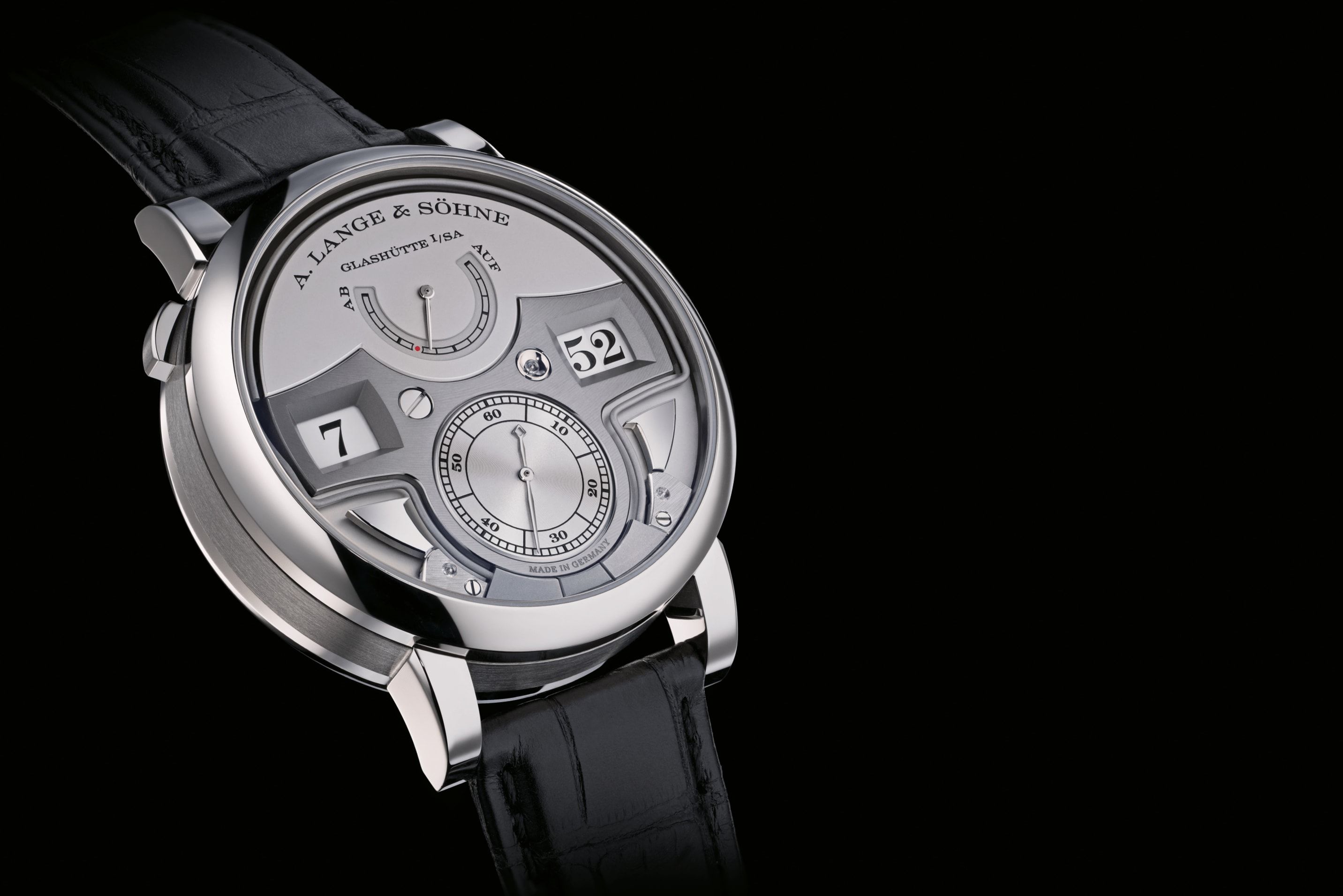
This is particularly visible in Glashütte's traditional movement architecture: the three-quarter plate, screwed gold chatons, blued screws, hand-engraved balance cocks and carefully polished steel components. But German design has another side. The Bauhaus tradition, functionalism and industrial design have given companies such as NOMOS, Junghans and others an entirely different vocabulary. And then there is the tool-watch tradition represented by Sinn and Damasko. Three completely different aesthetics, one country.
The Watchmaker as Engineer
Perhaps the common thread is the German relationship between watchmaking and engineering. A German mechanical watch often feels as though it has been designed from the inside out. The mechanism matters. The construction matters. The materials matter. The manufacturing process matters. That does not mean German watches are devoid of emotion. Quite the opposite. The appeal of an exquisitely finished Lange movement or a hand-engraved Kudoke calibre is profoundly emotional. But the emotion is often expressed through craftsmanship rather than overt luxury. It is a subtle distinction, but an important one.
One Heritage, Many Interpretations
This is ultimately what makes German watchmaking so compelling today. It is not a single school, hierarchy or even aesthetic. It is a collection of interpretations built on a common cultural foundation. There is the extraordinary hand finishing of the independent atelier, the industrial sophistication of the modern manufacture, the pared-back confidence of German design, the uncompromising functionality of the tool watch and the experimental spirit of the new microbrand. All of these belong to the same story. And perhaps that is the greatest achievement of the German watch industry since reunification. It did not simply recreate what had been lost. It created space for different ideas to coexist.

From Ferdinand Adolph Lange's workshop in 19th-century Glashütte to the modern ateliers of Dresden, from NOMOS's minimalist dials to Sinn's instrument watches, German horology has repeatedly demonstrated the same instinct: make the object purposeful, make the mechanism meaningful and let the craftsmanship speak. The result is not one German watchmaking tradition. It is many facets of the same idea- precision, independence and the belief that good engineering can itself be beautiful.
Click here to know more about the history of German watchmaking.
Frequently Asked Questions
1. What are the best German watch brands?
Some of the most important German watch brands include A. Lange & Söhne, Glashütte Original, NOMOS Glashütte, Moritz Grossmann, Lang & Heyne, Kudoke, Sinn, Damasko, Junghans, Stowa and MeisterSinger. Together, they represent the different facets of German watchmaking, from haute horlogerie and independent craftsmanship to tool watches and minimalist design.
2. Why is Glashütte important to German watchmaking?
Glashütte is the historic heart of German mechanical watchmaking. Ferdinand Adolph Lange established a watchmaking industry there in 1845, creating a network of specialist manufacturers and craftsmen. Today, Glashütte remains home to several important German watch manufactures, including A. Lange & Söhne, Glashütte Original and NOMOS Glashütte.
3. When did A. Lange & Söhne return to watchmaking?
A. Lange & Söhne was re-established by Walter Lange in 1990, 145 years after Ferdinand Adolph Lange founded the original company in Glashütte. Its revival, supported by Günter Blümlein, played a major role in restoring Germany's reputation as a centre of high-end mechanical watchmaking.
4. Did the quartz crisis cause A. Lange & Söhne to stop making watches?
Not directly. The original A. Lange & Söhne company disappeared as an independent business after the Second World War when it was expropriated in East Germany and subsequently absorbed into the state-owned Glashütter Uhrenbetriebe. The quartz crisis later compounded the decline of traditional mechanical watchmaking, while the company's modern revival came after German reunification in 1990.
5. What makes German watches different from Swiss watches?
German watchmaking is often characterised by an emphasis on engineering, functionality, clarity and distinctive movement architecture. Traditional Glashütte features such as the three-quarter plate, screwed gold chatons, blued screws and hand-engraved balance cocks are particularly associated with Saxon watchmaking, although contemporary German brands interpret these traditions in very different ways.


