
Rolex Still Rules. But Are Collectors Finally Moving On? The Chrono24 Rolex Report Has The Answer
 8 min read

For years, Rolex was not simply the most desirable name in luxury watches it was the benchmark against which the rest of the market was measured. The pandemic only intensified that position. Scarcity, soaring secondary-market prices and a frenzy for sports models turned Rolex into one of the most coveted luxury assets in the world. But the frenzy has passed, and according to a new analysis of Chrono24’s marketplace data, the Rolex story in 2026 is less about dominance and more about evolution.
The findings, based on completed transactions between 2018 and the second quarter of 2026, show that Rolex’s pandemic premium has now fully unwound. Its marketplace share has returned close to pre-2019 levels after reaching a peak of 44% in early 2022. Yet this is not a story of Rolex losing its crown. The brand remains the largest on Chrono24, accounting for approximately 31% of dollar sales volume, comfortably ahead of Omega at around 11% and Patek Philippe at approximately 6%. What has changed is the market around it and, most importantly, the people buying the watches.

The Rolex price index remains approximately 55% above its 2019 level and has risen around 7% over the past year, suggesting that demand for the brand itself remains remarkably resilient. But the composition of that demand is shifting. Buyers are no longer concentrating their spending as heavily on a handful of hyped references, and younger collectors in particular are beginning to look beyond the crown.
The Youngest Buyers Are The Ones Moving Away Fastest
Perhaps the most revealing finding in the Chrono24 analysis is generational. Buyers under 30 still allocate the largest proportion of their watch spending to Rolex approximately 34%, compared with 27% among buyers over 60. But this is also the generation that has pulled back the most dramatically.
At the height of the pandemic boom in 2022, buyers under 30 were directing roughly half of their watch expenditure towards Rolex. Three years later, that share has fallen by approximately 30%, representing the steepest decline of any age group. The implication is significant: the generation that helped fuel the most intense phase of Rolex enthusiasm is now among the first to diversify.

This does not mean younger buyers have lost interest in Rolex. Instead, their definition of what constitutes a desirable luxury watch appears to be broadening. They are moving towards dressier watches and exploring a wider range of brands, suggesting that today's younger collector is less inclined to see ownership of a Rolex as the ultimate destination and more likely to view it as one part of a broader collecting journey.
That shift matters because younger buyers are not simply the consumers of today; they are the collectors who will define the market of tomorrow. If their spending habits become more diversified, the consequences will extend well beyond Rolex.
Rolex Still Leads, But Rivals Are Closing In
Rolex continues to dominate every price segment above $5,000, but its hold on the market has weakened across every category since 2023. According to Chrono24, the brand has given back between three and eight percentage points depending on the price segment, as competitors including Cartier, Patek Philippe, Audemars Piguet and Vacheron Constantin gain ground.
The most striking change has occurred in the $10,000-to-$20,000 category, historically one of Rolex's strongest territories. At the 2022 peak, the brand accounted for more than 70% of sales volume in this segment. Today, that figure is closer to 61%. Even with the decline, Rolex remains overwhelmingly dominant, but the reduction illustrates just how much the market has normalised since the speculative frenzy of the pandemic.
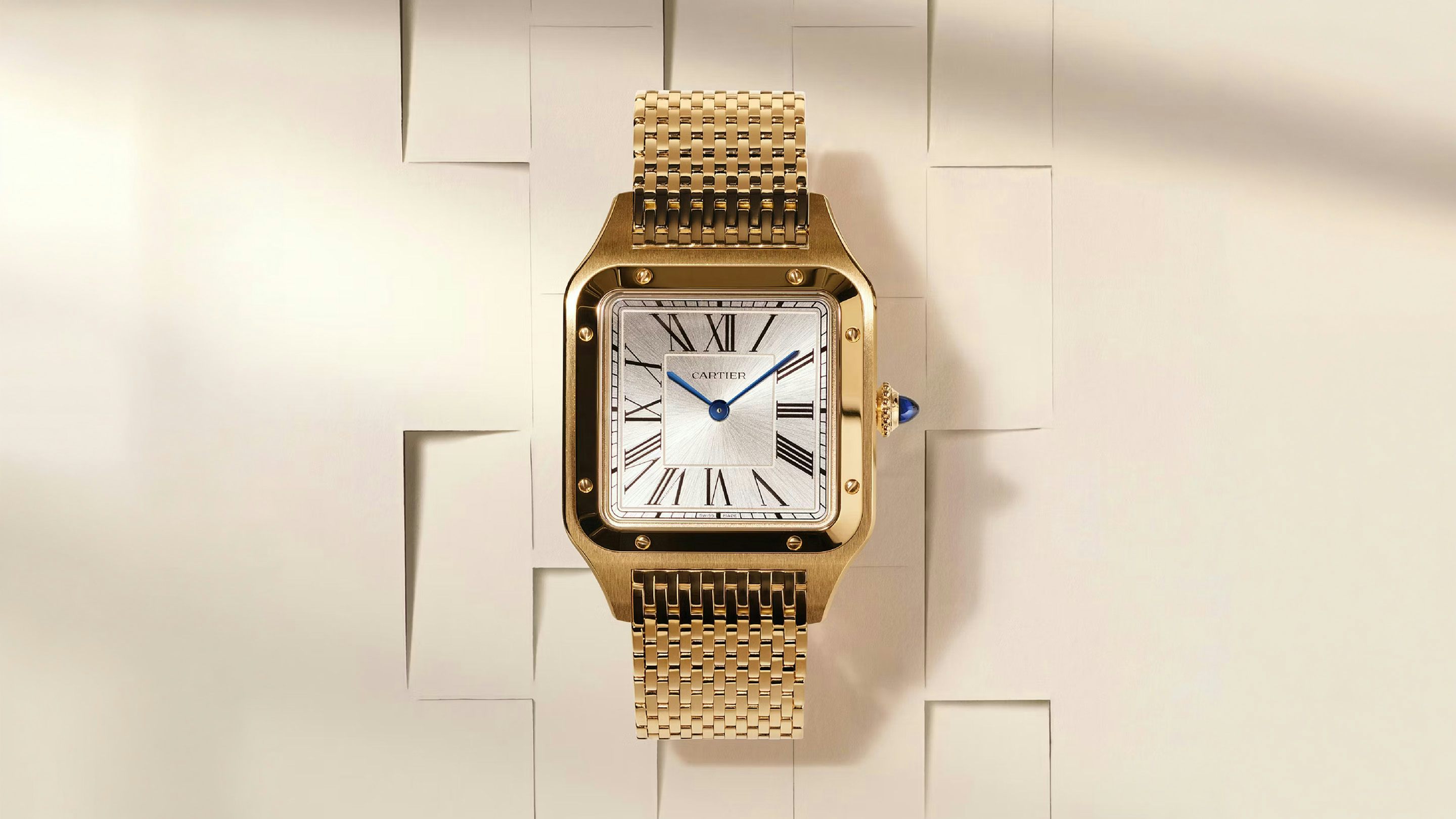
Above $20,000, Rolex holds close to 39% of sales volume, while the field becomes considerably more competitive. Patek Philippe and Vacheron Constantin have gained ground in this territory, while Audemars Piguet remains a significant force. In the $5,000-to-$10,000 segment, Cartier has made the strongest gains. The important point is not that Rolex has suddenly become vulnerable. Rather, luxury watch consumers have more options and are increasingly willing to explore them. Rolex remains the reference point, but it no longer absorbs quite as much of the conversation or the wallet.
The Sports-Model Obsession Is Giving Way To The Datejust
For much of the past decade, Rolex's sports watches have been at the centre of collector culture. The Submariner, GMT-Master II and Daytona became the symbols of contemporary Rolex desirability, fuelled by limited availability, waiting lists and extraordinary secondary-market premiums. Together, these three collections still account for close to 38% of Rolex revenue, confirming that their appeal remains formidable.

But the centre of gravity is moving. The Datejust has emerged as Rolex's single largest revenue-generating collection, contributing approximately 28% of revenue. Its rise reflects a broader movement towards versatility, classic design and watches that can move comfortably between formal and everyday settings. Click here for the newest Date Just launch from the Crown.
The GMT-Master II, meanwhile, remains one of the strongest performers among the sports models. Scarcity has continued to support certain references, most notably after Rolex discontinued the steel “Pepsi” GMT-Master II at Watches and Wonders 2026. Following the discontinuation, that reference traded approximately 24% higher than a year earlier, reaching close to $25,000 and registering one of the strongest year-on-year gains among Rolex's best-selling models.

Yet the larger story is not about one discontinued GMT. It is about what collectors are choosing when the excitement around hyped sports watches begins to cool. The Datejust and Oyster Perpetual remain common entry points for collectors, while more experienced buyers often progress towards the Daytona and vintage GMT-Master. The collecting journey, in other words, is becoming more nuanced and less exclusively centred on whichever sports reference is currently commanding the highest premium.
Women Are Spending More Of Their Watch Wallet On Rolex
The gender divide in Rolex demand is equally revealing. Women currently allocate approximately 38% of their watch spending to Rolex, compared with around 30% for men. Both figures have normalised from the pandemic-era peak, but women have seen a larger correction, with their Rolex spending share declining approximately 23% over three years compared with around 17% among men.

The model preferences are also distinctly different. Women tend to concentrate their Rolex purchases around the Datejust and Oyster Perpetual, collections that offer smaller case sizes and a more versatile aesthetic. Men, meanwhile, continue to show stronger demand for the Daytona, Submariner and GMT-Master II. The numbers reinforce another important shift in the Rolex market: the brand's appeal is no longer being driven by a single collector archetype. Different generations, genders and regions are approaching Rolex differently, creating a much more fragmented and sophisticated demand landscape. The brand roped in Bollywood actress Priyanka Chopra as their newest Rolex testimoniee to appeal to women watch buyers. Click here for the full coverage.
North America Has Become Rolex's Strongest Market
Geography provides perhaps the clearest indication of where Rolex's momentum is now concentrated. North America has emerged as the brand's strongest region, accounting for approximately 35% of watch transaction volume among North American buyers. That represents a significant increase from around 27% in 2018, with Rolex's share of spending among American buyers rising steadily over the past eight years.

Europe remains a powerful market, with Rolex accounting for nearly 29% of transaction volume. Asia, however, tells a very different story. The region's Rolex share has declined from the low 30% range to approximately 20%. The shift is important because Asia has historically been one of the world's most influential luxury markets. A decline in Rolex's share there, coupled with its growing strength in North America, suggests that the geography of luxury watch demand is changing alongside consumer behaviour. For Rolex, the North American market is therefore becoming increasingly important at precisely the moment when its traditional dominance in Asia is being diluted by a more competitive luxury landscape.
The End Of The Pandemic Premium Is Not The End Of Rolex
Perhaps the biggest misconception to take from the Chrono24 report would be that Rolex is somehow in decline. The data suggests something more interesting. The pandemic premium has disappeared, but the underlying strength of the brand remains firmly intact. The Rolex price index is still approximately 55% above its 2019 level and has gained around 7% in the past year. Rolex continues to lead every price segment above $5,000, remains the largest brand on Chrono24 by a substantial margin and continues to command extraordinary demand for its most recognisable collections.
What has changed is the behaviour of the buyer. The pandemic years created an unusually concentrated market in which scarcity and speculation pushed buyers towards a small number of highly recognisable sports watches. As that period has ended, collectors are demonstrating greater selectivity. They are exploring Cartier, Patek Philippe, Audemars Piguet and Vacheron Constantin. They are looking at dress watches. They are buying Datejusts. They are considering vintage pieces. And younger collectors, in particular, are distributing their spending across a wider range of brands.

That may ultimately be healthier for the luxury watch industry. A market driven entirely by a handful of hyped references is inherently fragile. A market in which consumers understand watches as expressions of design, heritage, craftsmanship and personal taste has considerably more depth.
Rolex Has Not Lost Its Crown. The Market Has Simply Grown Around It
The most telling conclusion from Chrono24's data is that Rolex has not been displaced. Instead, the market has matured around it. “The pandemic premium is unwound. The clearest signal is generational: younger buyers drove the boom, and they are the ones now moving to other brands and to classic watches like the Datejust. Rolex still sets the tone, but buyers spread their money across more brands than they did three years ago,” says Balazs Ferenczi, Head of Brand Engagement at Chrono24.

That observation neatly captures the state of the luxury watch market in 2026. Rolex remains the leader, but leadership no longer means owning the entire conversation. The buyer has become more curious, more discerning and more willing to look beyond the obvious choice. For Rolex, that may not necessarily be bad news. Its continued price strength, enormous transaction share and dominance across the major price bands demonstrate that the foundation remains exceptionally strong. But the days when one sports watch could define an entire generation of collectors appear to be fading.
The next phase of luxury watch collecting may therefore belong not to a single icon, but to a broader ecosystem of brands and watches. Rolex will remain at its centre. The difference is that today's collector is increasingly interested in discovering what else lies around the crown.
Source: Chrono24, “The Rolex Report 2026: The same leader, a different market”
To know what exactly makes Rolex great, click here.


